The World's Most Expensive Coffees, per Pound and per Cup (2026)
A sourced, per-pound and per-cup price comparison of the world's rarest coffees, from Black Ivory and auction Panama Geisha to Kona and Jamaica Blue Mountain.
- Black Ivory CoffeeThailand $52–$55
- Kopi LuwakIndonesia $1.29–$17
- St Helena CoffeeSaint Helena $10–$11
- Panama Geisha CoffeePanama $3.44–$9.94
- Yemeni CoffeeYemen $0.81–$4.40
- Jamaica Blue Mountain CoffeeThe benchmark $1.14–$2.15
- Kona CoffeeKona districts $1.06–$1.66
- Puerto Rican CoffeePuerto Rico $0.57–$0.77
- Kenyan CoffeeKenya $0.72–$0.77
- Sumatra CoffeeIndonesia $0.63–$0.72
- Ethiopian CoffeeEthiopia $0.66–$0.69
- Guatemalan CoffeeGuatemala $0.54–$0.66
- Colombian CoffeeColombia $0.23–$0.63
- Brazilian CoffeeBrazil $0.40–$0.63
- Mexican CoffeeMexico $0.46–$0.63
- Everyday Supermarket CoffeeBlended $0.26–$0.28
The world's most expensive coffees span an enormous range: roughly $120 to $347 a pound for retail Panama Geisha, $1,800 to $1,928 a pound for Black Ivory, and as much as $13,705 a pound at a 2025 Best of Panama auction. Per 8 oz cup, that works out to well under a dollar for everyday supermarket coffee and over $50 for Black Ivory.
How the Comparison Works
Every price below is converted to two figures: dollars per pound, roasted, at retail; and an estimated cost per cup. The per-cup figure assumes 13 grams of coffee per 8 oz (240 ml) cup, which is roughly the SCA Golden Cup Standard of 55 grams of coffee per liter of water. That ratio is a brewing guideline, not a law, so a stronger or weaker cup will cost more or less than the figure shown here, and espresso, which uses a different dose entirely, is not directly comparable.
Two different questions get conflated when people search for the highest price coffee: what a roaster charges at retail, and what a green-coffee lot fetched at auction. Retail prices reflect what a home drinker can actually buy and brew. Auction prices reflect what a roaster or importer paid for a tiny, often prize-winning micro-lot of green coffee, before roasting, packaging, shipping and margin are added. The two numbers can differ by a factor of 40 or more for the same coffee in the same year, so this page treats them as separate lines rather than blending them into one figure. Package size matters too: a small 4 oz or 8 oz bag of a rare coffee almost always costs more per pound than a full 1 lb bag of the same lot, since roasting, packaging and shipping costs don't shrink proportionally with the bag.
A useful anchor: the US Bureau of Labor Statistics tracks a national average retail price for 100% ground roast coffee, which sat at $9.299 a pound in August 2026, or roughly 26 to 28 cents a cup. Everything on this page is priced against that baseline of ordinary, mainstream-grocery coffee. A quick sense of scale, all at the 13-gram dose used throughout this page:
- Everyday supermarket coffee: about $0.26 to $0.28 a cup
- 100% Jamaica Blue Mountain: about $1.15 to $2.15 a cup
- 100% Kona: about $1.06 to $1.66 a cup
- Retail Panama Geisha: about $3 to $10 a cup
- St Helena: about $10 to $11 a cup
- Black Ivory: about $52 to $55 a cup
Those figures are rough by design. Roast level, grind, altitude of the buyer's kitchen and brew method all shift extraction slightly, and none of the retailers checked for this page publish an official "cost per cup" figure the way a few Kona roasters do. Treat the numbers as a way to compare coffees against each other, not a precise receipt.
What Drives the Price of Each Coffee
Black Ivory
Black Ivory is produced in Thailand by feeding ripe Arabica cherries to rescued elephants at a refuge in Surin province, then hand-collecting the beans from their dung after the cherries ferment in the animals' digestive tracts. The producer, Black Ivory Coffee Company, reports harvesting only about 500 pounds of usable beans a year, which makes it one of the smallest-volume coffees sold anywhere. Direct from the producer in 2026, it retails for $1,800 to $1,928 a pound, depending on package size, which works out to roughly $52 to $55 a cup at 13 grams. The price reflects labor and yield rather than any flavor consensus: a large share of cherries fed to the elephants are never recovered at all.
Panama Geisha, Auction and Retail
Panama Geisha is a floral, tea-like varietal traced to Ethiopia's Gori Gesha forest that became famous after Hacienda La Esmeralda's Boquete lot won the Best of Panama competition in 2004, selling for $21 a pound. Auction prices for the top lots have climbed almost every year since: $803 a pound in 2018, $1,029 a pound in 2019 for Lamastus Family Estates' Elida Geisha, and a record $13,705 a pound in 2025 for a 44-pound Best of Panama Geisha Washed lot bought by Dubai's Julith Coffee. Those are green-coffee auction prices, paid by roasters and cafés, not shelf prices. A home drinker can buy retail Panama Geisha for roughly $120 to $347 a pound in 2026, or about $3 to $10 a cup — still a premium coffee, but a small fraction of what the record lot cost.
Kopi Luwak
Kopi Luwak beans are eaten and excreted by the Asian palm civet before being cleaned, roasted and sold. Collection is slow and labor-intensive whether the civets are wild or caged, which is the main reason the coffee commands a premium at all. Reported retail prices in recent years run from about $45 a pound for farmed beans to as much as $590 a pound for rarer wild-collected beans — roughly $1.29 to $16.91 a cup. Reviewers are split on whether the cup itself justifies that price; see the welfare note below before buying kopi luwak.
St Helena
Coffee has grown on the remote South Atlantic island of St Helena since 1733, when Green Tipped Bourbon seeds arrived from Mocha, Yemen. Isolation, small growing area and costly shipping keep output low and prices high: the most recent verifiable retail figure found is a 2015 Harrods (London) listing at £60 per 100 grams, which converts to roughly $355 to $380 a pound in current dollars, or about $10 to $11 a cup. Coffee remained a meaningful share of the island's small export economy — about 17% of total exports in 2019/20, alongside fishing and tourism.
Kona
Kona coffee grows on the volcanic slopes of Hualalai and Mauna Loa on Hawaii Island, mostly between 500 and 3,000 feet. Hawaii's entire 2023/24 green coffee crop totaled only about 3.4 million pounds, worth $67 million at an average farm price of $19.50 a pound, which is small by world standards and helps explain the retail premium. For a genuine 100% Kona coffee — not a Kona "blend," which by Hawaii law can be as little as 10% Kona — 2026 retail prices run about $37 to $58 a pound, or roughly $1.06 to $1.66 a cup.
Jamaica Blue Mountain
Jamaica Blue Mountain is grown in a legally defined area of the Blue Mountains, across the parishes of St Andrew, St Thomas and Portland, commonly said to sit between 3,000 and 5,500 feet, though that range is a widely used description rather than a legal boundary. Jamaica's Blue Mountain harvest grew from about 240,000 boxes in 2021/22 to 285,000 boxes in 2022/23, though a 300,000-box target for 2023/24 fell short by an estimated 50,000 boxes after bad weather, according to the Jamaica Coffee Exporters Association. Three 100% Jamaica Blue Mountain retailers checked for this page price roasted beans at roughly $39.95 to $75 a pound in 2026, or about $1.15 to $2.15 a cup. Under JACRA's 2018 rules, a coffee labeled "Blend" needs only 30% Blue Mountain content, so it is worth checking that a bag says 100%.
Yemeni
Yemeni coffee is grown on centuries-old stone terraces in the western highlands, at elevations commonly cited from 4,900 to 8,200 feet, using heirloom Arabica varieties found almost nowhere else. According to Royal Coffee, a specialty green-coffee importer, about 60% of Yemen's crop reaches export markets. Hand-harvesting, natural processing and a fragile supply chain push retail prices from about $28 a pound for a standard specialty-roaster Mocha up to roughly $154 a pound for a rare single-farmer Yemeni micro-lot in 2026 — call it $0.81 to $4.40 a cup.
Record Auction Prices
Auction records track green, unroasted coffee sold to roasters and importers, not what ends up on a store shelf. The clearest pattern is Panama Geisha's Best of Panama competition, where a panel first cups and scores lots blind, then the highest-scoring lots go to a public online auction where roasters, cafés and collectors bid against each other. The record price has risen from double digits to five figures per pound in two decades.
| Year | Lot | Price |
|---|---|---|
| 2004 | Hacienda La Esmeralda, Best of Panama debut | $21 per pound |
| 2018 | Best of Panama Geisha | $803 per pound |
| 2019 | Elida Geisha Green Tip Natural, Lamastus Family Estates | $1,029 per pound |
| 2025 | Best of Panama Geisha Washed, 44-lb lot | $13,705 per pound ($605,000 total) |
At $13,705 a pound, the beans alone in a 13-gram cup would cost around $393 — a figure meant to illustrate scale, not something any café actually charges, since roasters who buy these lots typically use them for tastings, competitions or marketing rather than everyday sales. A handful of cafés do resell cups from record lots at high prices for a limited run, but those cups are a marketing event tied to one specific harvest, not a standing menu price, and they are a poor guide to what a rare coffee costs in ordinary retail.
It's worth noting that auction records tend to cluster around a single varietal and a single competition because Best of Panama has the longest continuous track record and the most public bidding data of any coffee auction. Other origins on this page, including Jamaica Blue Mountain, Yemeni Mocha and Kona, are sold mostly through direct trade and long-term buyer relationships rather than open online auctions, so comparable headline auction numbers are harder to verify for them and are not included here.
Why Price Isn't the Same as Quality
An auction price mostly measures scarcity and competitive bidding among a small number of roasters chasing publicity, not a linear multiple of cup quality. Two lots scored a point apart on a 100-point cupping scale can sell for wildly different prices depending on who is in the room that day, how a story around the farm is told, and how many buyers want bragging rights for the winning bid. Meanwhile, plenty of coffees that never see an auction stage — a well-grown Ethiopian or Colombian lot, for instance — score highly on the same cupping scales used to judge competition coffee, at a fraction of the price.
Rarity, novelty and processing labor also drive cost independently of taste. Black Ivory and kopi luwak cost what they cost largely because so few pounds exist and because turning animal digestion into a sellable product is slow, not because tasting panels rank them above cleanly processed washed coffees from Kenya or Guatemala. Geographic isolation works the same way: St Helena's price has more to do with the cost of growing coffee at all on a small, remote island than with any claim that the cup itself outranks a well-grown mainland Arabica.
None of this means expensive coffee is a scam. Careful processing, hand-selection, high altitude and low yields are real costs that a grower has to recover somewhere, and many of the coffees on this page are genuinely well regarded by independent reviewers, not just by the auction that made them famous. The point is narrower: a buyer chasing the most expensive coffees in the world should expect novelty, rarity, and sometimes real complexity, but not a guarantee that the $300 bag will out-cup a well-sourced $20 one, and searching for "most expensive coffee in the world price" is a question about scarcity and marketing as much as it is about flavor.
A Welfare Note on Kopi Luwak
How to Try a Famous Coffee Without Paying Auction Prices
Almost nobody needs to buy an auction lot to taste a well-known name. Retail versions of Kona, Yemeni Mocha and even Panama Geisha are sold by specialty roasters at prices closer to $20 to $75 a pound rather than four or five figures, and a smaller bag — 4 oz or 8 oz rather than a full pound — is an easy, low-risk way to try one that might not suit a particular brew method or palate.
A few habits help avoid overpaying for the wrong thing. Checking whether a bag says "100%" or "blend" matters more than the origin name printed largest on the label, since a blend can legally include a small fraction of a famous origin alongside cheaper beans. A roast date within the last few weeks matters more than the price tier, since even a rare coffee tastes flat once it's stale. And an origin's typical elevation, variety and processing — the same details covered in each section above — are a better guide to what a coffee will taste like than its price alone.
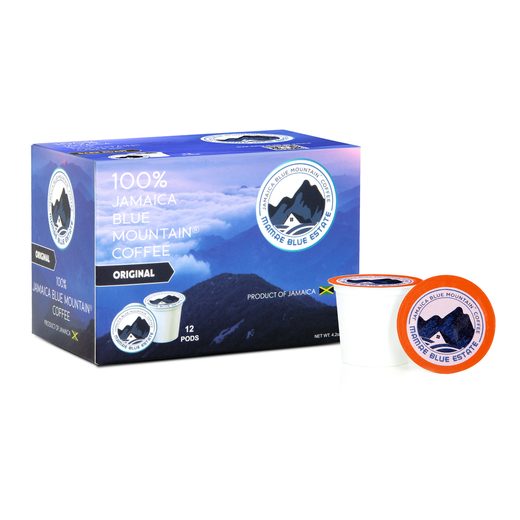
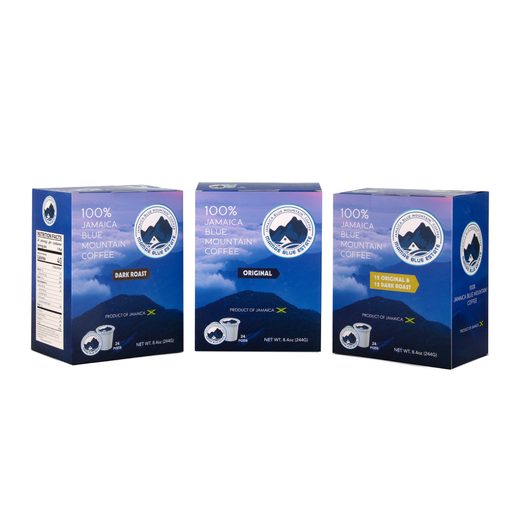
Jamaica Blue Mountain is a reasonable starting point for a reader curious about a globally famous coffee that is not the cheapest option but is not an auction-only novelty either. One estate that sells 100% Jamaica Blue Mountain whole bean, ground and K-Cup-style pods is Mamre Blue, a single Blue Mountain estate that JACRA approved as a Special Coffee Dealer and Trademark User Licensee in January 2021. Its own 16 oz 100% Jamaica Blue Mountain whole bean is priced within the retail range described above. Anyone who wants to compare it against the other coffees on this page can see current options on the shop page.
Questions people ask
What is the most expensive coffee in the world?
How much does the most expensive cup of coffee cost?
Is expensive coffee always better quality than cheap coffee?
Is kopi luwak ethical to drink?
What makes Jamaica Blue Mountain coffee expensive?
Can I try a rare coffee without paying auction prices?
Sources
- Average Price: Coffee, 100%, Ground Roast, All Sizes (Cost per Pound/453.6 Grams) in U.S. City Average (APU0000717311) – FRED
- The Golden Cup Standard – Roastopedia
- 6 Reasons Panamanian Geisha Coffee Costs Over $13,000 per Pound – TheCollector
- Why a Pound of Panama Geisha Coffee Sold for $1,029 — and Was Worth It – VinePair
- Geisha Coffee Buying Guide 2026 – Paradise Coffee Roasters
- Mike Perry Signature Edition: Panama Esmeralda Reserva De Cabaña Geisha Natural – Klatch Coffee
- Black Ivory Coffee – official site
- Kopi luwak – Wikipedia
- St Helena Coffee – sthelenaisland.info
- Economy of Saint Helena – Wikipedia
- May 2024 Hawaii Coffee – USDA NASS Pacific Region, Hawaii Field Office
- What Does My 100% Kona Coffee Cost Per Cup? – Greenwell Farms
- Extra Fancy 100% Kona Coffee – Hawaiian Queen Coffee
- Jamaica Blue Mountain Coffee Day 2024 Being Held in Tandem with Renewed Production and Marketing Drive to Boost Earnings – Jamaica Coffee Exporters Association
- Yemen Green Coffee Export Review – Royal Coffee
Taste the benchmark
More in Rare coffees
- Black Ivory Coffee: The Elephant Coffee, ExplainedBlack Ivory Coffee is made in Thailand by feeding coffee cherries to rescued elephants, yielding about 500 pounds a year at a steep price.
- Geisha Coffee: Why Panama Geisha Costs So MuchGeisha is a floral Ethiopian coffee variety that became world-famous after a 2004 Panama auction win, and top lots now sell for thousands of dollars a pound.
- Jacu Bird CoffeeJacu bird coffee comes from wild Brazilian guans that eat coffee cherries naturally, unlike kopi luwak's often-caged civets.
- Kopi Luwak (Civet Coffee): Price, Taste and the Welfare ProblemKopi luwak is coffee cherries fermented inside a civet's gut, prized for rarity but dogged by documented welfare abuses, widespread fakes, and lukewarm taste reviews.
- St Helena Coffee: Napoleon's Island CoffeeSt Helena's Green Tipped Bourbon coffee traces to 1733 and Napoleon's exile, but today's output is tiny and verified pricing is scarce.