Colombian Coffee: Regions, Grades and What "100% Colombian" Means
Colombian coffee's regions, grades and FNC labeling explained, with a fair comparison to Jamaica Blue Mountain.
Colombian coffee is 100% arabica, grown across Andean regions such as Huila, Nariño and Antioquia, and marketed worldwide through the Federación Nacional de Cafeteros (FNC) and its Juan Valdez program. It is prized for a balanced cup of caramel sweetness and bright acidity, and its "Café de Colombia" name carries EU geographical-indication protection.
What is the FNC and why does Juan Valdez matter?
The Federación Nacional de Cafeteros de Colombia (FNC), founded in 1927, is a grower-owned federation that represents more than 500,000 coffee farming families, most on small holdings. It sets quality standards, funds agronomic research and rural infrastructure, and markets Colombian coffee abroad on growers' behalf — a scale of coordination few coffee-producing countries can match.
In 1958 the FNC introduced Juan Valdez, a fictional farmer character created to put a human face on Colombian coffee. In 1981 the campaign was sharpened into a "100% Colombian" seal meant to separate single-origin Colombian coffee from blends cut with beans from other countries. In 2002 the FNC launched Procafecol S.A., which operates the Juan Valdez Café retail chain, extending the brand from a marketing seal into a storefront experience. The FNC also owns "100% Colombian Coffee," a word mark first registered in 1969 and licensed to roasters who meet its sourcing standards, according to the World Intellectual Property Organization (WIPO).
The throughline across all of this is traceability: the FNC's programs exist to let a buyer in the United States or Europe know that a bag labeled Colombian was actually grown by a Colombian farmer, under standards the federation can audit.
What are Colombia's main coffee-growing regions?
Colombia's coffee zones run north to south along three Andean mountain ranges, each with its own elevation bands, rainfall patterns and harvest timing. According to the specialty importer Royal Coffee, Huila, Antioquia, Tolima, Cauca and Caldas are consistently among the largest-producing departments, with Huila alone regularly the single biggest contributor to national output.
- Huila: a southern department known for near year-round picking, thanks to varied microclimates, and lots that show red fruit and caramel sweetness.
- Nariño: Colombia's highest-altitude coffee zone, with many farms between roughly 1,800 and 2,200 meters (5,900–7,200 ft); cited by Royal Coffee and other trade sources for bright acidity and floral complexity, a result of cooler nights slowing bean development.
- Cauca: neighboring Nariño and Huila, also recognized in specialty circles for elevated, complex lots and a growing number of small, well-documented farms.
- Antioquia: a large-volume central department associated with fuller body and milder acidity than the southern zones.
- Tolima: another major central producer, with farms known for stone-fruit and caramel notes and a long coffee-growing history.
- Sierra Nevada de Santa Marta: an isolated northern massif where the Arhuaco and other Indigenous communities have grown coffee for generations; Royal Coffee notes the area's high quality potential despite lower average elevations than the south.
Cauca, Nariño, Huila, Santander, Tolima and Sierra Nevada are among the areas Colombia has promoted internationally as designated coffee-growing origins within the country's broader Café de Colombia geographical indication. In practice, most Colombian coffee sold in the US names a department rather than a single farm, so a bag marked "Huila" is a much narrower and more useful claim than "Colombian" alone.
What do "Supremo" and "Excelso" mean on a Colombian coffee bag?
Supremo and Excelso are export size grades, not flavor or quality tiers on their own. Coffee is sorted by bean size using screens measured in 64ths of an inch, the same basic method used in several other origins. Trade sources describe Supremo as the larger grade, roughly screen size 17 and up, with Royal Coffee calling it the largest, most valuable size classification in Colombia's export system. Excelso is the next size down, generally in the screen 14–16 range.
Because Supremo and Excelso beans can come from the same trees and the same harvest, sorted afterward by size, a well-grown Excelso lot can cup as well as a Supremo one; size alone does not guarantee flavor. Below Excelso sit lower grades sold mainly for domestic use or lower-cost blends and generally not marketed to US specialty buyers. For a shopper, the grade printed on a bag is a useful signal of bean uniformity and export tier, but it is not a substitute for information about the specific farm, region or harvest.
Does "Café de Colombia" carry legal protection?
Yes. The European Union registered "Café de Colombia" as a Protected Geographical Indication (PGI) in September 2007, under Commission Regulation (EC) No 1050/2007 — the first time the EU had granted this status to a product from outside the bloc, according to the World Intellectual Property Organization (WIPO). The designation restricts the "Café de Colombia" name, within the EU, to coffee grown in the legally defined Colombian coffee zone and verified by the FNC.
When is Colombian coffee harvested?
Colombia is unusual among major origins in producing two harvests a year rather than one. Mercanta, a UK-based green coffee importer, describes a main crop running roughly October through January and a secondary "mitaca," or fly crop, from about April through June; nationally the mitaca can account for close to half of annual output, though the balance shifts by region and in several southern and central departments the April–June window is actually the larger of the two harvests. Because the harvest calendar varies with each department's microclimate, some coffee is being picked somewhere in the country in nearly every month, which is one reason Colombian coffee tends to stay available and relatively fresh in the US market year-round rather than arriving in one seasonal wave.
What does Colombian coffee taste like?
Colombian coffee is widely described by roasters and importers as medium-bodied with a clean finish, built on caramel or brown-sugar sweetness balanced by citrus-leaning acidity; tasting notes often mentioned include milk chocolate, toasted nut and red fruit. Regional character varies — Huila lots are often described as fruit-forward, Nariño and Cauca as brighter and more floral, and Antioquia as fuller-bodied with softer acidity — though any single farm or lot can depart from these generalizations, and roast level changes the picture too: lighter roasts tend to foreground acidity and fruit, darker roasts lean toward chocolate and body.
Because Colombia spans such a wide range of altitudes and microclimates, "Colombian coffee" as a single flavor category is really a spread of profiles rather than one fixed taste. A Nariño lot grown above 1,800 meters and an Antioquia lot grown at lower elevation can taste noticeably different even though both are labeled Colombian and both are Supremo grade.
What does "100% Colombian" mean on a label?
"100% Colombian" is a sourcing claim, not a grade or a flavor promise. It indicates that every bean in the bag was grown in Colombia, as opposed to a blend that mixes Colombian beans with coffee from other countries. In the United States, roasters license the FNC's "100% Colombian Coffee" mark and Juan Valdez imagery to make this claim on packaging; an unlicensed bag can still be entirely Colombian-grown without carrying the seal. Either way, the claim says nothing about grade (Supremo versus Excelso), altitude, harvest, or roast — those details, when a roaster provides them, are worth more to a buyer than the origin claim alone.
What should you look for in Colombian coffee brands?
Rather than ranking specific brands, it helps to know which label details actually predict what is in the bag. A department or region name (Huila, Nariño, Tolima) tells you more than "Colombian" alone. A stated grade (Supremo or Excelso) tells you about bean size and export tier, not necessarily cup quality. A roast date within the past few weeks matters more to freshness than almost anything else on the label. The FNC's "100% Colombian Coffee" seal and Juan Valdez branding confirm licensed, verified Colombian sourcing, but plenty of high-quality, honestly labeled Colombian coffee is sold without that seal, especially from smaller specialty roasters who buy direct from a single farm or cooperative. Whole bean, freshly roasted and clearly sourced beats a familiar logo as a buying rule.
How does Colombian coffee compare with Jamaica Blue Mountain?
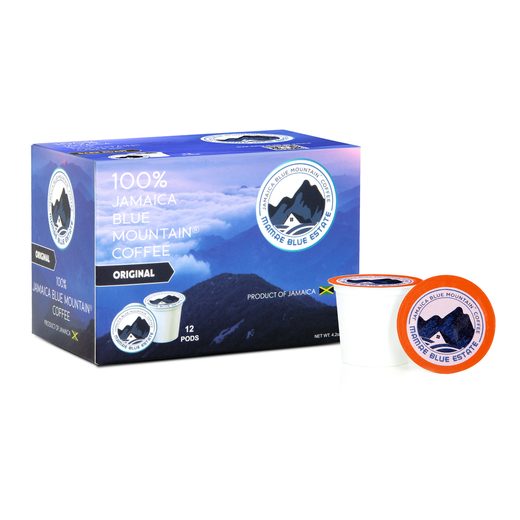
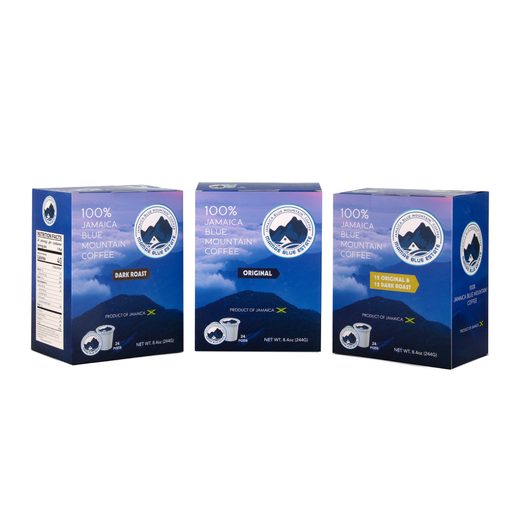
Colombian and Jamaica Blue Mountain (JBM) coffee sit at different points on the flavor map, and comparisons are necessarily general since both vary lot to lot. Colombian coffee is typically described as medium-bodied with caramel sweetness and noticeable, citrus-toned acidity. JBM is more consistently described — by growers and importers alike — as mild and balanced, with low bitterness and a smoother, less acidic profile. Colombia is also a very different scale of origin: it is one of the world's largest coffee producers, spread across multiple regions and grading systems, while JBM comes from a single, legally defined and comparatively small growing area in Jamaica's Blue Mountains. Buyers who want Colombia's brighter, sweeter cup can look for regional or single-farm lots; those curious about JBM's milder reputation can compare it directly through whole bean options.
How does Colombian coffee compare with other origins?
Compared with Ethiopian coffee, which is grown largely from heirloom varieties and often processed naturally for a fruit-forward cup, Colombian coffee is almost entirely washed and built around consistency across a huge growing area. Compared with Kenyan coffee, prized for sharp, wine-like acidity, Colombian lots are generally milder and sweeter. Both Colombia and Jamaica grow coffee that falls under the broader arabica species, as opposed to robusta, which is one reason the two origins are compared as often as they are: they are working with the same species, in different terroirs, under different regulatory systems.
For a buyer trying to place Colombian coffee on a wider map, it helps to think in terms of consistency versus distinctiveness. Colombia's scale and federation-backed quality control make it one of the most dependable origins to buy on a repeat basis. Smaller, more tightly regulated origins — Jamaica's Blue Mountain among them — trade some of that scale for a narrower, more tightly defined identity. Neither approach is objectively better; they answer different questions for a coffee buyer.
Questions people ask
What makes coffee "Colombian"?
What is the difference between Supremo and Excelso coffee?
Is Colombian coffee always 100% arabica?
When is Colombian coffee harvested?
Is Colombian coffee stronger than other coffees?
How does Colombian coffee compare to Jamaica Blue Mountain?
Sources
- National Federation of Coffee Growers of Colombia — Wikipedia
- Juan Valdez Café — Wikipedia
- Making the Origin Count: The Colombian Experience — WIPO
- Colombian Coffee Regions and Varieties — Royal Coffee
- Commission Regulation (EC) No 1050/2007 (Café de Colombia PGI) — legislation.gov.uk
- Coffee Seasonality — Mercanta (Coffee Hunter)
- Colombian coffee: flavor profile, regions, and the best beans to buy — Trade Coffee
Taste the benchmark
More in Origins
- Congo (DRC) Kivu CoffeeDR Congo's Lake Kivu region grows washed, volcanic-soil arabica that is slowly recovering from decades of conflict and policy-driven decline.
- Costa Rican CoffeeCosta Rica grades its all-arabica crop by altitude across eight regions and is a reference point for honey-processed coffee.
- Dominican Republic CoffeeDominican coffee comes mainly from four mountain regions, including Barahona and Cibao, and is consumed at home largely through brands like Café Santo Domingo.
- Ecuadorian and Galápagos CoffeeEcuador pairs small-lot highland arabica from Loja and Galápagos's San Cristóbal island with one of South America's largest robusta and soluble-coffee industries.
- El Salvador CoffeeEl Salvador is the birthplace of the Pacas and Pacamara varieties and still grows much of its coffee on heritage Bourbon trees.
- Ethiopian Coffee: Regions, Processing and FlavorA region-by-region guide to Ethiopian coffee's heirloom varieties, processing styles and grading, compared fairly with Jamaica Blue Mountain.
- Guatemalan Coffee: Huehuetenango, Antigua and BeyondGuatemala grades coffee by altitude across eight distinct regions, from volcanic Antigua to the high, dry, non-volcanic Huehuetenango highlands.
- Guji CoffeeA guide to Guji, one of Ethiopia's newest named coffee regions: its elevation, washed and natural processing, flavor, sales and how it compares with Jamaica Blue Mountain.