Puerto Rican Coffee: History, Yauco and Today's Harvest
Puerto Rican coffee went from 19th-century world fame to near-collapse after Hurricane Maria, and today survives as a small, closely watched specialty crop.
Puerto Rican coffee built a world-class reputation in the 19th century, nearly vanished after decades of decline and Hurricane Maria's 2017 devastation, and survives today as a small, high-quality crop grown across the island's central mountains. Its rise, fall, and slow recovery run in instructive parallel to Jamaica Blue Mountain's own story.
How did Puerto Rican coffee earn its 19th-century reputation?
Coffee arrived in Puerto Rico under Spanish colonial rule and expanded through the 19th century into one of the island's most important export crops. By the century's end, Puerto Rico had grown into what is described as the world's seventh-largest coffee producer, with the mountain town of Utuado serving as its most prominent production center before the United States acquired the island in 1898. Puerto Rican coffee built a strong following in European markets, particularly France, and popular accounts of the era credit it with admirers among discerning European drinkers — claims that are hard to verify precisely but reflect how highly the coffee was regarded at the time.
The 1898 change in sovereignty marked a turning point. New American investors favored sugar cane over coffee, and the industry that had defined much of Puerto Rico's highland economy began a long decline that, with some recoveries, has continued in various forms ever since.
What is Yauco Selecto?
Yauco, in Puerto Rico's southwestern mountains, was largely settled by Corsican immigrants who began arriving in the 1830s under Spain's Cédula de Gracias, a law offering land and tax incentives to Catholic European settlers. By the 1860s, Corsican families owned roughly seven of every ten coffee plantations on the island, and Yauco grew into one of Puerto Rico's signature coffee towns.
"Yauco Selecto" is the best-known name associated with the area, but it is a registered commercial trademark, not a legal appellation. It has been used since around 1990 to market a high grade (AA), wet-processed coffee — typically Bourbon and Typica arabica varieties — from specific estates in the Yauco hills, generally cited in the roughly 2,300–3,900 ft (700–1,200 m) elevation range. There is no independent certifying body or published altitude standard governing the name; the legal protection that does exist for Puerto Rican coffee is the "Café de Puerto Rico" designation, certified by the island's Oficina de Cafés de Puerto Rico under a 2019 law.
How did Hurricane Maria affect Puerto Rico's coffee?
Hurricane Maria struck in September 2017, just as farmers were on track for their best harvest in a decade. The storm destroyed roughly 80% of the island's coffee trees and about 85% of that year's crop, according to reporting on the disaster. Output collapsed from more than 2,000 metric tons the year before the storm to just over 330 tons in 2017 — an 84% drop — and coffee farmers lost an estimated $85 million in revenue almost overnight. Around 2,500 farming families were affected.
Damage assessments later found destruction was uneven: research on surviving plantations found many trees defoliated or knocked over rather than killed outright, while lost shade cover let weeds and vines spread and choke surviving bushes. Recovery has been gradual. By around five years after the storm, harvests were reported to have neared pre-hurricane production levels for the first time, helped in part by federally funded replanting programs.
Does Puerto Rico still produce much coffee today?
Puerto Rico's coffee industry today is a fraction of its 19th-century scale, and it now falls short of the island's own demand. By one account, domestically grown coffee covers only around a third of local consumption, so Puerto Rico imports commercial-grade coffee — mainly from the Dominican Republic and Mexico — to fill the gap, while exporting only a limited amount of its own crop. High production costs, cloud cover and a changing climate, and a shortage of harvest labor all weigh on output; by one estimate, close to half of a given year's cherry crop goes unpicked for lack of workers, a bigger constraint on volume than land or weather alone.
Federal and cooperative investment is aimed at reversing the decline. Since 2023, the USDA-funded "Café del Futuro" project, a $15 million, multi-year initiative under the Partnerships for Climate-Smart Commodities program, has targeted roughly 2,000 growers across ten mountain municipalities with subsidized trees, technical assistance, and cash incentives, with a goal of planting more than 2.75 million new coffee and shade trees.
Where is Puerto Rican coffee grown?
Puerto Rico's coffee belt runs through the Cordillera Central, the island's central mountain spine, with five towns most often named on labels and in trade accounts:
- Yauco — the southwestern region historically associated with Corsican-settled estates and the Yauco Selecto name.
- Adjuntas — high in the Cordillera Central, with some farms near 3,000 ft (about 915 m), known for brighter, more complex lots.
- Jayuya — a central highland municipality known for fruit-forward, higher-acidity coffee.
- Utuado — one of the island's oldest coffee towns and its leading production center before 1898.
- Lares — in the central-western mountains, with fertile soils and consistent humidity suited to coffee.
Most farms are small and family-run, spread across hillsides rather than concentrated on large estates, which is part of why Puerto Rican coffee remains a boutique category rather than a bulk commodity crop. Elevation and rainfall vary enough between these towns that trade buyers treat them as distinct micro-origins rather than interchangeable stand-ins for one another, much the way specialty buyers separate Jamaica's own Blue Mountain farms by district rather than treating the whole growing area as a single flavor.
What does Puerto Rican coffee taste like?
Puerto Rican coffee is generally described as smooth, full-bodied, and mild, with low acidity and notes of chocolate, caramel, and nuts rather than the bright, citrusy profile associated with some Central American origins. Reviewers and roasters commonly point to this restrained acidity and rounded mouthfeel as the throughline across the island's growing areas, even as individual towns like Jayuya or Adjuntas produce brighter, more complex lots than the island's typical smooth, chocolate-forward style. Roast level matters here as much as origin: a lighter roast tends to show more of a given lot's acidity and fruit, while medium and darker roasts lean into the caramel and chocolate notes most buyers associate with the island's coffee overall.
What should you look for in Puerto Rican coffee brands?
Rather than chasing a single "best" brand, it helps to check a few label details. Because "Yauco Selecto" and similar regional names are trademarks rather than regulated appellations, look for a specific municipality (Yauco, Adjuntas, Jayuya, Utuado, or Lares), a stated grade such as AA, and, where available, the official "Café de Puerto Rico" seal — the one designation with a legal certifying body behind it. A visible roast date and single-estate or single-cooperative sourcing are generally better indicators of freshness and quality than the brand name alone.
How does Puerto Rican coffee compare with Jamaica Blue Mountain?
Puerto Rico and Jamaica are both mountainous Caribbean islands with coffee histories that once ranked among the world's most prestigious, and both now produce a comparatively small, high-value crop rather than a bulk commodity. Jamaica Blue Mountain is grown, per Jamaica's coffee regulator, within a legally defined area covering the parishes of St Andrew, St Thomas, and Portland, commonly cited at elevations of 3,000–5,500 ft, though that range is customary rather than a legal boundary. It is widely described as mild and balanced with low bitterness — a description that closely echoes how Puerto Rican coffee is usually characterized.
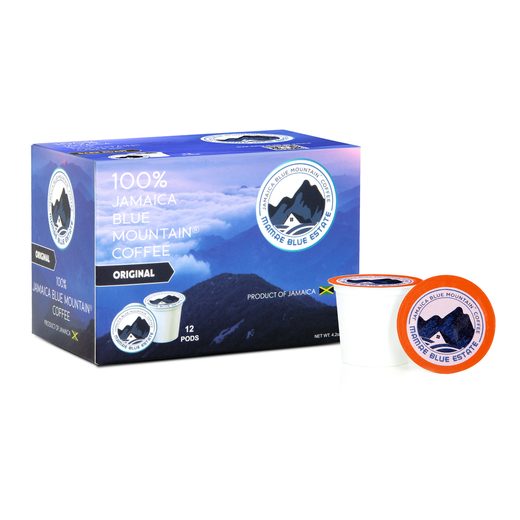
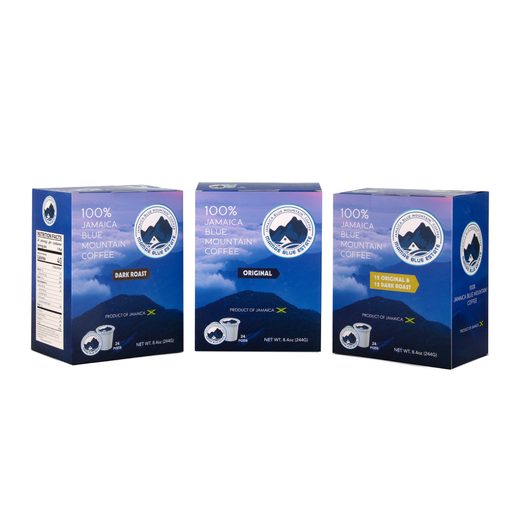
The clearest difference is regulatory. Jamaica Blue Mountain's name is protected as a certification mark, including a rule that any coffee sold as "Jamaica Blue Mountain Blend" must contain at least 30% actual Blue Mountain coffee under 2018 rules. Puerto Rico's best-known regional name, Yauco Selecto, carries no comparable legal weight; its "Café de Puerto Rico" designation is the island's real legal protection, and it remains far less internationally known than Jamaica's. Readers who want to taste the more tightly regulated benchmark directly can start with Jamaica Blue Mountain whole bean, available alongside ground and pod formats in the full shop.
Questions people ask
Why was Puerto Rican coffee famous in the 19th century?
Is Yauco Selecto an official coffee designation?
How much did Hurricane Maria damage Puerto Rico's coffee industry?
Does Puerto Rico export or import more coffee today?
What are the main Puerto Rican coffee growing regions?
What should I check when buying Puerto Rican coffee brands?
Sources
- Coffee production in Puerto Rico — Wikipedia
- Following Hurricane Maria, Farmers in Puerto Rico Find their Resilience — TechnoServe
- Yauco: Puerto Rico's Crown Coffee Region — The Coffee Encyclopedia (PuertoRicoCoffeeShop.com)
- Coffee growers combat climate change — The Weekly Journal (wjournalpr.com)
- Puerto Rican Coffee: Production, Regions, Taste, and Best Brands — Colipse
Taste the benchmark
More in Origins
- Rwandan CoffeeRwanda grows washed, volcanic-soil Bourbon coffee through cooperative washing stations and has used Cup of Excellence auctions to build its specialty reputation.
- Sidama (Sidamo) CoffeeA guide to Sidama coffee: its 2020 statehood, elevation, washed-and-natural processing, flavor, cooperative sales, harvest season, and comparison with Jamaica Blue Mountain.
- Sulawesi Toraja CoffeeToraja coffee grows high in South Sulawesi's Tana Toraja highlands, mostly wet-hulled like Sumatra, with a spicy profile shaped by a long trade tie to Japan.
- Sumatra Coffee: Wet-Hulled, Earthy and UnusualSumatra's wet-hulled processing gives it a heavy, low-acid, earthy cup unlike almost any other coffee origin in the world.
- Taiwan Coffee: Alishan and BeyondTaiwan's small but growing coffee crop, centered on Alishan and Gukeng, now includes Geisha and its own Cup of Excellence program.
- Tanzanian Coffee: Kilimanjaro, Mbeya and MoreTanzania grows arabica near Kilimanjaro and Mbeya, sells much of it through the weekly Moshi auction, and grades it on an 11-tier British-derived scale.
- Tarrazú Coffee: Costa Rica's High-Grown RegionA guide to Tarrazu, Costa Rica's flagship coffee region: its elevation, varieties, processing, flavor, harvest season and how it compares with Jamaica Blue Mountain.
- Timor-Leste CoffeeTimor-Leste's coffee is grown mostly by smallholders, and its Timor Hybrid variety became the genetic source for rust-resistant Catimor coffee worldwide.