Geisha Coffee: Why Panama Geisha Costs So Much
Geisha is a floral Ethiopian coffee variety that became world-famous after a 2004 Panama auction win, and top lots now sell for thousands of dollars a pound.
Panama Geisha (also spelled Gesha) is a coffee variety that traces to Ethiopia and became famous after a Panamanian lot won the 2004 Best of Panama competition. Since then, record-breaking lots have sold at auction for well over $1,000 a pound, and some now sell for more than $10,000 a kilogram, making it one of the world's most expensive coffees.
Gesha or Geisha: which spelling is right?
Both spellings describe the same variety, and there's no single official rule for which to use. The plant takes its name from Gesha, a forest area in southwest Ethiopia where it originated; there is no mountain or town actually called "Geisha." According to Daily Coffee News, the "Geisha" spelling traces to a 1936 reference by a British consular official to coffee from "Geisha Mountain." Panama kept that version: coffee pioneer Don Pachi Serracín reportedly remembered the plant material as "Geisha 2722," and the research center CATIE recorded it in the 1950s as "Arabica – Geisha." Sprudge has noted there's no established convention either way, and a 2014 genetic study by Dr. Sarada Krishnan found Panamanian and Ethiopian plants to be very closely related despite the different spellings. In practice, Ethiopian lots today are more often labeled "Gesha," while Panamanian and other Latin American lots are more often labeled "Geisha" — a convention rather than a rule. For a buyer, either spelling points to the same variety, so it's worth searching and shopping under both when comparing lots from different origins.
Where did Geisha coffee come from? From Ethiopia to Costa Rica to Panama
The variety's documented history runs through three countries before it became famous in a fourth. In 1936, a British consular official named Richard Whalley collected seeds near Gesha in southwest Ethiopia, according to Hacienda La Esmeralda's own account of the variety's history. Those seeds were grown at the Lyamungu research station in Tanzania as accession VC-496, then sent to the Tropical Agricultural Research and Higher Education Center (CATIE) in Costa Rica in 1953, where they were cataloged as T2722. In the 1960s, CATIE distributed the variety to farmers in Panama, mainly for its resistance to coffee leaf rust, World Coffee Research's variety catalog notes. Panamanian farmers largely rejected it at the time: the plant has brittle branches and low yields compared with more productive varieties, so it sat mostly unplanted, or was grown without much attention, for decades. That decades-long detour matters for understanding today's prices — Geisha isn't a newly bred specialty variety engineered for the market, but an old, low-yielding heirloom that happened to be rediscovered once specialty roasters started paying attention to what was in the cup rather than what was easiest to farm.
How Hacienda La Esmeralda put Geisha on the map
Rudolph A. Peterson bought the Esmeralda property in Boquete, Panama, in 1967, and the Peterson family moved into coffee production in the mid-1980s. In 1997 they bought additional land called Jaramillo, on the slopes of the Volcán Barú, and Daniel Peterson planted Geisha there above roughly 1,650 meters (about 5,400 feet). In 2004, the family separated the Jaramillo Geisha into its own lot for the first time and entered it in the Best of Panama competition. Cuppers were struck by what Hacienda La Esmeralda's own account describes as an "explosion of juicy brightness and multi-layered aromatics," unlike the coffee typically expected from Central America. The lot won, and on May 1, 2004 it sold at auction for $21 a pound — an unprecedented price at the time, according to the trade publication STiR. That single lot is the starting point for nearly every Geisha coffee sold today.
Best of Panama auction records: how expensive has Geisha gotten?
Prices for the winning Geisha lots at Panama's annual competition and auction have climbed sharply and unevenly since 2004. The figures below are the winning price per pound or per kilogram in the year given, drawn from specialty-coffee trade press:
| Year | Price | Lot |
|---|---|---|
| 2004 | $21/lb | Hacienda La Esmeralda, Jaramillo (Best of Panama debut) |
| 2006 | $50.25/lb | Hacienda La Esmeralda |
| 2007 | about $130/lb | Hacienda La Esmeralda |
| 2018 | $803/lb | Elida Geisha Green Tip Natural, Lamastus Family Estates |
| 2019 | $1,029/lb | Elida Natural Geisha 1029, Lamastus Family Estates |
| 2021 | $2,568/lb | Natural Geisha, Finca Nuguo |
| 2023 | $10,005/kg (about $4,540/lb) | Washed Geisha, Carmen Estate |
| 2024 | $10,013/kg (about $4,540/lb) | Elida Natural Geisha Vuelta, Lamastus Family Estates |
| 2025 | $30,204/kg (about $13,700/lb) | Washed Geisha, Hacienda La Esmeralda |
A few of these results stand out beyond the headline price. The 2019 Elida lot scored 95.25 points and its 100-pound total sold to Klatch Coffee; CoffeeReview later scored the same coffee 98. The 2023 Carmen Estate lot scored 96.5 and its 25-kilogram total sold for $250,125. The 2025 Esmeralda lot scored 98 points, and a 20-kilogram portion sold for $604,080 to Julith Coffee of Dubai, with the full Best of Panama auction that year totaling about $2.8 million, according to Sprudge. Separately, in a private sale outside the Best of Panama auction, a 7-pound lot from Lamastus Family Estates sold for $6,034 a pound in September 2022, Sprudge reported — a reminder that headline "record" prices can come from different kinds of sales, not always the same competition.
Several factors combine to push these prices so high. The plant's low, unreliable yield means a farm dedicates significant land to a variety that produces less cherry than sturdier options. Only a small share of any harvest scores well enough to be entered as a separate, traceable micro-lot rather than blended into a farm's general offering. And the Best of Panama auction format itself is a public, competitive bidding process among specialty roasters worldwide, each trying to secure a lot that will stand out — a dynamic that tends to push winning prices well above what the same coffee might fetch in a private sale.
What does Geisha coffee taste like, and why?
Cuppers consistently describe Geisha as floral and tea-like rather than heavy or chocolatey, though exact notes vary by lot and processing method. STiR has described Hacienda La Esmeralda's Geisha as showing jasmine, mandarin, and stonefruit. VinePair described the record-setting 2019 Elida lot as "sweet, clean, and fruity," with notes of candied fruit. A sommelier-focused trade primer describes the variety generally as floral, with papaya, peach, jasmine, and bergamot notes. These are tasting opinions, not chemical measurements, and they can vary by harvest and processing.
Growing conditions are usually cited as part of the explanation. Boquete's coffee farms range from roughly 1,000 to 2,800 meters (about 3,300 to 9,200 feet), most commonly around 1,600 meters (about 5,200 feet), on the slopes of Volcán Barú, Panama's highest point at 3,475 meters (about 11,400 feet). The cool air and frequent mist at that elevation slow ripening, which growers and trade sources commonly link to more complex flavor development, though — as with most high-elevation coffee claims — no single study isolates elevation as the sole cause.
Is Geisha only grown in Panama?
No. Panama built the variety's reputation, but Geisha is now grown in several countries, including its original home. In Ethiopia, the Gesha Village Coffee Estate farms about 471 hectares in the West Omo zone, next to the Gori Gesha forest the variety is named for, at 1,900 to 2,100 meters (about 6,200 to 6,900 feet), according to the estate's own account. Geisha lots from Colombia, Honduras, Guatemala, and Taiwan have also placed in competitions such as Cup of Excellence in recent years, though detailed, independently verified scores for those lots are harder to pin down than for Panama's well-documented Best of Panama results.
How much does Geisha coffee cost at retail?
Retail pricing for roasted Geisha is far less documented than the auction results above, and varies enormously by roaster, lot, and processing method. What can be said with confidence is that roasted retail Geisha, even from ordinary (non-record) lots, typically costs several times more than mainstream specialty coffee, reflecting the variety's low yields and the demand the auction records have created. Auction-lot Geisha, roasted in small batches by the winning roaster, commands the highest retail prices of all; Geisha grown outside a competition lot, including from countries other than Panama, tends to cost less while still carrying a premium over most single-origin coffee. For a specific current price and format, see the price details on this page.
How does Geisha coffee compare with Jamaica Blue Mountain?
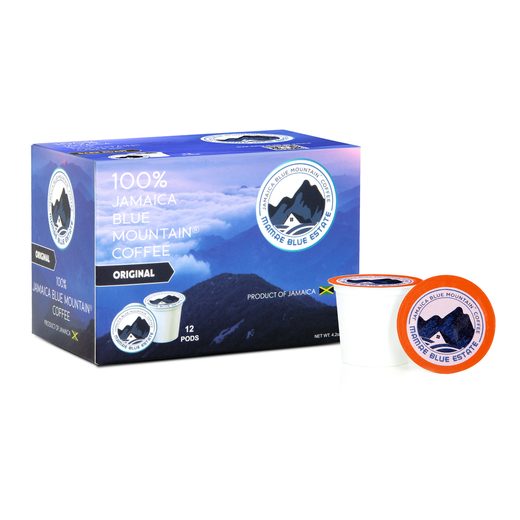
Geisha and Jamaica Blue Mountain (JBM) are both benchmark-setting coffees, but their prestige comes from different places. JBM's status rests on a protected, legally defined growing area in the parishes of St Andrew, St Thomas, and Portland, commonly described as 3,000 to 5,500 feet (roughly 900 to 1,700 meters) of elevation, and on regulated certification: Jamaica's regulator, JACRA, requires that any coffee sold as "Jamaica Blue Mountain Blend" contain at least 30% Blue Mountain coffee. Geisha's status rests instead on a specific 2004 discovery story and more than two decades of competitive Best of Panama auctions that have driven its top lots to extraordinary prices.
The two also taste quite different by reputation. JBM is widely described as mild and balanced, with low bitterness, while Geisha is prized for pronounced floral and fruit notes. One importer's 2023 market overview put JBM's typical retail range around $45 to $140 a pound and estimated it at roughly 0.1% of world coffee output — tiny, but still a larger and steadier supply than a record-setting Best of Panama micro-lot, most of which are sold in quantities of a few dozen pounds. Buyers who want a rare coffee they can find consistently, rather than bid on once a year, might compare the two by trying JBM whole bean alongside a specialty Geisha, or read about other high-priced origins such as kopi luwak, Kona coffee, and Yemeni coffee in the broader guide to the world's most expensive coffees.
Questions people ask
Is it spelled Gesha or Geisha?
Why is Panama Geisha so expensive?
What is the most expensive Geisha coffee ever sold?
Does Geisha coffee only grow in Panama?
What does Geisha coffee taste like?
How does Geisha coffee compare with Jamaica Blue Mountain?
Sources
- Is It Geisha or Gesha? If Anything, It's Complicated (Daily Coffee News, Nov 9 2017)
- Stop Calling It Geisha Already (Sprudge)
- Our Story (Hacienda La Esmeralda)
- Geisha (Panama) variety profile (World Coffee Research)
- Taste, Terroir, and 20 Years of Esmeralda Geisha's Influence (STiR Coffee and Tea)
- Natural Geisha Breaks Best of Panama Auction Record at $803 Per Pound (Daily Coffee News, Jul 20 2018)
- Panama Geisha Coffee Auction Record (VinePair)
- Record-Breaking Panama Gesha Stirs Praise and Criticism at Auction (Fresh Cup)
- Panamanian Geisha Wins Record High Price of $10,005 Per Kilogram (STiR Coffee and Tea)
- Record-Breaking Panama Auction Lot (STiR Coffee and Tea)
- A Panama Gesha Broke Price Records Again (Sprudge, 2025)
- Panama Coffee: A Primer for Sommeliers
- Our Story (Gesha Village Coffee Estate, Ethiopia)
- The World's Most Expensive Coffees (Genuine Origin)
Taste the benchmark
More in Rare coffees
- Jacu Bird CoffeeJacu bird coffee comes from wild Brazilian guans that eat coffee cherries naturally, unlike kopi luwak's often-caged civets.
- Kopi Luwak (Civet Coffee): Price, Taste and the Welfare ProblemKopi luwak is coffee cherries fermented inside a civet's gut, prized for rarity but dogged by documented welfare abuses, widespread fakes, and lukewarm taste reviews.
- St Helena Coffee: Napoleon's Island CoffeeSt Helena's Green Tipped Bourbon coffee traces to 1733 and Napoleon's exile, but today's output is tiny and verified pricing is scarce.
- The World's Most Expensive Coffees, per Pound and per Cup (2026)A sourced, per-pound and per-cup price comparison of the world's rarest coffees, from Black Ivory and auction Panama Geisha to Kona and Jamaica Blue Mountain.
- Black Ivory Coffee: The Elephant Coffee, ExplainedBlack Ivory Coffee is made in Thailand by feeding coffee cherries to rescued elephants, yielding about 500 pounds a year at a steep price.