Sumatra Coffee: Wet-Hulled, Earthy and Unusual
Sumatra's wet-hulled processing gives it a heavy, low-acid, earthy cup unlike almost any other coffee origin in the world.
Sumatra coffee is Indonesian arabica defined less by variety than by how it is processed: wet-hulling, or giling basah, a method almost unique to Sumatra and its neighboring islands. The technique trades the bright acidity of washed coffee for heavy body, low acidity, and earthy, herbal flavor. Trade names like Mandheling and growing regions like Gayo and Lintong describe style and origin, not a single farm or official grade.
Where did Sumatra's coffee industry come from?
Dutch traders brought arabica (the Typica variety) to the Indonesian archipelago in the late 17th century, first to Java and then, as demand grew, to Sumatra's highlands near Lake Toba and later the Gayo highlands around Lake Laut Tawar. That first wave of arabica plantations did not last: in 1876, leaf rust disease swept through the islands and devastated Typica plantings. Growers across much of Indonesia replanted with the rust-resistant robusta species in the early 20th century, and robusta still accounts for the large majority of the country's coffee output today. Sumatra's highland arabica survived because its elevation, cooler and less humid than the lowlands, was less hospitable to the rust fungus, which is part of why the island remains one of Indonesia's main arabica sources.
What is wet-hulled (giling basah) processing?
Most Sumatran coffee is processed by giling basah, "wet-hulling," a method rarely used at commercial scale outside Indonesia. Farmers depulp ripe cherries within a day or two of picking, then let the beans ferment briefly in tanks or sacks before washing off the mucilage. Instead of drying fully to the roughly 10–12% moisture level common elsewhere before milling, Sumatran mills buy parchment coffee wet, at around 35–50% moisture, and hull it immediately, exposing the bare green bean for a shorter final dry-down on tarps or raised beds.
The method grew out of necessity as much as tradition. Sumatra's humid, cloud-covered highlands make full sun-drying slow and risky; parchment coffee left too long can mold before it ever reaches a dry mill. Smallholders, who often need cash quickly, benefit from selling wet parchment sooner rather than waiting weeks for coffee to dry the conventional way.
Processing this way also reshapes the cup. Hulling the bean while it is still moist and soft lets it absorb extra moisture and oxidize slightly during the final drying stage, which mutes acidity and thickens body. That is the direct cause of the heavy, low-acid, earthy profile — cedar, dried herbs, sometimes mushroom or tobacco — that roasters use to describe Sumatran coffee, in contrast to the fruit-forward brightness typical of washed origins.
What does "Mandheling" mean on a coffee bag?
Mandheling is not a farm, a botanical variety, or an official growing region — it is a trade name. It comes from the Mandailing, an ethnic group from the Tapanuli area of North Sumatra who were historically involved in growing and trading coffee from the surrounding highlands. Dutch trading houses picked up the name during the colonial period, and exporters later extended it as a commercial label for wet-hulled arabica from a broad stretch of North Sumatra, well beyond the original Mandailing homeland.
Because "Mandheling" was never formally defined the way a legal appellation would be, it functions today mainly as shorthand for a style: big-bodied, low-acid, earthy Sumatran arabica. Buyers who want a specific, traceable growing area should look for a named region such as Lintong or Gayo rather than relying on "Mandheling" alone.
Where do Gayo and Lintong coffee come from?
Gayo, grown around Lake Tawar on the Gayo Plateau in Aceh province, is Sumatra's largest coffee-growing area, with smallholder farms spread across roughly 1,300 to 1,600 meters (about 4,300–5,200 ft) of elevation. Aceh is also known for long-aged lots — green or parchment coffee rested for months or longer — which specialty buyers seek out for the extra sweetness and reduced acidity that aging develops.
Lintong lies farther south near Lake Toba in North Sumatra, centered on the Lintongnihuta district. It is typically described as sweet and medium-bodied, with lower acidity than Gayo and an earthy, cedar-and-spice character that reviewers often cite as the archetype of classic "Sumatra flavor."
Both regions rely on wet-hull processing and mostly grow arabica, though Sumatra also produces a meaningful amount of robusta at lower elevations, largely for the commercial blend market rather than specialty buyers. Gayo's smallholders are unusually well organized into farmer cooperatives — groups reported to run from a few hundred to more than 2,000 member households — several of which hold organic and Fairtrade certification and export directly rather than through a long chain of middlemen.
What about Java and Sulawesi Toraja?
Indonesia's coffee reputation rests mainly on Sumatra, but two other islands are worth knowing. Java still has government-run estates — Blawan, Kayumas, and Jampit among them — that grow washed arabica in a cleaner, more refined style than Sumatra: medium body, mild spice, dark chocolate, and gentler acidity. (Indonesia is also the source of kopi luwak, the civet-processed coffee, which is a separate story from Sumatra's mainstream wet-hulled arabica.)
Sulawesi, farther east, grows Toraja coffee (sometimes labeled Kalossi) on volcanic soil around Mount Sesean at 1,400 to 1,900 meters (roughly 4,600–6,200 ft). Like Sumatran coffee, Toraja is usually wet-hulled, which gives it a silky body and moderate acidity, but its cup leans toward warm spice — cinnamon, cardamom, sometimes black pepper — alongside chocolate and almond notes, landing somewhere between Sumatra's earthiness and Java's cleaner profile. In the past decade, a handful of importers have worked directly with Toraja farmer cooperatives on better picking and drying standards, and some resulting lots have scored above 85 points on the Specialty Coffee Association's 100-point cupping scale, the threshold generally used to call a coffee "specialty grade."
| Region | Island | Typical elevation | Character |
|---|---|---|---|
| Gayo (Aceh) | Sumatra | 1,300–1,600 m (4,300–5,200 ft) | Full body, spice, long-aged lots |
| Lintong | Sumatra | Highlands near Lake Toba | Sweet, medium body, cedar and spice |
| Mandheling (trade name) | Sumatra | Varies by lot | Heavy body, low acid, earthy |
| Toraja | Sulawesi | 1,400–1,900 m (4,600–6,200 ft) | Silky body, warm spice, chocolate |
| Java estates | Java | Varies by estate | Cleaner, medium body, mild spice |
What does Sumatra coffee taste like?
Across regions, Sumatran coffee is consistently described by roasters and reviewers as heavy-bodied and low in acidity, with flavors running to cedar, dried herbs, and dark chocolate, and, in more intense lots, mushroom, leather, or tobacco. That profile comes mainly from wet-hull processing rather than variety alone, which is why Sumatra, Lintong, Mandheling, and even Sulawesi Toraja share a family resemblance despite coming from different farms and islands.
It is a divisive style. Drinkers who prize the bright, fruit-driven cups typical of washed African coffees such as Kenyan or Ethiopian arabica often find Sumatra murky or funky by comparison. Drinkers looking for a rich, low-acid coffee for dark roasting or espresso blending tend to seek Sumatra out specifically for those same qualities.
Grading terms on a bag of Sumatra coffee mostly describe defect count and pick quality rather than flavor directly: labels like Grade 1, "double-picked," or "triple-picked" (TP) signal how thoroughly beans were sorted for size and defects before export, and cleaner grades generally correlate with a more consistent cup, though not necessarily a fundamentally different flavor profile than a well-processed Grade 1 lot.
How does Sumatra coffee compare to Jamaica Blue Mountain?
Sumatra and Jamaica Blue Mountain sit near opposite ends of the flavor spectrum. Blue Mountain coffee is grown, per Jamaica's coffee regulator, within a legally defined area of the Blue Mountains spanning the parishes of St Andrew, St Thomas, and Portland, commonly at elevations of 3,000–5,500 ft, though that range describes custom rather than a legal boundary. It is widely described as mild and balanced, with low bitterness — the product of conventional wet (washed) processing that preserves clarity in the cup.
Sumatra's giling basah method does the opposite on purpose: it trades clarity for body and earthy intensity. Where Blue Mountain is prized for restraint, Sumatra is prized for weight and boldness. Trademark rules differ too — Jamaica's regulator requires a coffee labeled "Jamaica Blue Mountain Blend" to contain at least 30% actual Blue Mountain coffee under its 2018 rules, a legal floor that Sumatra's informal trade names like Mandheling simply do not have.
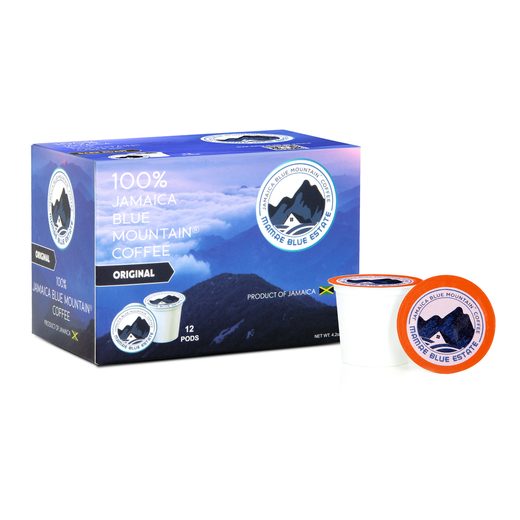
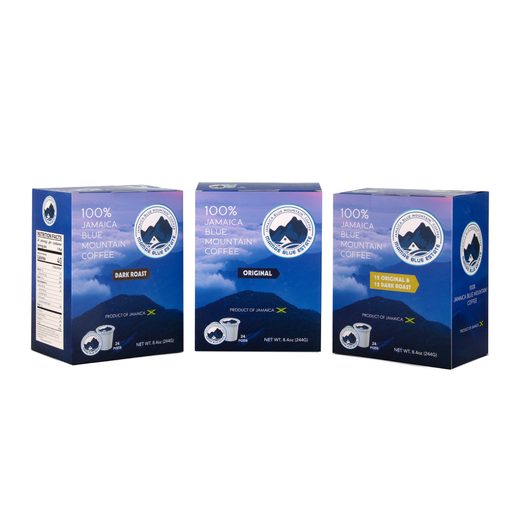
The two origins make an instructive side-by-side cupping for anyone trying to understand how processing, and not just where beans are grown, shapes flavor. Readers curious about the benchmark can compare directly with Jamaica Blue Mountain whole bean, or browse the full lineup to see whole bean, ground, and pod formats side by side.
Questions people ask
What is wet-hulled (giling basah) coffee?
Is Mandheling a specific coffee farm or region?
What's the difference between Gayo and Lintong coffee?
How is Sulawesi Toraja coffee different from Sumatra coffee?
Is Sumatra coffee low in acidity?
How does Sumatra coffee compare with Jamaica Blue Mountain?
Sources
- Wet-Hulled Process | Cafe Imports
- Sumatran Coffee Processing: Why You Should Know Giling Basah — Sweet Maria's Coffee Library
- Mandheling — Wikipedia
- Sumatra Coffee Regions, Aceh, Lintong — Sweet Maria's Coffee Library
- A Guide to Indonesia Sumatra Coffee Flavours — Seven Sisters Coffee Co
- Sulawesi Coffee Beans — Espresso & Coffee Guide
- Indonesia's Coffee Story: Java, Sumatra & Sulawesi Explained — Overdose Coffee
- Indonesian Coffee: Exploring Its Rich History — Coffeeness
- The Power of Public-Private Partnerships: Speciality Coffee Farmers Scaling Up in Indonesia — Root Capital
- Cooperative built by young farmers: A new future for Gayo Coffee — Fairtrade
Taste the benchmark
More in Origins
- Taiwan Coffee: Alishan and BeyondTaiwan's small but growing coffee crop, centered on Alishan and Gukeng, now includes Geisha and its own Cup of Excellence program.
- Tanzanian Coffee: Kilimanjaro, Mbeya and MoreTanzania grows arabica near Kilimanjaro and Mbeya, sells much of it through the weekly Moshi auction, and grades it on an 11-tier British-derived scale.
- Tarrazú Coffee: Costa Rica's High-Grown RegionA guide to Tarrazu, Costa Rica's flagship coffee region: its elevation, varieties, processing, flavor, harvest season and how it compares with Jamaica Blue Mountain.
- Timor-Leste CoffeeTimor-Leste's coffee is grown mostly by smallholders, and its Timor Hybrid variety became the genetic source for rust-resistant Catimor coffee worldwide.
- Ugandan CoffeeUganda is East Africa's largest coffee exporter, trading mostly robusta while Bugisu and Rwenzori arabica are grown high and graded by screen size.
- Venezuelan CoffeeNineteenth-century Venezuela ranked among the world's top coffee exporters; price controls and economic crisis have since collapsed its once-prized Andean arabica trade.
- Yemeni Coffee and the Port of MochaYemen was the first place coffee was grown and traded commercially, and its Red Sea port, Mocha, gave the world both a coffee word and a chocolate flavor name.
- Yirgacheffe Coffee: Ethiopia's Most Famous RegionA guide to Yirgacheffe, Ethiopia's best-known coffee district: its elevation and cooperatives, floral washed flavor, harvest timing, and how it compares with Jamaica Blue Mountain.