Mexican Coffee: Chiapas, Veracruz, Oaxaca and Café de Olla
Mexican coffee comes mostly from small indigenous farms in Chiapas, Veracruz, Oaxaca and Puebla, prized for a mild, low-acid, everyday cup.
Mexican coffee is grown mostly by small, often indigenous farmers across a handful of southern and eastern states, historically sold under the high-grown "Altura" label, and enjoyed at home partly as café de olla, a cinnamon-and-piloncillo brew with roots in the Mexican Revolution. It's a mild, everyday coffee culture rooted in small family farms rather than one built around a single famous estate.
Where is Mexican coffee grown?
Coffee is grown across 14 of Mexico's states, but four do almost all of the work. In the 2025/26 marketing year, Chiapas accounted for about 37% of national production, Veracruz around 24%, Puebla about 22%, and Oaxaca roughly 8%, according to USDA reporting — together well over 90% of the country's coffee, grown across some 663,000 harvested hectares nationwide.
Chiapas, bordering Guatemala in Mexico's south, is the country's single largest producer; its Soconusco district in particular is well suited to arabica. Veracruz, on the Gulf coast, climbs quickly from coastal lowlands into mountainous terrain favorable to arabica. Oaxaca, in the south, grows coffee on the southern slopes of its central mountains, including the well-known Pluma coffee from the Oaxaca Pluma district. Puebla, in central Mexico, has become one of the country's most productive states per hectare — recent USDA figures put its yield at roughly 12 bags per hectare, more than double the national average of under 6 — helped by government-backed replanting programs and favorable growing conditions.
How many Mexican coffee farmers are smallholders?
Mexico's coffee industry is built overwhelmingly around small, family-run farms rather than large estates. Mexico's most recent agricultural census counted roughly 515,000 coffee producers, of whom about 85% are indigenous Mexicans and 95% farm less than three hectares (about 7.4 acres). That structure — hundreds of thousands of very small growers rather than a smaller number of large plantations — shapes almost everything else about the industry, from how coffee is picked (largely by hand, on terrain often too steep for machines) to how it reaches export markets, frequently through cooperatives that pool small lots for sale.
This fragmented structure is partly a legacy of policy change: Mexico's state coffee institute, INMECAFE, which had supported growers with credit, technical help, and guaranteed prices, was dismantled in 1989. The years that followed left many smallholders exposed to volatile world prices with less institutional support, and cooperatives grew in importance partly to fill that gap. Producer organizations formed in the years after INMECAFE's dismantling now represent tens of thousands of small growers across Chiapas, Oaxaca, and neighboring states, handling much of the pooling, milling, and export logistics that individual smallholders could not manage on their own.
Is Mexican coffee organic?
A meaningful share of it is, at least by formal certification. Mexico's Department of Agriculture and Rural Development (SADER) has put the share of producers growing certified-organic coffee at up to 8%, and Mexico is regularly cited among the world's leading exporters of organic-certified coffee. The real organic footprint is likely larger still: many smallholder farms simply cannot afford synthetic fertilizers and pesticides, so in practice they grow coffee organically by default even without paying for formal certification — a distinction worth knowing if a bag lacks an organic seal but still comes from a small Chiapas or Oaxaca cooperative.
What does the "Altura" grade mean?
Altura is Spanish for "altitude," and on a bag of Mexican coffee it signals high-grown arabica rather than a specific farm or region. It generally covers coffee grown above roughly 900 m (about 3,000 ft), the elevation at which slower cherry ripening starts to concentrate sugars and acids in the bean; some sellers use "Strictly High Grown" for coffee above roughly 1,200 m (about 3,900 ft) as a step above ordinary Altura. Because the term is used descriptively rather than under one legal standard, it functions more like Sumatra's "Mandheling" than like a regulated appellation — a useful signal of growing conditions, not a guarantee of a specific taste or farm of origin.
What is café de olla?
Café de olla is a traditional Mexican preparation — coffee simmered with cinnamon (canela) and piloncillo, an unrefined cane sugar with a deep, molasses-like sweetness — rather than a growing region or bean type. Its name comes from the clay pot, or olla de barro, it was traditionally brewed in, which is said to add its own earthy character to the drink. The preparation is widely associated with the Mexican Revolution (1910–1920), when soldaderas, the women who cooked for and supported troops in the field, stretched scarce, often re-brewed coffee by sweetening it with piloncillo and warming it with spice.
Café de olla remains a cultural touchstone in Mexican coffee culture today, more often made at home or served as a specialty than sold as a packaged bean style. It's a reminder that how Mexican coffee is prepared can be as distinctive as where it's grown, even though the beans used are the same Altura-grade arabica described on export bags.
What does Mexican coffee taste like?
Mexican coffee is generally described as mild and light-to-medium bodied, with low to moderate acidity and flavors that run toward nuts, chocolate, and brown sugar, sometimes with a light citrus or stone-fruit note. It's a gentler profile than the bright, wine-like cups associated with some other Latin American origins, which is part of why Mexican coffee has long been a familiar, approachable everyday choice north of the border. Flavor still varies by state: Chiapas coffee is often described as having brighter acidity and chocolate notes, Veracruz as smooth and balanced, and Oaxaca as more complex and fruit-forward, so a specific regional bag can taste noticeably different from generic "Mexican coffee" sold without a state or altitude noted. Roast level shifts the picture further — a light roast lets a Chiapas or Oaxaca lot's acidity and fruit come through, while a medium or dark roast, more common in traditional Mexican coffee drinking, leans into nuttiness and sweetness and mutes any brightness the green coffee had to begin with.
How does Mexican coffee compare with Jamaica Blue Mountain?
Mexican Altura coffee and Jamaica Blue Mountain both trade on altitude, but the comparison mostly ends there. Jamaica Blue Mountain is grown, per Jamaica's coffee regulator, in a single legally defined area within the parishes of St Andrew, St Thomas, and Portland, commonly cited at 3,000–5,500 ft, and is widely described as mild and balanced with low bitterness. Mexican Altura coffee, by contrast, is a descriptive, unregulated term applied across 14 states and hundreds of thousands of small farms, so its quality and character vary far more from bag to bag than a single named Blue Mountain estate.
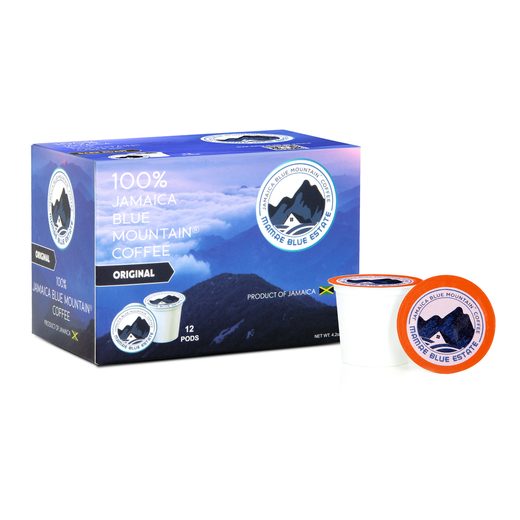
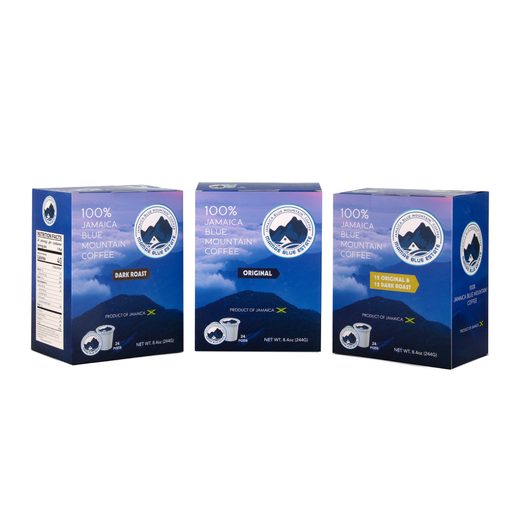
Scale is the other big difference. Mexico's coffee economy rests on roughly half a million mostly indigenous smallholders farming a few hectares each, while Jamaica Blue Mountain comes from a comparatively small, tightly bounded region where the name itself carries legal weight — a coffee sold as "Jamaica Blue Mountain Blend" must contain at least 30% actual Blue Mountain coffee under 2018 rules. Readers who want to taste that more tightly regulated benchmark directly can start with Jamaica Blue Mountain whole bean, available alongside ground and pod formats in the shop.
Questions people ask
Where does most Mexican coffee come from?
Are most Mexican coffee farms small or large?
Is Mexican coffee usually organic?
What does "Altura" mean on Mexican coffee?
What is café de olla?
How does Mexican coffee compare with Jamaica Blue Mountain?
Sources
- Coffee production in Mexico — Wikipedia
- Mexico Coffee Report: Production Up Slightly while Soluble Exports Surge — Daily Coffee News
- Coffee Origins: A Guide to Mexico — Perfect Daily Grind
- The History of Café de Olla — El Ojo del Lago
- Mexican Coffee Beans: Regions, Production, Flavors, and Best Brands — Colipse
Taste the benchmark
More in Origins
- Monsooned Malabar CoffeeMonsooned Malabar exposes Indian coffee to monsoon humidity for months, replicating old sailing-ship voyages and producing a low-acid, heavy-bodied cup used in espresso.
- Myanmar CoffeeMyanmar's small arabica coffee industry centers on Shan State and the hill town of Pyin Oo Lwin, and now operates inside a currency-disrupted economy.
- Nepal CoffeeNepal's smallholder, largely organic coffee farms span more than 40 mid-hill districts, producing a few hundred tonnes a year at high altitude.
- Nicaraguan CoffeeNicaragua grows a brighter, citric and floral coffee across Jinotega, Matagalpa and the rising Nueva Segovia region.
- Panamanian Coffee Beyond Geisha: Boquete and VolcánBeyond its famous Geisha, Panama's Boquete and Volcán regions mostly grow Catuaí, Caturra and Mundo Novo on small farms and old estates.
- Papua New Guinea CoffeePapua New Guinea grows syrupy, often fruity Arabica across Highlands smallholder gardens and estates, producing an estimated 45,371 tonnes in 2023.
- Peruvian CoffeePeru grows a large, mostly organic coffee crop on tiny smallholder farms across Cajamarca, Junín, Cusco and Puno.
- Philippine Coffee and Kapeng BarakoThe Philippines briefly led world coffee exports before an 1880s rust outbreak, and today grows barako, arabica and robusta across Luzon and Mindanao.