Kopi Luwak (Civet Coffee): Price, Taste and the Welfare Problem
Kopi luwak is coffee cherries fermented inside a civet's gut, prized for rarity but dogged by documented welfare abuses, widespread fakes, and lukewarm taste reviews.
Kopi luwak is coffee made from beans that have passed through the digestive tract of the Asian palm civet, a cat-sized mammal native to South and Southeast Asia. Marketed as one of the world's rarest coffees, it can sell for $80 to $100 a cup in the United States, but its supply chain has drawn sustained welfare and fraud investigations.
What is kopi luwak, and how is it made?
The Asian palm civet (Paradoxurus hermaphroditus) eats ripe coffee cherries in the wild, selecting the ripest fruit as it forages at night. Enzymes in its digestive tract ferment the beans as they pass through, and the beans are collected from its droppings, then washed, dried, and roasted like any other coffee. A 2020 study published in PeerJ found that a bacterium called Gluconobacter makes up roughly two-thirds of the civet gut microbiome during this process, and that the resulting beans end up with more malic and citric acid, less protein, and more lipids and carbohydrates than beans that were never eaten. The researchers suggested these chemical shifts are the likely biological basis for any taste difference between kopi luwak and ordinary coffee, though the practical effect on flavor in the cup is still debated, as the taste section below shows.
The practice is usually traced to Dutch colonial Java in the 19th century. By common historical accounts, plantation workers were forbidden from picking cherries for their own use, so they gathered beans from civet droppings on the plantation floor instead and roasted them at home out of necessity. That origin story later became a marketing hook rather than a hidden detail, and kopi luwak is now sold openly as a luxury item worldwide, including through civet "coffee tours" set up for visitors in Bali and Sumatra, where guests can see the animals and sample the coffee on site.
Because the process depends on a wild animal's foraging and digestion rather than a controllable industrial step, output from any single collector is small and inconsistent by nature. That built-in scarcity is a large part of why kopi luwak commands a premium price in the first place, well before questions of fraud or animal welfare enter the picture.
Wild civets versus caged civets: what welfare investigations found
Kopi luwak began as a byproduct of wild civets foraging on their own. Rising demand has since pushed much of the supply toward caged production, where civets are confined and fed a diet of mostly or only coffee cherries so their droppings can be collected on a schedule. Several independent investigations have documented poor conditions on caged farms:
- The Guardian reported in November 2012 that Chris Shepherd of the wildlife-trade monitoring network TRAFFIC Southeast Asia described conditions on some farms as "awful, much like battery chickens."
- A 2013 BBC investigation found that coffee marketed in Europe as wild-sourced kopi luwak was in fact coming from caged civets. Several UK retailers, including Harrods and Selfridges, subsequently pulled the product from sale, according to the charity World Animal Protection.
- National Geographic reported in 2016 on a joint study by Oxford University's Wildlife Conservation Research Unit and World Animal Protection, published in the journal Animal Welfare, which assessed about 50 civets across 16 farms in Bali. All 16 farms failed to meet basic welfare standards, with wire-floored cages causing foot injuries, malnourishment, and a lack of clean water.
- PETA Asia reported in 2024 that civets on farms in Java were kept in small, dirty cages, showed signs of injury, and were force-fed coffee cherries.
- Sentient Media reported in 2019 that farmers themselves described exclusively wild-sourced kopi luwak as "nearly impossible" to produce at real volume, and that some farms admitted to labeling caged-civet coffee as wild.
Partly as a result, the Rainforest Alliance advises against buying kopi luwak, and the certifier UTZ does not certify it at all, National Geographic reported in 2016. None of this means every farm mistreats its animals, and some producers do rely only on beans gathered from genuinely free-ranging civets. The problem, as the investigations above describe it, is that a shopper has no reliable way to tell a wild-collected bag from a caged one just by looking at the label.
Is kopi luwak real, or is it often fake?
The high price and largely unverifiable supply chain have made kopi luwak a frequent target for fraud: coffee labeled "wild" that was actually farmed, or blends cut with beans that never passed through a civet at all. A peer-reviewed 2013 study in the Journal of Agricultural and Food Chemistry, led by researchers at Osaka University working with Indonesian partners, identified chemical markers — including levels of citric and malic acid and the ratio of inositol to pyroglutamic acid — that lab equipment can use to distinguish genuine kopi luwak from blends and fakes. That a dedicated authentication method exists at all is a sign of how real the adulteration problem is thought to be, though there's no reliable public figure for what share of kopi luwak sold today is fake.
For an ordinary buyer without access to a lab, that leaves few good options besides trusting a specific seller's sourcing claims. Tourist-facing "civet coffee" stands, in particular, are a common setting for the BBC's 2013 finding that caged-civet beans were being sold as wild. A receipt, a farm name, or a specific collection method described in detail is a weak substitute for lab verification, but it is at least more information than a bag that simply says "wild kopi luwak" with no further detail.
What does kopi luwak taste like?
Assessments from coffee professionals vary widely and often run negative. Washington Post writer Tim Carman, reviewing kopi luwak in 2012, said it reminded him of ordinary supermarket coffee and described it as "stale" and "lifeless." Supporters describe it instead as smooth and low in bitterness, similar to claims made about many other coffees, but there's no strong consensus among reviewers that kopi luwak tastes better than coffee produced by conventional means.
How much does kopi luwak cost?
Prices vary widely by seller, roast, and where it's served. National Geographic reported in 2016 that a single cup could sell for up to $80 in the United States; Sentient Media put the ceiling closer to $100 a cup in 2019. Those are café and specialty-retail prices rather than one fixed market rate, and, as with the wild-versus-caged question, the price alone doesn't tell a buyer how a given batch was produced. Sentient Media's 2019 reporting also noted that farmers who genuinely rely on wild foraging cannot easily scale up supply to meet demand, which is one reason caged production, and the welfare and fraud problems that come with it, has spread.
Is kopi luwak worth it?
On taste alone, most professional reviewers are unconvinced that kopi luwak justifies its price. Its fame rests mainly on novelty and rarity rather than cupping scores, and outlets including National Geographic and Sentient Media have both raised welfare and authenticity concerns as reasons for buyers to think twice. A buyer weighing whether to try it is really weighing three separate questions at once: whether the story appeals to them, whether they can trust a specific seller's wild-versus-caged claims, and whether they expect the coffee itself, independent of the story, to taste notably better than a well-sourced cup from a known origin. On that last point, the review evidence above is thin.
Readers curious about genuinely rare, high-scoring coffees whose prices are tied to auction results and cupping scores rather than a digestive process might look instead at Geisha coffee, Kona coffee, or the wider roundup of the world's most expensive coffees, all of which built their reputations through documented competitions and published scores rather than novelty alone.
How does kopi luwak compare with Jamaica Blue Mountain coffee?
Jamaica Blue Mountain (JBM) and kopi luwak are both marketed as rare, but the similarity mostly ends there. JBM's rarity is a matter of geography and regulation: it can only be grown in a legally defined part of Jamaica's Blue Mountains, in the parishes of St Andrew, St Thomas, and Portland, at what's commonly described as 3,000 to 5,500 feet (roughly 900 to 1,700 meters) of elevation, though that range is not itself a legal boundary. Jamaica's regulator, JACRA, also requires that any coffee sold as "Jamaica Blue Mountain Blend" contain at least 30% Blue Mountain coffee. Kopi luwak's rarity, by contrast, comes from a labor-intensive, hard-to-verify collection process — exactly the weak point that has opened the door to fraud described above.
On flavor, JBM is widely described as mild and balanced with low bitterness, a reputation that, like kopi luwak's, rests on attributed tasting notes rather than a single lab-measured standard. Where the two diverge most is supply-chain transparency: JBM production is licensed and traceable to certified growers and dealers, while kopi luwak's wild-versus-caged question is, per National Geographic's 2016 reporting, now essentially unanswerable at the point of sale.
The two coffees also earned their reputations in different eras and for different reasons. JBM built its name over more than a century of export to Japan and other markets, backed by a licensing system that predates most modern origin marketing. Kopi luwak's fame is newer and leans harder on the novelty of the production method itself. Neither comparison is a knock on legitimate wild-collected kopi luwak, which does exist; it's a reminder that "rare" and "expensive" are not, on their own, evidence of quality. Readers who want a rare coffee with a more traceable supply chain can start with the whole bean collection, or read about other storied origins such as Yemeni coffee.
Questions people ask
Is kopi luwak really made from civet droppings?
Is kopi luwak cruel to civets?
How can you tell if kopi luwak is fake?
What does kopi luwak taste like?
How much does kopi luwak cost?
Is kopi luwak better than Jamaica Blue Mountain coffee?
Sources
- Metabolite and gut-microbiome study of civet coffee (kopi luwak) (PeerJ, via PMC, 2020)
- Civet coffee investigation exposes abuse claims (The Guardian, Nov 19 2012)
- Leading retailers pull civet coffee from shelves (World Animal Protection, Jan 16 2014)
- Investigation into captive civets and the kopi luwak trade in Indonesia (National Geographic, Apr 29 2016)
- Kopi Luwak coffee cruelty investigation (PETA Asia, 2024)
- The true cost of producing the world's most expensive coffee (Sentient Media, Oct 5 2019)
- New method to authenticate the world's costliest coffee (Asian Scientist, Aug 2013, on Jumhawan et al., J. Agric. Food Chem. 2013)
- Washington Post denounces kopi luwak (Sprudge, 2012, citing Tim Carman)
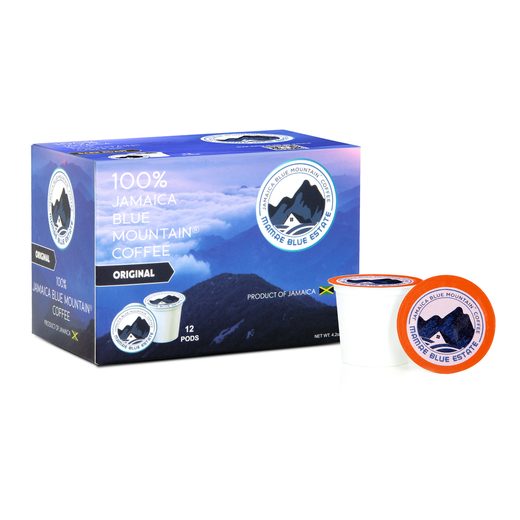
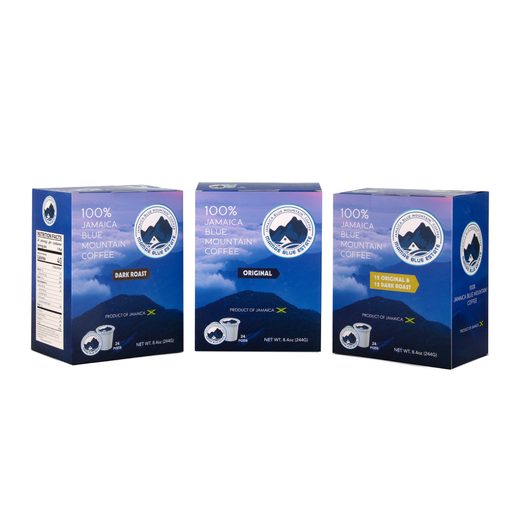
Taste the benchmark
More in Rare coffees
- St Helena Coffee: Napoleon's Island CoffeeSt Helena's Green Tipped Bourbon coffee traces to 1733 and Napoleon's exile, but today's output is tiny and verified pricing is scarce.
- The World's Most Expensive Coffees, per Pound and per Cup (2026)A sourced, per-pound and per-cup price comparison of the world's rarest coffees, from Black Ivory and auction Panama Geisha to Kona and Jamaica Blue Mountain.
- Black Ivory Coffee: The Elephant Coffee, ExplainedBlack Ivory Coffee is made in Thailand by feeding coffee cherries to rescued elephants, yielding about 500 pounds a year at a steep price.
- Geisha Coffee: Why Panama Geisha Costs So MuchGeisha is a floral Ethiopian coffee variety that became world-famous after a 2004 Panama auction win, and top lots now sell for thousands of dollars a pound.
- Jacu Bird CoffeeJacu bird coffee comes from wild Brazilian guans that eat coffee cherries naturally, unlike kopi luwak's often-caged civets.