Black Ivory Coffee: The Elephant Coffee, Explained
Black Ivory Coffee is made in Thailand by feeding coffee cherries to rescued elephants, yielding about 500 pounds a year at a steep price.
Black Ivory Coffee is made in Thailand by feeding ripe Arabica cherries to rescued elephants, then hand-collecting the beans after they pass through the animals' digestive tracts. It is one of the rarest coffees sold anywhere, with a single producer reporting only about 500 pounds harvested each year, priced accordingly.
Who Founded Black Ivory Coffee?
Black Ivory Coffee was founded by Blake Dinkin, a Canadian entrepreneur who spent nine years developing the process before the first batch reached market in 2012, according to Wikipedia's summary of the company's history. That first harvest produced only about 150 kilograms, or roughly 330 pounds, of beans, a scale the operation has stayed close to ever since.
How Is Black Ivory Coffee Made?
Workers hand-pick ripe Arabica cherries from farms in Thailand's northern highlands, then feed them to elephants alongside their regular diet of grasses, rice, bananas and tamarind. The cherries pass through each elephant's digestive tract over roughly 10 to 72 hours, and mahouts, the elephants' caretakers, collect the beans from the animals' dung once the fruit has been digested away.
The conversion rate is steep: producers report that it takes about 33 kilograms of coffee cherries picked from the trees to yield just 1 kilogram of finished Black Ivory beans, since much of what an elephant eats is never recovered intact. That ratio, more than any single step in the process, is what keeps annual output so small.
The Elephant Refuge Behind the Coffee
Black Ivory's beans were first produced at the Golden Triangle Asian Elephant Foundation in Chiang Saen district, in far northern Thailand, before production shifted to a refuge in Surin province, in the country's northeastern Isan region. The company has described around 20 elephants as contributing to the coffee at any given time. Many of the animals involved are former working or tourism elephants now living at the refuge, rather than animals bred specifically for coffee production.
How Much Black Ivory Coffee Is Produced Each Year?
Black Ivory Coffee Company reports harvesting only about 500 pounds of usable beans a year worldwide, a figure it has repeated consistently in its own marketing. That makes it one of the smallest-volume coffees sold anywhere, smaller by weight than what many single family-run coffee farms produce in a single season.
How Much Does Black Ivory Coffee Cost?
Direct from the producer, Black Ivory has sold "The Treasure," a 40-gram package, for $170, and "The Companion," a half-pound package, for $900 — prices that work out to roughly $1,800 to $1,928 a pound in 2026. Some hotels have reportedly served it by the cup for about $50, according to Wikipedia's summary of press coverage. No independent third-party retail listing was found to check those producer-quoted figures against.
What Does Black Ivory Coffee Taste Like?
Black Ivory's producer describes the coffee as smooth and mild, with less bitterness than conventional Arabica, attributing the change to enzymes at work during the elephants' digestion — the same broad mechanism claimed for other animal-processed coffees such as kopi luwak. As with those other coffees, that description comes from the company itself rather than a published, independent tasting panel, so it is best read as a marketing claim rather than a settled fact.
Is Black Ivory Coffee Ethical?
Black Ivory Coffee Company describes the operation as resting on a strong commitment to animal welfare, and Wikipedia's article on the coffee states that eating coffee cherries does not adversely affect the elephants' health.
What is better documented is the refuge model itself: the elephants involved are described as rescued or formerly working animals living at a single, named location, which makes the operation easier to trace to a specific source than many other animal-processed foods.
How Does Black Ivory Compare With Kopi Luwak?
Black Ivory and kopi luwak share the same basic idea — coffee cherries fermented inside an animal's digestive tract before the beans are recovered — but the animal, the scale and the welfare record differ sharply. Most kopi luwak sold today comes from Asian palm civets kept in small cages, a practice that independent investigations have repeatedly criticized. Black Ivory's elephants, by contrast, are kept at a single named refuge in far smaller numbers, though as with kopi luwak, most of what a buyer knows about the animals' welfare ultimately comes from the seller rather than an independent inspection. Readers weighing the two, along with other high-priced rarities, may also want the wider view on our most expensive coffees page or the rare coffees hub.
Black Ivory Coffee vs. Jamaica Blue Mountain
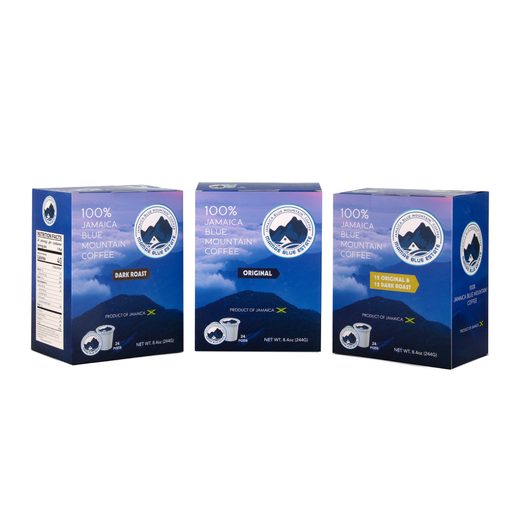
Black Ivory and Jamaica Blue Mountain are rare for very different reasons. JBM's scarcity comes from geography and regulation: it can only be grown in a legally defined part of Jamaica's Blue Mountains, and its trade is licensed and certified. Black Ivory's scarcity comes from a labor-intensive production process capped by how much fruit a small group of elephants can eat and pass in a season. JBM is widely described as mild and balanced with low bitterness; Black Ivory's producer describes a smoother, less bitter cup of its own, attributing the change to the same enzymatic digestion process claimed for other animal-processed coffees. Both trade heavily on rarity, but only one of them is grown, harvested and traded at anything resembling ordinary commercial scale.
Questions people ask
Is Black Ivory Coffee from Guatemala?
How much does Black Ivory coffee cost?
Who founded Black Ivory Coffee?
Is Black Ivory Coffee cruel to elephants?
Sources
Taste the benchmark

More in Rare coffees
- Geisha Coffee: Why Panama Geisha Costs So MuchGeisha is a floral Ethiopian coffee variety that became world-famous after a 2004 Panama auction win, and top lots now sell for thousands of dollars a pound.
- Jacu Bird CoffeeJacu bird coffee comes from wild Brazilian guans that eat coffee cherries naturally, unlike kopi luwak's often-caged civets.
- Kopi Luwak (Civet Coffee): Price, Taste and the Welfare ProblemKopi luwak is coffee cherries fermented inside a civet's gut, prized for rarity but dogged by documented welfare abuses, widespread fakes, and lukewarm taste reviews.
- St Helena Coffee: Napoleon's Island CoffeeSt Helena's Green Tipped Bourbon coffee traces to 1733 and Napoleon's exile, but today's output is tiny and verified pricing is scarce.
- The World's Most Expensive Coffees, per Pound and per Cup (2026)A sourced, per-pound and per-cup price comparison of the world's rarest coffees, from Black Ivory and auction Panama Geisha to Kona and Jamaica Blue Mountain.