Jamaica Blue Mountain Coffee: Where It Grows and What Makes It Genuine
Jamaica Blue Mountain is a legal name, not a flavor style: under Jamaica's 2018 regulations it means coffee grown inside a mapped area of the Blue Mountains, and only licensed, certified coffee may carry it.
Jamaica Blue Mountain coffee is defined by law, not by taste or marketing. Jamaica's 2018 commodity regulations say the name means coffee grown in the Blue Mountain area of Jamaica, an area drawn on a named boundary line, and they make it an offence to sell or export coffee under a "Blue Mountain" name without written authority from the national regulator.
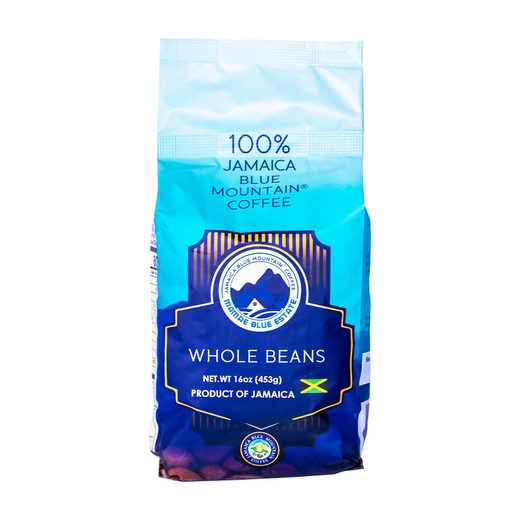
What does "Jamaica Blue Mountain" legally mean?
The Jamaica Agricultural Commodities Regulatory Authority Regulations, 2018, published in the Jamaica Gazette on March 2, 2018, define four protected coffee names. "Jamaica Blue Mountain Coffee" is coffee grown in the Blue Mountain area of Jamaica. "Jamaica Blue Mountain Blend Coffee" is any coffee or coffee product in which Jamaica Blue Mountain coffee makes up not less than 30% of the weight. "Jamaica High Mountain Supreme Coffee" covers the premium grades of Jamaican coffee grown outside the Blue Mountain area, and a "High Mountain Supreme Blend" must contain at least 30% of that coffee by weight.
The same regulations, in regulation 21, bar anyone not authorized in writing by the regulator from buying, selling or exporting any other coffee under a name containing the words "Blue Mountain" or "High Mountain", or from carrying on any trade activity that uses those words. The maximum penalty on summary conviction is a fine of two million Jamaican dollars, or up to twelve months' imprisonment if the fine is not paid.
| Protected name | What the 2018 regulations require |
|---|---|
| Jamaica Blue Mountain Coffee | Grown in the Blue Mountain area defined in the regulations' First Schedule |
| Jamaica Blue Mountain Blend Coffee | At least 30% Jamaica Blue Mountain coffee by weight |
| Jamaica High Mountain Supreme Coffee | Premium grades of Jamaican coffee grown outside the Blue Mountain area |
| Jamaica High Mountain Supreme Blend Coffee | At least 30% Jamaica High Mountain Supreme coffee by weight |
Where exactly is the Blue Mountain coffee area?
The First Schedule of the 2018 regulations traces the area as a loop of named places, starting at Skibo and running through Swift River, Chelsea, Durham (Samba Hill), Belleview, along the western slope of the John Crow Mountains to Cedar Grove, then Font Hill, Ramble, Good Hope, Dallas, Industry Village, Maryland, Golden Spring, Brandon Hill and Tranquility before returning to Skibo. The range itself sits between Kingston to the south and Port Antonio to the north and rises to about 2,256 meters (7,402 feet), according to Wikipedia's summary.
Popular accounts usually describe the area by parish (St Andrew, St Thomas and Portland, with some sources such as WIPO's case study also listing St Mary) and by an elevation band, most often 3,000 to 5,500 feet. Those are useful shorthand, but the legal test in the current regulations is the mapped area, not a parish name or an altimeter reading. Our page on the Blue Mountain coffee growing area walks through the boundary and why the elevation figures vary between sources.
Who certifies it, and how?
Since 2017 the regulator has been the Jamaica Agricultural Commodities Regulatory Authority (JACRA), which took over the functions of the Coffee Industry Board, the board that had certified Jamaican coffee since 1950. JACRA licenses dealers, processors, coffee works and nurseries, registers growers and their properties, sets grading and certification standards, and prepares export documentation. Under regulation 22, green coffee approved for export stays in JACRA's physical custody, and the Authority exports it on the dealer's behalf. The full process is set out on our JACRA certification page.
The name itself is also protected as intellectual property abroad. WIPO's case study lists a United States certification mark (No. 1,414,598), a European Union trademark (No. 002093060) and a United Kingdom certification trademark (No. 1222993), all held through Coffee Marks Limited, a company the 2018 licence forms describe as wholly owned by JACRA.
What variety is it, and how is it graded?
Jamaica Blue Mountain is arabica, and the variety most associated with it is Typica, the line descended from the plants brought to the island in the 18th century. Export coffee is sorted into grade classes by bean size and defect count, with peaberry sold as its own class. The 2018 regulations published in the Gazette do not themselves list screen sizes, so the figures usually quoted come from trade summaries; our Blue Mountain grades page sets those out with that caveat.
Taste is the least regulated part of the story. Jamaica Blue Mountain is widely described as mild and balanced with little bitterness, but that is a reputation, not a legal standard, and roast level changes it considerably.
How much is grown, and where does it go?
Jamaica is a very small producer. A 2023 peer-reviewed study in the journal Insects put national production in 2017 at about 6,222 tonnes from roughly 8,000 hectares, around 0.1% of world output, with more than 80% of farms run by smallholders. The Jamaica Coffee Exporters Association reported Blue Mountain output rising from about 240,000 boxes in 2021/22 to 285,000 boxes in 2022/23, and said weather losses meant JACRA's 300,000-box target for 2023/24 fell short by an estimated 50,000 boxes. In 2023 JACRA told the Jamaica Gleaner that almost 90% of recent production had come from the Blue Mountain region.
Most of it leaves the island for Japan. The Jamaica Observer reported in 2018 that Japan takes about 70% of premium Blue Mountain exports, a relationship that dates to a first direct shipment in March 1953; see why Japan buys most Blue Mountain coffee.
How do you know a bag is genuine?
Because the name is regulated, the label is the first line of defense. A genuine single-origin bag should say "100% Jamaica Blue Mountain"; a bag that says "Blend" may legally contain as little as 30% Blue Mountain coffee; and words like "style", "type" or "roast" next to "Blue Mountain" are not a protected category at all. Our guides to spotting fake Blue Mountain coffee, the 30% blend rule and "Blue Mountain style" labels go through the details, and the history of Blue Mountain coffee explains how the rules came to be.
A disclosure that matters here: this site is published by Mamre Blue Coffee, a Jamaica Blue Mountain estate (see about us). We have tried to rely on the regulations and official or independent reporting rather than our own say-so, and every claim above is tied to a source listed below. For how Blue Mountain compares with other famous origins, start with Kona or the world's most famous coffees.
Questions people ask
What is Jamaica Blue Mountain coffee?
Who certifies Jamaica Blue Mountain coffee?
Is Jamaica Blue Mountain a variety of coffee?
How much Blue Mountain coffee does a blend need?
Where does most Jamaica Blue Mountain coffee go?
What altitude is Blue Mountain coffee grown at?
Sources
- The Jamaica Agricultural Commodities Regulatory Authority Regulations, 2018 (Jamaica Gazette Supplement, March 2 2018)
- Jamaica Agricultural Commodities Regulatory Authority: functions and services (Jamaica Coffee Exporters Association)
- In Search of a Perfect Cup: Jamaica Blue Mountain Coffee (WIPO IP Advantage case study)
- Jamaican Blue Mountain Coffee (Wikipedia)
- Myrie et al., Coffee Berry Borer Activity and Infestation in the High Mountain and Blue Mountain Regions of Jamaica (Insects, 2023)
- Jamaica Blue Mountain Coffee Day 2024 Being Held in Tandem with Renewed Production and Marketing Drive (Jamaica Coffee Exporters Association)
- Coffee Exports Up 30%, Production Climbs (Jamaica Gleaner, June 2023)
- Blue Mountain Coffee Day Jan 9 (Jamaica Observer, Dec 31 2018)
Taste the benchmark


More in Origins
- Jamaica High Mountain Coffee: How It Differs from Blue MountainHigh Mountain Supreme is Jamaica's second protected coffee name, covering premium grades grown outside the Blue Mountain area; it is a small and shrinking share of the island's crop.
- Java Coffee: The Island, and Why Coffee Is Called JavaJava is both an Indonesian island and English slang for coffee, a legacy of three centuries as a top coffee source now centered on the Ijen Plateau's washed arabica.
- Kenyan Coffee: AA Grades, SL28 and Bright AcidityA guide to Kenya's grading system, key varieties and regions, with a fair comparison of its bright acidity to Jamaica Blue Mountain.
- Kona Coffee: Hawaii's Famous Coffee, and What 'Kona Blend' MeansKona coffee grows on a tiny Big Island belt and, until a 2024 law tightened the rule, a blend needed only 10% real Kona coffee to use the name.
- Malawi CoffeeMalawi grows a small, smallholder highland coffee crop centered on Mzuzu and the Misuku Hills, overshadowed for a century by tobacco and tea.
- Mexican Coffee: Chiapas, Veracruz, Oaxaca and Café de OllaMexican coffee comes mostly from small indigenous farms in Chiapas, Veracruz, Oaxaca and Puebla, prized for a mild, low-acid, everyday cup.
- Monsooned Malabar CoffeeMonsooned Malabar exposes Indian coffee to monsoon humidity for months, replicating old sailing-ship voyages and producing a low-acid, heavy-bodied cup used in espresso.
- Myanmar CoffeeMyanmar's small arabica coffee industry centers on Shan State and the hill town of Pyin Oo Lwin, and now operates inside a currency-disrupted economy.