Myanmar Coffee
Myanmar's small arabica coffee industry centers on Shan State and the hill town of Pyin Oo Lwin, and now operates inside a currency-disrupted economy.
Myanmar's small, young specialty coffee industry centers on Shan State and the hill town of Pyin Oo Lwin, near Mandalay, where cooler highland elevations support arabica. Coffee remains a minor crop next to Myanmar's rice and tea, and its farmers now operate inside an economy destabilized by the 2021 military coup.
Where is coffee grown in Myanmar?
Coffee in Myanmar is concentrated in the country's eastern highlands, particularly Shan State, where townships such as Ywangan and Nawnghkio grow it alongside other cash crops like tea, orange and macadamia, according to Wikipedia's articles on those townships. Nawnghkio sits at an average elevation of about 840 m (2,750 ft) — high enough, along with the region's cooler hill climate, to support arabica rather than the lower-elevation robusta grown in much of Southeast Asia.
What is Pyin Oo Lwin's role in Myanmar coffee?
The hill town of Pyin Oo Lwin, about 67 km (42 miles) east of Mandalay in the Shan Hills, is described by Wikipedia as the center of Myanmar's growing coffee industry, home to several processing facilities that handle locally grown beans for both domestic sale and export. The town sits at roughly 1,070 m (3,500 ft), where temperatures run some 7–10°C cooler than the plains around Mandalay — a highland microclimate that has made it Myanmar's most visible coffee hub, even though it sits outside Shan State proper, in Mandalay Region. Myanmar's mountainous coffee belt also borders Yunnan, China's own young specialty arabica region, though the two industries have developed largely independently of each other.
What variety does Myanmar grow, and how is it processed?
Myanmar's coffee industry specializes in arabica rather than robusta, according to Wikipedia's summary of Pyin Oo Lwin. Beyond that, the sources available for this page don't detail which specific arabica varieties dominate Myanmar's farms, or its processing methods and harvest calendar, in any depth — a reflection of how little has been independently documented about an industry that remains small next to Myanmar's major crops of rice, pulses and tea.
What challenges does Myanmar's coffee sector face?
Myanmar's coffee farmers and exporters operate inside an economy that has faced serious disruption since the military coup of February 2021. The kyat lost roughly two-thirds of its value against the dollar in the aftermath, and the central bank sold off around $600 million in foreign currency reserves — about 10% of its total — trying to prop up the currency, according to Wikipedia's summary of Myanmar's economy. Capital controls, import restrictions and a sharp drop in foreign investment followed. Wikipedia's account doesn't break out coffee-specific figures, but export-oriented smallholder crops generally are exposed to exactly this kind of currency instability and banking disruption, on top of the ordinary agronomic risk of farming in a mountainous, monsoon-dependent region.
What should buyers look for in Myanmar coffee?
Because so little has been independently documented about Myanmar's coffee industry, buyers should treat most claims about its cup character with some caution unless they come from a specific roaster or importer who has cupped the actual lot.
How does Myanmar coffee compare with Jamaica Blue Mountain?
Myanmar and Jamaica Blue Mountain are both small, arabica-focused producers next to coffee giants like Brazil or Vietnam, and both grow their coffee in cool highland conditions rather than at scale on flat, low-elevation land. The similarities are mostly structural, though. Jamaica Blue Mountain is a mature, legally defined growing area with more than two centuries of continuous cultivation and a globally recognized name; Myanmar's coffee industry is younger, smaller and far less documented, concentrated informally around hill towns like Pyin Oo Lwin rather than organized into a legally protected origin.
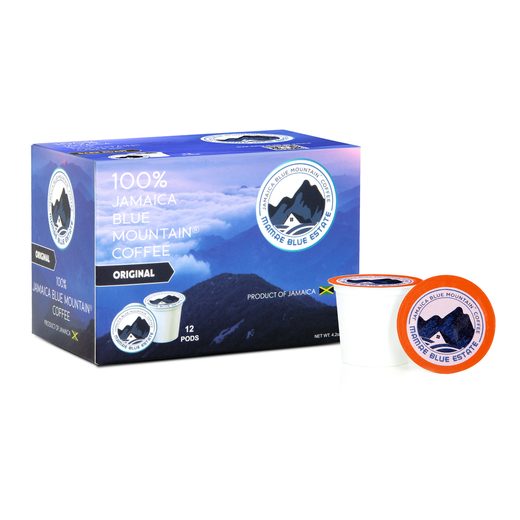
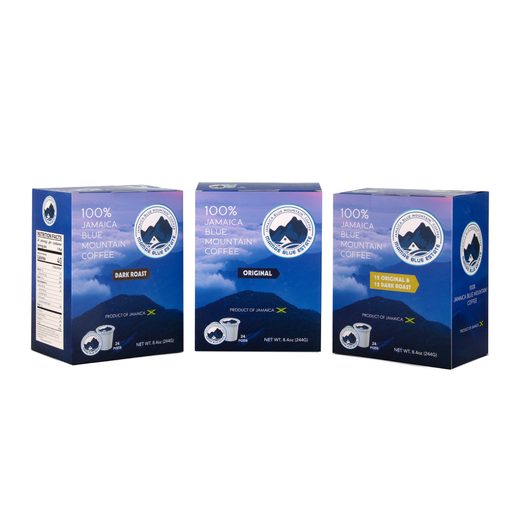
The two also sit on opposite sides of political and economic stability, which matters to buyers even when it has nothing to do with what's in the cup: Jamaica's coffee trade operates inside a settled regulatory system, while Myanmar's exporters have had to navigate currency collapse and capital controls since 2021. Readers curious about a settled, well-documented mild arabica can start with Mamre Blue's Jamaica Blue Mountain whole bean, in the shop.
Questions people ask
Where is coffee grown in Myanmar?
Does Myanmar grow arabica or robusta coffee?
What challenges does Myanmar's coffee industry face?
How does Myanmar coffee compare with Jamaica Blue Mountain?
Sources
Taste the benchmark
More in Origins
- Nepal CoffeeNepal's smallholder, largely organic coffee farms span more than 40 mid-hill districts, producing a few hundred tonnes a year at high altitude.
- Nicaraguan CoffeeNicaragua grows a brighter, citric and floral coffee across Jinotega, Matagalpa and the rising Nueva Segovia region.
- Panamanian Coffee Beyond Geisha: Boquete and VolcánBeyond its famous Geisha, Panama's Boquete and Volcán regions mostly grow Catuaí, Caturra and Mundo Novo on small farms and old estates.
- Papua New Guinea CoffeePapua New Guinea grows syrupy, often fruity Arabica across Highlands smallholder gardens and estates, producing an estimated 45,371 tonnes in 2023.
- Peruvian CoffeePeru grows a large, mostly organic coffee crop on tiny smallholder farms across Cajamarca, Junín, Cusco and Puno.
- Philippine Coffee and Kapeng BarakoThe Philippines briefly led world coffee exports before an 1880s rust outbreak, and today grows barako, arabica and robusta across Luzon and Mindanao.
- Puerto Rican Coffee: History, Yauco and Today's HarvestPuerto Rican coffee went from 19th-century world fame to near-collapse after Hurricane Maria, and today survives as a small, closely watched specialty crop.
- Rwandan CoffeeRwanda grows washed, volcanic-soil Bourbon coffee through cooperative washing stations and has used Cup of Excellence auctions to build its specialty reputation.