Jamaica Blue Mountain Coffee Grades: No. 1, No. 2, No. 3 and Peaberry
Blue Mountain export coffee is sorted into size-and-defect classes, from No. 1 down to triage, with peaberry kept separate; a grade describes the beans, not the flavor or the authenticity of the bag.
Jamaica Blue Mountain coffee is graded mainly by bean size and defect count. The classes usually quoted are Blue Mountain No. 1, No. 2 and No. 3, a separate peaberry class and a mixed "triage" class, and buyers most often see "No. 1" or "Peaberry" on retail bags.
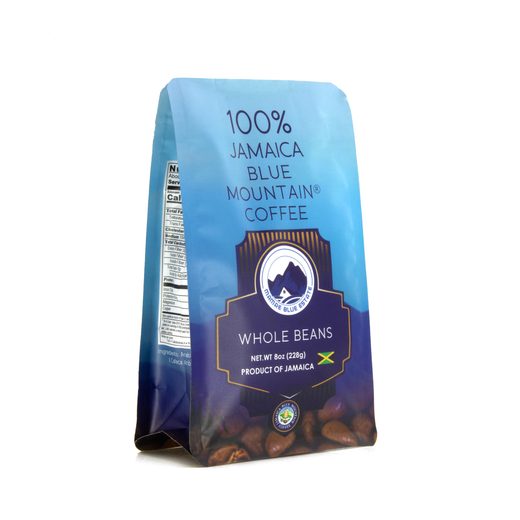
How is Blue Mountain coffee graded?
Like most washed arabicas, Blue Mountain coffee is sorted after milling through perforated screens. Screen sizes are measured in 64ths of an inch, so a bean retained on a screen 17 is roughly 17/64 of an inch across, and a "17/20" description means the beans fall within screens 17 to 20. Beans are then inspected for defects such as black, sour, broken or insect-damaged beans.
A widely reproduced summary of the classes, attributed to Jamaica's coffee industry regulations and published by the long-running importer Cafe Kingston Jamaica, sets them out as follows. Wikipedia's article agrees on the overall structure, three size grades plus peaberry, without giving screen numbers.
| Class | Bean size | Defect allowance |
|---|---|---|
| Blue Mountain No. 1 | 96% of beans screen 17/20 | No more than 2% significant defects |
| Blue Mountain No. 2 | 96% of beans screen 16/17 | No more than 2% |
| Blue Mountain No. 3 | 96% of beans screen 15/16 | No more than 2% |
| Blue Mountain Peaberry | 96% peaberry beans | No more than 2% |
| Blue Mountain Triage | Mixed sizes from the classes above | No more than 4% |
One caveat: the JACRA regulations published in the Jamaica Gazette in 2018 define the protected names and the licensing system, but their text does not list screen sizes. Some retailers describe No. 1 as screen 17/18 rather than 17/20. Treat the table as the trade's standard description rather than a quotation of current law, and rely on the exporter's paperwork for any specific lot.
What is Blue Mountain peaberry?
A peaberry forms when a coffee cherry develops one rounded seed instead of the usual two flat-sided ones. It is not a separate variety or a separate farm; peaberries turn up in ordinary Blue Mountain harvests and are sorted out because their shape roasts differently. Wikipedia describes Blue Mountain peaberries as smaller and rounder than the flat beans. Because they are sorted into their own class, peaberry lots are sold and usually priced separately, much as with Kona peaberry.
What counts as a defect?
Defects are beans that are visibly damaged or poorly processed: black or sour beans, broken pieces, insect damage, shells and foreign matter such as stones or sticks. Jamaica's 2018 regulations attack some of these at the source. Regulation 18 bars anyone from picking, selling or buying, for commercial purposes, coffee containing entirely green berries, black berries mixed with stones or trash, coffee dried in the double husk, or coffee not dried to JACRA's standards. Grading then removes what remains after milling. Coffee berry borer damage, a problem in Jamaica since the beetle was detected in 1978, according to a 2023 study in Insects, is one reason hand sorting still matters.
How do Blue Mountain grades compare with other origins?
| Origin | Top size grade | How it is described |
|---|---|---|
| Jamaica Blue Mountain | No. 1 | 96% of beans screen 17/20, up to 2% defects (trade summary) |
| Hawaii (Kona) | Extra Fancy | No more than 8 full defects per 300 g, minimum screen 19 (Hawaii rules) |
| Kenya | AA | Largest standard bean-size grade, screened in 64ths of an inch |
| Colombia | Supremo | Generally screen 17 and up |
The comparison shows how differently origins draw their lines: Hawaii counts defects per sample weight, while the Jamaican summary uses percentages. None of these grades is a flavor score, and none says anything about how fresh the coffee is when it reaches a cup. They are best read as minimum standards for size and cleanliness that let buyers on opposite sides of the world trade a lot without inspecting every bean.
Is a higher grade better coffee?
Not automatically. Grading is a size and cleanliness standard. Larger, more uniform beans roast more evenly and a low defect count removes obvious flaws, so No. 1 is a sensible floor for a premium bag, but grade alone does not describe acidity, body, sweetness or freshness. A well-roasted No. 2 can taste better than a stale No. 1. The same is true of other origins that grade by screen size, such as Kenya's AA system or Colombia's Supremo and Excelso.
Grades also say nothing about authenticity. Anyone can print "Grade 1" on a bag. What matters for authenticity is whether the coffee is Jamaica Blue Mountain under the 2018 regulations, grown in the defined area and traded under JACRA licence, and whether the bag is 100% Blue Mountain or a blend that may be 70% something else.
How does grading fit into certification?
Grading is one step in a longer chain. WIPO's case study describes the traditional process: ripe cherries are selected and pulped, wet parchment reaches an authorized facility within 24 hours, the coffee is sun-dried and rested for at least eight weeks, then hulled, polished and hand-sorted before certification. The 2018 regulations require dealers to record, where applicable, the grade, type and quality of every lot they buy or sell, and export coffee stays in JACRA's custody until it ships. Our JACRA certification page covers that system.
What should a buyer look for on the label?
- "100% Jamaica Blue Mountain" first. A grade on a blend bag only describes the Blue Mountain portion, which can be as little as 30%.
- The grade or "Peaberry", if stated. Many retail bags do not state a grade at all, which is not in itself a warning sign.
- A named roaster, estate or exporter in Jamaica, and a roast date. Grade cannot make up for old coffee.
For green-coffee buyers, our page on buying and storing unroasted coffee explains how size and moisture affect roasting. Back to the overview: Jamaica Blue Mountain coffee.
Questions people ask
What is Jamaica Blue Mountain No. 1?
Is peaberry better than No. 1?
What is Blue Mountain triage?
Does a grade prove Blue Mountain coffee is genuine?
Sources
- Cultivation of Blue Mountain Coffee: grade classes (Cafe Kingston Jamaica, importer)
- Jamaican Blue Mountain Coffee (Wikipedia)
- The Jamaica Agricultural Commodities Regulatory Authority Regulations, 2018 (Jamaica Gazette Supplement, March 2 2018)
- In Search of a Perfect Cup: Jamaica Blue Mountain Coffee (WIPO IP Advantage case study)
- Myrie et al., Coffee Berry Borer Activity and Infestation in the High Mountain and Blue Mountain Regions of Jamaica (Insects, 2023)
- Hawaii Administrative Rules §4-143-6, Coffee Grading (via Cornell Law School Legal Information Institute)
Taste the benchmark


More in Coffee knowledge
- Japanese Coffee CultureJapan's coffee culture spans century-old kissaten cafes, vending-machine canned coffee, meticulous pour-over brewing, and a decades-long appetite for Jamaica Blue Mountain.
- The Coffee Belt: Where Coffee GrowsCoffee grows only within a tropical coffee belt, where altitude and climate, more than latitude alone, decide what grows where, and climate change is shifting the map.
- The Coffee Plant: How Coffee GrowsCoffee comes from the flowering shrub Coffea, whose cherries, genuine fruit despite the name bean, take three to seven years to reach a first harvest.
- The World's Most Famous CoffeesA guide to why coffees like Jamaica Blue Mountain, Panama Geisha and Kona became famous, not a ranking of which one is best.
- The World's Top Coffee-Producing CountriesBrazil and Vietnam dominate world coffee production, and USDA's country-by-country bag counts show exactly where the rest of the top ten, and tiny Jamaica, rank.
- What Is Specialty Coffee?Specialty coffee traditionally means 80-plus cupping points, but the SCA's current definition covers flavor, origin, growing practices and processing together.
- Why Japan Buys Most Jamaica Blue Mountain CoffeeSince a first direct shipment in 1953, Japan has become the main buyer of Jamaica Blue Mountain coffee, taking around 70% of exports by recent Jamaican estimates.
- "Blue Mountain Style" Coffee: Lookalike Labels ExplainedWords like "style", "type" and "roast", and the Blue Mountain name used for coffee grown outside Jamaica, sit outside Jamaica's protected categories; here is how to read them.