Monsooned Malabar Coffee
Monsooned Malabar exposes Indian coffee to monsoon humidity for months, replicating old sailing-ship voyages and producing a low-acid, heavy-bodied cup used in espresso.
Monsooned Malabar isn't a growing region in the usual sense — it's a coffee, grown in the hills of Karnataka and Kerala, deliberately exposed to India's humid summer monsoon for months after harvest. The process swells the beans, mutes their acidity, and turns them a pale gold, producing a heavy-bodied, low-acid cup with chocolate and spice notes.
What Is Monsooned Malabar, and Where Does Its Coffee Come From?
Unlike most named coffee regions, Monsooned Malabar isn't defined by where the trees grow. The arabica and robusta cherries used start out in the same Karnataka and Kerala hill districts covered in our guide to Indian coffee. What makes Monsooned Malabar distinct is what happens after harvest, once dried, unwashed ("natural") cherry coffee is shipped to warehouses along India's low-lying Malabar coast, historically centered on the port city of Mangalore.
The name refers to that coastline, in the modern states of Karnataka and Kerala, and coffee from Tamil Nadu's Nilgiri hills is monsooned the same way. Both of India's major species go through the process: Monsooned Malabar is made from both arabica and robusta cherry.
How Does the Monsooning Process Work?
Coffee destined for monsooning starts as whole, sun-dried cherry, sorted into AA and A grades and held in warehouses until the monsoon arrives. From roughly June through September — about twelve to sixteen weeks — the beans are spread out in open-sided, well-ventilated warehouses and exposed directly to the moisture-laden monsoon winds blowing in off the Arabian Sea.
Workers repeatedly rake, spread and turn the beans through the season, letting them absorb humidity evenly. Over those months the beans swell and fade from green to a pale, golden color. The moisture also strips out much of the coffee's original acidity, leaving a comparatively neutral pH and a heavier body — a process growers and exporters finish with a final round of sorting once the monsoon season ends.
Why Was Monsooning Developed?
The technique dates to the era of British colonial trade, when green coffee bound for Europe traveled by sailing ship around the Cape of Good Hope — a voyage of up to six months. Held in a ship's hold the whole way, the beans absorbed humidity and salt air and arrived tasting noticeably different from how they'd tasted when loaded in India: softer, heavier, less acidic.
When steamships cut that journey down to weeks, coffee began arriving in Europe tasting brighter and more acidic than buyers had come to expect. Producers on the Malabar coast responded by recreating the old ship-hold conditions on land, warehousing coffee through the monsoon on purpose — turning what had been an accident of slow shipping into a deliberate, repeatable process.
What Does Monsooned Malabar Coffee Taste Like?
Monsooned Malabar is consistently described as heavy-bodied and low in acidity, with a pungent, chocolatey aroma and notes of baking spice and nuts — about as far from a bright, floral washed coffee as arabica gets. Quality varies more than with most named origins, since the process depends on catching the right humidity over months rather than a single controlled step; well-made lots are prized for a smooth, mellow cup, while poorly monsooned coffee can taste flat.
Because it's built by processing rather than variety or terroir, Monsooned Malabar invites a comparison with Sumatra's wet-hulled coffee: both are cases where what happens to the bean after picking matters more to the final cup than where, exactly, it was grown.
How Is Monsooned Malabar Sold?
Monsooned Malabar is registered as a Geographical Indication under Indian law, restricting the name to coffee actually monsooned on the Malabar coast rather than coffee merely grown nearby. It is sold as both Monsooned Malabar Arabica and Monsooned Malabar Robusta, graded separately, and has a long-standing reputation in Europe in particular.
Its low acidity and heavier body make it a popular component in espresso blends, where roasters use it to add sweetness, body and crema without the sharper acidity that washed high-grown arabica can bring — a different role from the single-origin, filter-brewed coffees that dominate specialty shelves.
When Is Monsooned Malabar "Harvested"?
The cherries that eventually become Monsooned Malabar are picked during India's main coffee harvest, then dried and stored as ordinary natural-process coffee. The defining season for this coffee isn't picking, though — it's the monsoon itself, which runs from roughly June to September each year and is the only window in which the monsooning process can happen at all.
How Does Monsooned Malabar Compare With Jamaica Blue Mountain?
Jamaica Blue Mountain is washed coffee from a single, legally defined growing area, widely described as mild and balanced with low bitterness — a cup built for restraint and clarity. Monsooned Malabar is close to its opposite: a coffee deliberately re-engineered after harvest for heavy body and low acidity, valued for weight rather than brightness.
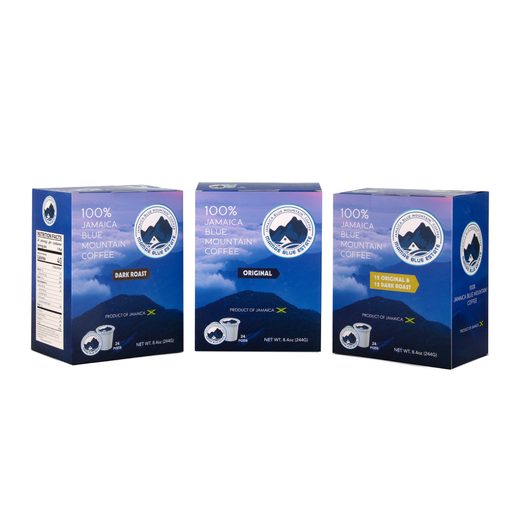
The two also differ in how they're protected. JBM's 2018 rules require anything labeled "Jamaica Blue Mountain Blend" to contain at least 30% real Blue Mountain coffee; Monsooned Malabar's Geographical Indication instead protects the process and the coastline where it happens, not a single farm or variety. Readers who want to compare the two directly can start with Jamaica Blue Mountain whole bean in the shop.
Questions people ask
What is Monsooned Malabar coffee?
Why is coffee monsooned in India?
Is Monsooned Malabar coffee arabica or robusta?
How does Monsooned Malabar compare with Jamaica Blue Mountain?
Sources
Taste the benchmark

More in Origins
- Myanmar CoffeeMyanmar's small arabica coffee industry centers on Shan State and the hill town of Pyin Oo Lwin, and now operates inside a currency-disrupted economy.
- Nepal CoffeeNepal's smallholder, largely organic coffee farms span more than 40 mid-hill districts, producing a few hundred tonnes a year at high altitude.
- Nicaraguan CoffeeNicaragua grows a brighter, citric and floral coffee across Jinotega, Matagalpa and the rising Nueva Segovia region.
- Panamanian Coffee Beyond Geisha: Boquete and VolcánBeyond its famous Geisha, Panama's Boquete and Volcán regions mostly grow Catuaí, Caturra and Mundo Novo on small farms and old estates.
- Papua New Guinea CoffeePapua New Guinea grows syrupy, often fruity Arabica across Highlands smallholder gardens and estates, producing an estimated 45,371 tonnes in 2023.
- Peruvian CoffeePeru grows a large, mostly organic coffee crop on tiny smallholder farms across Cajamarca, Junín, Cusco and Puno.
- Philippine Coffee and Kapeng BarakoThe Philippines briefly led world coffee exports before an 1880s rust outbreak, and today grows barako, arabica and robusta across Luzon and Mindanao.
- Puerto Rican Coffee: History, Yauco and Today's HarvestPuerto Rican coffee went from 19th-century world fame to near-collapse after Hurricane Maria, and today survives as a small, closely watched specialty crop.