Pacamara Coffee
Pacamara is a large-beaned coffee variety bred in El Salvador in 1958 by crossing Pacas and Maragogipe, now prized in specialty markets and Cup of Excellence.
Pacamara is a large-beaned arabica variety bred in El Salvador by crossing two other varieties: the compact Pacas and the giant-beaned Maragogipe. Since its creation in 1958, it has become one of specialty coffee's most recognizable named varieties, frequently placing near the top of Cup of Excellence competitions.
Where did Pacamara come from?
El Salvador's Instituto Salvadoreño de Investigaciones del Café (ISIC) created Pacamara in 1958 by crossing Pacas — a naturally dwarf mutation of Bourbon discovered in El Salvador in 1949 — with Maragogipe, a large-beaned mutation of Typica from Brazil. The name blends its two parents: Pa(cas) plus (Mara)gogype equals Pacamara, according to World Coffee Research. Pacas itself had been found on a Salvadoran farm less than a decade earlier, so Pacamara's creation was a deliberate breeding decision rather than a chance discovery — researchers specifically wanted a variety that combined Maragogipe's oversized bean with a more manageable, Pacas-style plant.
Where is Pacamara grown today?
Pacamara is grown primarily in El Salvador, where it frequently dominates the country's Cup of Excellence entries, and it has since spread in smaller quantities to Guatemala, Honduras and Nicaragua as growers chase its reputation and competition results. It remains a minority planting almost everywhere, overshadowed by acreage devoted to Bourbon, Caturra and Catimor-type hybrids, which makes a labeled Pacamara lot a comparatively rare find even within a single country's export mix.
What are Pacamara's plant traits, yield and bean size?
| Trait | Rating |
|---|---|
| Stature | Dwarf/compact to tall (variable) |
| Bean size | Very Large |
| Yield potential | Low |
| Coffee leaf rust resistance | Very high susceptibility |
| Coffee berry disease resistance | Susceptible |
| Other disease notes | Highly susceptible to Ojo de Gallo (American leaf spot) |
| Quality potential at high altitude | Exceptional |
Pacamara's defining trait is its bean size — World Coffee Research classifies it as "Very Large," among the biggest of any commercial arabica variety. That comes at a cost: yield potential is low, disease resistance is poor across the board, and World Coffee Research notes the variety is not genetically stable from one generation to the next, meaning plants grown from Pacamara seed do not always breed true. Serious producers often propagate it more carefully as a result, sometimes through selected clones rather than open seed. That instability also means two farms' Pacamara trees, even from related seed stock, can vary noticeably in bean size and vigor, which is part of why cup quality within the variety is less uniform than for more stable hybrids like Catuaí.
What does Pacamara coffee taste like?
World Coffee Research rates Pacamara's quality potential as "Exceptional" at high altitude, among the highest ratings the catalog gives any variety. Roasters and competition judges commonly describe well-grown Pacamara as full-bodied with pronounced sweetness and complex, often fruit-and-chocolate-toned cups — one reason it shows up so often near the top of El Salvador's Cup of Excellence results.
How do growers and buyers use Pacamara?
For growers, Pacamara is a quality bet rather than a volume play: low, inconsistent yield and poor disease resistance mean it rarely makes sense as a farm's main crop, but a well-managed lot can earn competition scores and prices that a higher-yielding variety cannot match. For buyers, "Pacamara" on a bag is generally a signal of a specialty-tier lot, often a microlot from a single farm, and worth seeking out specifically for its large beans and full-bodied cup rather than treating it as interchangeable with more common Central American varieties.
How does Pacamara compare with Jamaica Blue Mountain?
Pacamara and Jamaica Blue Mountain both trade yield for quality, but they arrive at very different cups. Blue Mountain, from low-yielding Typica trees, is prized for being mild and balanced with low bitterness; Pacamara, bred specifically for size and intensity, tends toward a fuller body and more pronounced sweetness. Both are effectively scarcity plays for buyers — Blue Mountain because of its legally limited growing area, Pacamara because of its low yield and unstable genetics — though the resulting cups sit at nearly opposite ends of the flavor spectrum. A buyer who already appreciates Blue Mountain's restraint may find Pacamara a useful next step toward bigger, more assertive cups, without leaving the general territory of scarce, quality-focused, high-altitude arabica coffee that both varieties represent.
Questions people ask
What is Pacamara coffee?
Why does Pacamara have such large beans?
Is Pacamara a high-yielding coffee variety?
Where does Pacamara coffee come from?
Sources
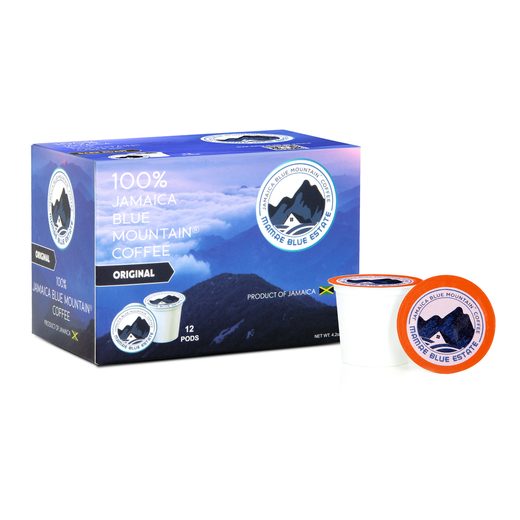
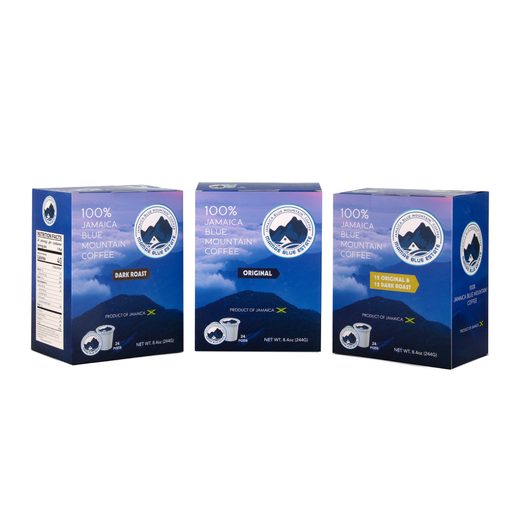
Taste the benchmark
More in Varieties
- Pink Bourbon CoffeePink Bourbon is a pink-cherried variety from Colombia's Huila department whose genetic identity is still debated, prized by specialty buyers for its distinctive cup.
- Robusta Coffee: What It Is and Where It GrowsRobusta (Coffea canephora) is the higher-caffeine, hardier coffee species behind instant coffee and espresso blends, grown mainly in Vietnam, Brazil and Uganda.
- Sidra CoffeeSidra is a fruit-forward Ecuadorian coffee variety with a disputed genetic origin and multiple World Barista Championship wins to its name.
- SL28 and SL34: Kenya's Famous VarietiesSL28 and SL34 are two arabica varieties selected in 1930s Kenya by Scott Agricultural Laboratories that still define much of the country's celebrated coffee flavor.
- Stenophylla: The Rediscovered Coffee SpeciesStenophylla is a once-abandoned West African coffee species rediscovered in Sierra Leone, with arabica-like flavor and notable heat tolerance, per 2021 research.
- Typica: The Original Arabica VarietyTypica is the oldest cultivated arabica variety, the tall, low-yielding plant that carried coffee from Yemen to the Americas and remains Jamaica Blue Mountain's traditional variety.
- Wush Wush CoffeeWush Wush is an Ethiopian landrace coffee now grown as a specialty variety in Colombia, prized for an unusually wide, fruit-driven flavor range.
- Arabica Coffee vs Robusta, Liberica and ExcelsaA clear comparison of arabica, robusta, liberica and excelsa coffee, plus what "100% arabica" actually promises on a label.