El Salvador Coffee
El Salvador is the birthplace of the Pacas and Pacamara varieties and still grows much of its coffee on heritage Bourbon trees.
El Salvador is a small producer by regional standards, but it holds an outsized place in coffee genetics: it's the birthplace of both Pacas, a natural Bourbon mutation found in 1949, and Pacamara, the large-beaned Pacas-Maragogype cross bred in 1958. Much of the country's coffee still grows on old Bourbon and Typica trees on the slopes of its volcanic mountain ranges, rather than on the newer hybrids many neighboring countries have shifted toward.
How much coffee does El Salvador produce?
The UN Food and Agriculture Organization put El Salvador's 2023 green coffee production at roughly 32,300 tonnes, the smallest total among its Central American neighbors apart from Panama. The country exports its crop in standard 69-kilogram bags, alongside smaller 35-kilogram "pequeños" bags aimed at microlot buyers, according to the importer Café Imports.
Coffee-leaf rust has hit El Salvador especially hard: Café Imports reports yield declines of up to 50% in some areas, a pressure that has pushed some growers toward rust-resistant hybrids even as the country's reputation still rests heavily on old-line Bourbon and Typica.
What are El Salvador's coffee regions?
| Region / range | Notes |
|---|---|
| Apaneca-Ilamatepec | Includes Ahuachapán, Concepción de Ataco; anchored by the Santa Ana volcano, El Salvador's highest volcano at 2,381 m (7,812 ft) |
| Cacahuatique | Eastern volcanic range |
| El Bálsamo-Quetzaltepec | Central volcanic range near San Salvador |
| Chinchontepec / Tecapa-Chinameca | Central and eastern volcanic zones |
| Metapán / Chalatenango | Northern, non-volcanic highlands |
Café Imports counts nine distinct growing zones in total. Nearly all sit on volcanic soil, which both Café Imports and Royal Coffee point to as a key reason for the country's reputation for aromatic, balanced coffee, though the drier, non-volcanic Metapán and Chalatenango zones in the north offer a partial exception.
What varieties define El Salvador's coffee?
Royal Coffee describes essentially all Salvadoran coffee as arabica, with Bourbon the most widely planted variety in the country. Pacas, a natural Bourbon mutation first found on a Salvadoran farm in 1949, and Pacamara, bred there in 1958 by crossing Pacas with the large-beaned Brazilian variety Maragogype, both trace directly back to El Salvador's long-standing Bourbon base. Sarchimor, a newer rust-resistant hybrid, and Catuaí and Caturra also appear on many farms.
That reliance on older, non-hybrid Bourbon and Typica trees is part of why El Salvador is so exposed to leaf rust, but it is also why the country keeps producing new naturally occurring varieties: a large population of genetically similar old trees is fertile ground for the kind of spontaneous mutation that produced Pacas in the first place.
How is El Salvador's coffee processed, graded and harvested?
Washed processing is the primary method, according to Café Imports, though natural and honey-style lots are increasingly common as producers chase specialty prices. El Salvador uses a three-tier altitude grading system: SHG (Strictly High Grown) for coffee above 1,200 m, HG (High Grown) from 900-1,200 m, and CS (Central Standard) from 500-900 m.
Harvest runs from November through April, with green coffee typically arriving in North America between May and July.
What does El Salvador coffee taste like, and what should buyers look for?
Royal Coffee describes the national style broadly as aromatic, balanced and often buttery, but the variety on the label matters: Bourbon lots are typically sweet and chocolatey with good balance, Pacamara shows a floral aroma with full body and pronounced chocolate notes, and Pacas tends toward medium body and acidity with a milder fragrance.
How does El Salvador coffee compare with Jamaica Blue Mountain?
El Salvador's SHG grade, for coffee grown above 1,200 m (about 3,900 ft), sits just below the 3,000-5,500 ft range commonly cited for Jamaica Blue Mountain, though neither figure is directly comparable — El Salvador's is a formal three-tier export grade, while Blue Mountain's range is customary rather than a legal minimum. Both origins also lean heavily on heritage varieties: El Salvador on old Bourbon and Typica stock, Blue Mountain on Typica grown in a single legally defined area across the parishes of St Andrew, St Thomas and Portland.
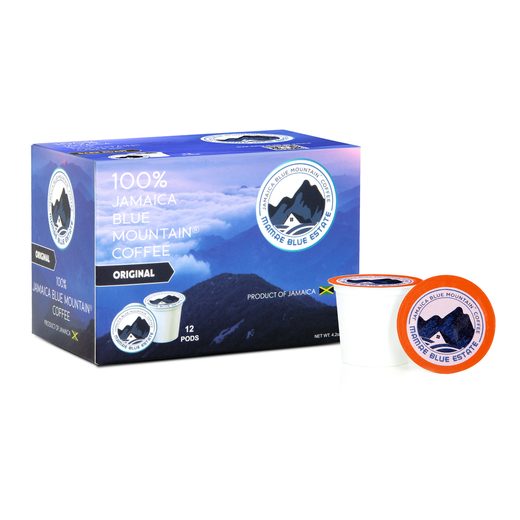
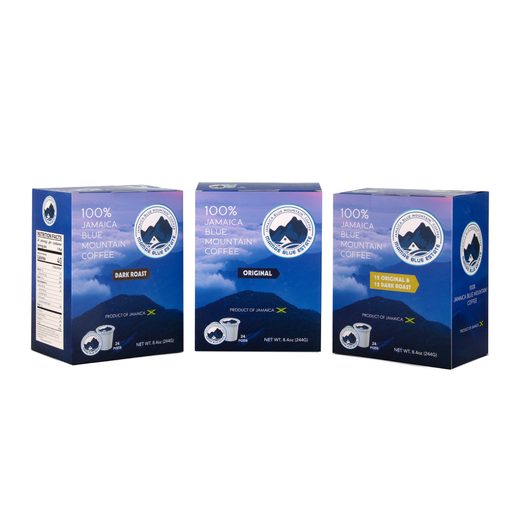
The cups differ more than the elevations do. Jamaica Blue Mountain is widely described as mild and balanced with low bitterness, while El Salvador's Bourbon and Pacamara lots typically show more sweetness, body and chocolate character. Readers who want to compare a mild Blue Mountain cup against a fuller-bodied Pacamara can start with Jamaica Blue Mountain whole bean, available in the shop.
Questions people ask
Where did the Pacamara coffee variety come from?
What does SHG mean on a bag of El Salvador coffee?
What does El Salvador coffee taste like?
How does El Salvador coffee compare with Jamaica Blue Mountain?
Sources
Taste the benchmark
More in Origins
- Ethiopian Coffee: Regions, Processing and FlavorA region-by-region guide to Ethiopian coffee's heirloom varieties, processing styles and grading, compared fairly with Jamaica Blue Mountain.
- Guatemalan Coffee: Huehuetenango, Antigua and BeyondGuatemala grades coffee by altitude across eight distinct regions, from volcanic Antigua to the high, dry, non-volcanic Huehuetenango highlands.
- Guji CoffeeA guide to Guji, one of Ethiopia's newest named coffee regions: its elevation, washed and natural processing, flavor, sales and how it compares with Jamaica Blue Mountain.
- Haitian CoffeeColonial Saint-Domingue once supplied some 60% of Europe's coffee; Haiti's industry today survives mainly as small-scale, family-farmed production for a niche export market.
- Harrar Coffee: Ethiopia's Dry-Processed ClassicA guide to Harrar, Ethiopia's classic dry-processed coffee region: its elevation, fruity wine-toned flavor, cooperative sales, harvest timing and how it compares with Jamaica Blue Mountain.
- Hawaiian Coffee Beyond Kona: Ka'u, Maui and KauaiKona isn't Hawaii's only coffee: Ka'u, Kauai and Maui grow roughly half the state's crop, now covered by a stricter 2024 labeling law.
- Honduran CoffeeHonduras is Central America's largest coffee producer, grading its washed, mostly smallholder crop by altitude across 15 departments.
- Huila Coffee: Colombia's Top Specialty RegionA guide to Huila, Colombia's top specialty coffee department: its elevation, varieties, flavor, sales, unusual harvest calendar and comparison with Jamaica Blue Mountain.