Sidra Coffee
Sidra is a fruit-forward Ecuadorian coffee variety with a disputed genetic origin and multiple World Barista Championship wins to its name.
Sidra is an arabica variety first identified in Ecuador's Pichincha province, prized by specialty roasters for winning multiple World Barista Championship titles even though its genetic parentage is still disputed. Farmers value its high yield; buyers value its stone-fruit and citrus cup; scientists still aren't entirely sure what it is.
Where does Sidra coffee come from?
Sidra is an arabica variety first identified in Ecuador's Pichincha province, where coffee grower Olger Rogel is credited with bringing it into the country's specialty coffee sector, according to Perfect Daily Grind. It has since spread to other Ecuadorian growing zones and drawn interest from farms elsewhere in the region chasing the same fruit-driven cup that made it famous on the competition circuit.
Why is Sidra's genetic origin still debated?
Sidra's backstory is unusually contested for a variety this well known. It was originally described as a cross of Typica and Bourbon, but Perfect Daily Grind reports that when farmers and roasters later sent leaf samples for genetic testing, the results conflicted: some batches came back similar to Ethiopian heirloom coffee, while others pointed to different parentage entirely. A separate theory holds that Sidra descends from hybrid breeding work done at a Nestlé research facility using Ethiopian and Bourbon material, a claim Perfect Daily Grind also reports without confirming it.
World Coffee Research has taken the position that Sidra may not represent one single, genetically consistent plant at all. The organization suggests farmers in different places may be calling more than one distinct plant "Sidra" — a mix-up it calls "not uncommon in the coffee industry given the lack of a formal seed sector," according to Perfect Daily Grind's reporting. In practice, that means a bag labeled Sidra is a name more than a guaranteed genotype.
What are Sidra's plant traits, yield and disease resistance?
Where it has been described, Sidra is reported as a vigorous plant with a notably thick trunk that can grow up to about 13 feet (4 m) tall, with dark green leaves and five-petaled flowers, according to Perfect Daily Grind. Its cherries grow in dense clusters and are larger and rounder than typical arabica cherries, while the beans inside are long and thin, a shape often compared to Geisha. Farmers report high yields from the plant, but it needs full shade to perform well and is considered susceptible to coffee leaf rust and to diseases such as Ceratocystis wilt, which limits how widely it can be planted without careful disease management.
What does Sidra coffee taste like?
Sidra's reputation rests almost entirely on its cup, and tasters describe a wide range of fruit and floral notes. Canadian barista Cole Torode, who used a Sidra from La Palma y el Tucán in national and world competitions, described ripe stone fruit — nectarine, apricot and peach — alongside orange or orange-blossom citrus and notes he likened to white grape and wine, according to Perfect Daily Grind. Ecuadorian producer José "Pepe" Jijón of Finca Soledad has described his own Sidra lots as botanical and minty, while Arturo Arevalo of Selvadentro has cupped his as sweet, with honey, malt and red apple, mild acidity and a rounded, velvety body — a reminder of how much a single variety's cup can shift by farm and process.
How has Sidra performed in coffee competitions?
Sidra's competition record is a big part of its reputation. Jooyeon Jeon won the 2019 World Barista Championship using a Sidra from La Palma y el Tucán, with Cole Torode placing third using the same coffee, and Anthony Douglas went on to win the 2022 World Barista Championship also brewing Sidra, according to Perfect Daily Grind. Repeated wins on coffee's biggest competitive stage are a major reason roasters and buyers now seek the variety out by name.
How do growers and buyers use Sidra?
For growers, Sidra is a trade-off familiar from many high-flavor varieties: strong yields are offset by a need for full shade and real vulnerability to leaf rust and wilt disease, which keeps it from becoming a commodity-scale planting. Farms that grow it well are usually chasing the specialty premium that comes with competition wins rather than volume. For buyers and roasters, a lot labeled Sidra signals a bet on a distinctive, often wine-like or stone-fruit cup — with the caveat, given the genetic uncertainty, that its exact identity is more a matter of farm reputation than settled botany.
How does Sidra compare with Jamaica Blue Mountain?
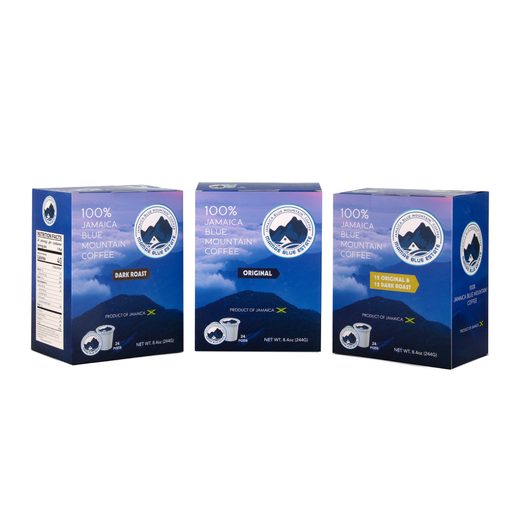
Jamaica Blue Mountain is traditionally grown as Typica, a variety with a documented, centuries-long paper trail from Ethiopia and Yemen through Java to the Caribbean; Sidra, by contrast, has been grown in Ecuador for only a few decades and still lacks a settled genetic identity. The two coffees also sit at opposite ends of the flavor spectrum: Blue Mountain is usually described as mild and balanced with low bitterness, while Sidra's competition-winning lots are prized for intense stone-fruit, citrus and wine-like notes. Readers curious how a long-settled heritage variety compares with one of coffee's newest competition favorites can explore Jamaica Blue Mountain coffee, browse other named varieties on the varieties hub or the arabica species overview, or see how a similarly long, thin-beaned variety fares on the Geisha page.
Questions people ask
What is Sidra coffee?
Is Sidra related to Typica and Bourbon?
What does Sidra coffee taste like?
Has Sidra coffee won any competitions?
Sources
Taste the benchmark

More in Varieties
- SL28 and SL34: Kenya's Famous VarietiesSL28 and SL34 are two arabica varieties selected in 1930s Kenya by Scott Agricultural Laboratories that still define much of the country's celebrated coffee flavor.
- Stenophylla: The Rediscovered Coffee SpeciesStenophylla is a once-abandoned West African coffee species rediscovered in Sierra Leone, with arabica-like flavor and notable heat tolerance, per 2021 research.
- Typica: The Original Arabica VarietyTypica is the oldest cultivated arabica variety, the tall, low-yielding plant that carried coffee from Yemen to the Americas and remains Jamaica Blue Mountain's traditional variety.
- Wush Wush CoffeeWush Wush is an Ethiopian landrace coffee now grown as a specialty variety in Colombia, prized for an unusually wide, fruit-driven flavor range.
- Arabica Coffee vs Robusta, Liberica and ExcelsaA clear comparison of arabica, robusta, liberica and excelsa coffee, plus what "100% arabica" actually promises on a label.
- Bourbon: The Coffee VarietyBourbon is the arabica variety isolated on the Indian Ocean island of Réunion for over a century, later spreading through Latin America and producing Caturra and Catuaí.
- Castillo CoffeeCastillo is a coffee-leaf-rust-resistant arabica variety bred by Colombia's Cenicafé and released in 2005, and its cup quality has been debated ever since.
- Catimor and Sarchimor CoffeeCatimor and Sarchimor are rust-resistant coffee hybrids bred by crossing the Timor Hybrid with Caturra and Villa Sarchi, now grown from Latin America to Yunnan.