Dominican Republic Coffee
Dominican coffee comes mainly from four mountain regions, including Barahona and Cibao, and is consumed at home largely through brands like Café Santo Domingo.
Dominican Republic coffee has been grown since 1715, and today its arabica comes mainly from four mountain zones — the Central and Northern ranges, plus the Neyba and Bahoruco ranges near Barahona — alongside familiar domestic brands like Café Santo Domingo that most Dominicans grow up drinking.
How much coffee does the Dominican Republic produce?
Coffee arrived in the Dominican Republic in 1715 and became the country's principal smallholder crop, according to Wikipedia's overview of Dominican coffee production; commercial exports began around 1872, and by 1900 the country was exporting nearly 4 million pounds a year. Coffee land eventually peaked at about 120,000 hectares, roughly 3% of the country's farmland, before shrinking substantially after 1981.
By 2013, the most recent figure given in that source, national production stood at 10,100 short tons (about 9,200 tonnes) grown across 22,400 hectares — about 0.1% of world production that year.
What are the Dominican Republic's coffee regions — Barahona, Cibao, Jarabacoa and others?
| Region | Notes |
|---|---|
| Central Mountain Region (incl. Jarabacoa) | Cordillera Central highlands; Jarabacoa sits at about 1,736 ft (529 m) |
| Northern Mountain Region (Cibao) | Historic center including Moca and Santiago |
| Neyba Mountain Range | Southwestern growing area |
| Bahoruco Mountain Range (incl. Barahona) | Southwestern border area, long associated with the Barahona name |
Wikipedia's overview names these four mountainous zones as the country's major coffee-producing areas, alongside older historical centers like Moca, Santiago, Baní and Puerto Plata — the last of which handled about two-thirds of the country's coffee exports as far back as 1918. The Bahoruco range, home to the Barahona name, sits in the far southwest of the country, close enough to the Haitian border that the two countries' coffee-growing zones are only a short distance apart even though they are not marketed together.
Jarabacoa, a well-known mountain town in the Central Mountain Region's Cordillera Central, sits at roughly 1,736 ft (529 m) with a cooler, wetter climate that supports coffee alongside vegetables and fruit, per Wikipedia's entry on the town.
What varieties and grading does Dominican coffee use?
Arabica dominates Dominican production and is marketed internationally under the trade term "mild," while robusta makes up only about 1.3% of cultivation and is consumed domestically rather than exported, according to Wikipedia. Much of that arabica traces back to old Typica plantings: World Coffee Research's variety catalog notes that Typica reached Santo Domingo, on the island of Hispaniola, in 1735, part of the same wave of 18th-century introductions that also reached Jamaica in 1730.
Nor does the Dominican Republic appear to run a nationally standardized altitude-grading scale, of the kind found in Central America; coffee here is generally sold and marketed by named region or estate instead.
What are Café Santo Domingo and the country's other domestic brands?
Most coffee Dominicans actually drink comes from a handful of long-established domestic brands rather than single-origin export lots. Café Santo Domingo, made by the company Induban, is one of the best known; Induban describes itself as having roughly 80 years in the Dominican coffee business and also produces several other domestic labels, including Café Induban Gourmet, Café Pilón and Café Supremo, according to the company's own website. These are everyday commercial blends rather than the specialty micro-lots exported to roasters abroad.
What does Dominican coffee taste like, and what should buyers look for?
Detailed tasting notes for Dominican coffee are less widely published than for some neighboring origins. What is documented is mostly about the bean and category: Wikipedia describes Dominican beans as larger and thicker than those from nearby Martinique, and classes the country's arabica under the broad "mild" trade category used across washed Latin American coffee. A precise national harvest calendar was not part of the record available for this page; as in most Caribbean and Central American arabica regions, picking is understood to concentrate in the cooler, drier months, with timing shifting by elevation across the Central, Northern, Neyba and Bahoruco ranges.
How does Dominican coffee compare with Jamaica Blue Mountain?
Both are Caribbean island origins with roots in the same 18th-century wave of Typica arabica that spread through the region's French, Spanish and English colonies. But their modern markets look very different. Jamaica built a single, legally protected growing area and export brand around Blue Mountain; the Dominican Republic instead grew a domestic coffee culture, where brands like Café Santo Domingo dominate everyday consumption and only a modest share of the crop is exported as named single-origin coffee.
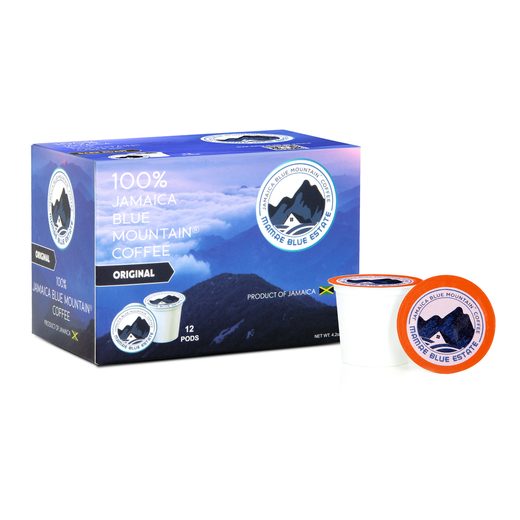
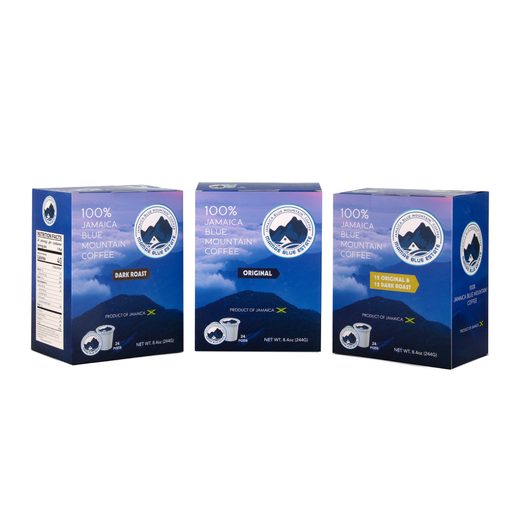
On the palate, Jamaica Blue Mountain's mild, balanced, low-bitterness reputation sits closer to the gentle "mild" arabica character generally attributed to Dominican coffee than to the brighter, more acidic profiles common elsewhere in Latin America — though Dominican coffee, sold mostly as blends, rarely gets marketed with Blue Mountain's single-origin precision. For a benchmark of that milder Caribbean style done as a single estate, see Jamaica Blue Mountain whole bean in the shop, or compare notes with Puerto Rican coffee, the Caribbean's other well-known arabica island.
Questions people ask
How much coffee does the Dominican Republic produce?
What are the Dominican Republic's main coffee regions?
What is Café Santo Domingo?
How does Dominican coffee compare with Jamaica Blue Mountain?
Sources
Taste the benchmark
More in Origins
- Ecuadorian and Galápagos CoffeeEcuador pairs small-lot highland arabica from Loja and Galápagos's San Cristóbal island with one of South America's largest robusta and soluble-coffee industries.
- El Salvador CoffeeEl Salvador is the birthplace of the Pacas and Pacamara varieties and still grows much of its coffee on heritage Bourbon trees.
- Ethiopian Coffee: Regions, Processing and FlavorA region-by-region guide to Ethiopian coffee's heirloom varieties, processing styles and grading, compared fairly with Jamaica Blue Mountain.
- Guatemalan Coffee: Huehuetenango, Antigua and BeyondGuatemala grades coffee by altitude across eight distinct regions, from volcanic Antigua to the high, dry, non-volcanic Huehuetenango highlands.
- Guji CoffeeA guide to Guji, one of Ethiopia's newest named coffee regions: its elevation, washed and natural processing, flavor, sales and how it compares with Jamaica Blue Mountain.
- Haitian CoffeeColonial Saint-Domingue once supplied some 60% of Europe's coffee; Haiti's industry today survives mainly as small-scale, family-farmed production for a niche export market.
- Harrar Coffee: Ethiopia's Dry-Processed ClassicA guide to Harrar, Ethiopia's classic dry-processed coffee region: its elevation, fruity wine-toned flavor, cooperative sales, harvest timing and how it compares with Jamaica Blue Mountain.
- Hawaiian Coffee Beyond Kona: Ka'u, Maui and KauaiKona isn't Hawaii's only coffee: Ka'u, Kauai and Maui grow roughly half the state's crop, now covered by a stricter 2024 labeling law.