Hawaiian Coffee Beyond Kona: Ka'u, Maui and Kauai
Kona isn't Hawaii's only coffee: Ka'u, Kauai and Maui grow roughly half the state's crop, now covered by a stricter 2024 labeling law.
Kona gets the fame, but a little over half of Hawaii's coffee acreage grows somewhere else — on the Big Island's Ka'u and Puna districts, on Kauai's large coastal plantation, and on smaller farms across Maui, Oahu and Molokai. Statewide, Hawaii's coffee crop was worth $48.2 million in the 2023-24 season, according to USDA.
How Much Coffee Does Hawaii Produce Statewide?
Hawaii's entire coffee crop — Kona included — totaled 19.2 million pounds of cherry in the 2023-24 season, worth $48.2 million at a season-average price of $2.51 a pound, according to the USDA National Agricultural Statistics Service's Hawaii field office, released May 7, 2024. That was down 17% from 2022-23's 23.0 million pounds and $54.1 million, a decline USDA attributed to coffee leaf rust, coffee berry borer damage, drought during flowering, and — specifically for Maui — the wind-driven wildfires of August 2023, which destroyed agricultural land on the island. Statewide bearing acreage stood at 7,400 acres in 2023-24, yielding an average 3,150 pounds of cherry per acre.
Kona is only part of that total. Wikipedia's account of Hawaii coffee history notes that a little over half of the state's coffee acreage grows outside the island of Hawaii altogether, chiefly on Kauai, with additional farms on Maui, Oahu and Molokai — a reminder that "Hawaiian coffee" and "Kona coffee" are not the same thing, even though the two get conflated constantly in retail marketing.
Ka'u: Hawaii's Fastest-Growing Coffee District
Ka'u, on the southern tip of the Big Island, has one of the more dramatic origin stories in American coffee. Coffee only became a major crop there after the Ka'u Sugar Company shut down in 1996, ending 24 years of sugar consolidation on the district's land, according to Wikipedia; many former sugar workers were offered five-acre land leases to switch into coffee farming. In the roughly two decades since, Ka'u built a reputation fast enough that trade press was already treating it as a serious specialty origin by the mid-2010s — Perfect Daily Grind profiled Ka'u growers experimenting with honey, natural and carbonic-maceration processing as early as 2017.
Typica and Caturra are the most widely planted varieties in Ka'u, Wikipedia reports, and the district holds an annual Ka'u Coffee Festival in the town of Pāhala to promote its growers. Ka'u's climate differs from Kona's in a way that matters for the cup: Perfect Daily Grind describes Kona as comparatively dry and sunny, while Ka'u is volcanic and considerably rainier, and neighboring Puna rainier still.
Maui and Kauai: Hawaii's Other Coffee Islands
Kauai is home to the largest contiguous coffee farm in the United States, a former sugar plantation converted to coffee that anchors much of the "a little over half" of statewide acreage that Wikipedia locates outside the Big Island. Maui grows coffee on a smaller scale, spread across several farms rather than one large estate; Maui's coffee land sat directly in the path of the August 2023 wildfires that NASS cited as a factor in that season's statewide production decline. Oahu and Molokai round out Hawaii's coffee map with still smaller plantings.
Because these islands sit at different elevations, rainfall patterns and soil types than Kona or Ka'u, growers and marketers lean on the same "microclimate" story Hawaii tells about Kona itself — each district's mix of rain, sun and volcanic soil is presented as giving its coffee a distinctive cup, per Perfect Daily Grind's overview of Hawaii's non-Kona origins, though how distinctive it really is varies lot to lot and roaster to roaster.
Hawaii's 2024 Coffee Labeling Law: What 51% Means Beyond Kona
Hawaii's coffee-labeling rules matter well beyond Kona. Act 198, signed into law on July 3, 2024, raises the minimum share of named-region coffee required in any blend using a Hawaii regional name — Kona, Ka'u, Kauai, Maui or otherwise — from 10% to 51%, Daily Coffee News reported. Enforcement begins July 1, 2027, giving growers and blenders a multi-year transition. Because the old 10% threshold applied to any Hawaii region, not just Kona, a bag labeled "Ka'u blend" or "Maui blend" could historically contain mostly coffee from somewhere else; after 2027, the same bag must be mostly the coffee it's named for.
Varieties, Processing and Harvest Season
Across Hawaii's non-Kona districts, Typica and Caturra are the most commonly cited varieties, particularly in Ka'u, per Wikipedia. Processing has traditionally meant washing — pulping ripe cherry, fermenting briefly, then drying — but Ka'u growers in particular have pushed into honey, natural and carbonic-maceration methods aimed at the specialty market, a trend Perfect Daily Grind documented as early as 2017. USDA lists Hawaii's coffee marketing season as running October through September, spanning harvest and sale of the crop across the state's islands.
Hawaii Coffee vs Jamaica Blue Mountain
Hawaii's 2024 law and Jamaica's coffee-labeling regime now point in a similar direction. JACRA's 2018 rules require anything labeled "Jamaica Blue Mountain Blend" to contain at least 30% real Blue Mountain coffee; Hawaii's new 51% threshold for any regional name, taking effect in 2027, will actually be stricter on paper than Jamaica's blend minimum, though Hawaii's rule took decades longer to tighten from its original 10% floor. Both places also favor mild, low-bitterness coffee: Jamaica Blue Mountain is widely described as balanced and gentle, and Hawaii's non-Kona regions are generally marketed the same way, rather than for bold or intensely acidic cups.
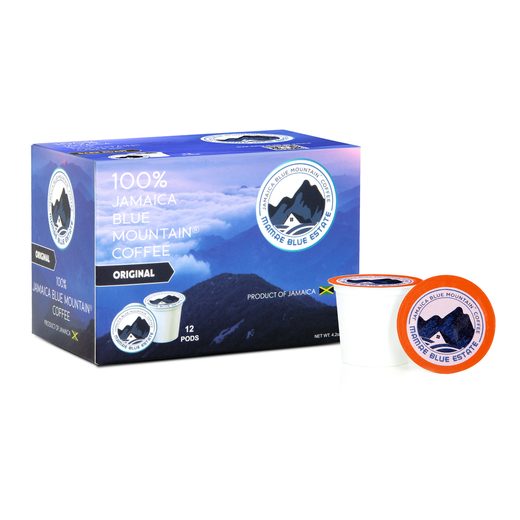
Scale is where the two diverge most. Hawaii's entire statewide crop — all islands and districts combined — came to 19.2 million pounds of cherry in 2023-24, spread across thousands of acres on five islands; JBM grows in a single legally defined district in Jamaica's Blue Mountains, above roughly 3,400 feet on the one estate whose facts inform this site. Readers who want to compare Hawaii's most famous coffee directly can start with our guide to Kona coffee, or taste Jamaica's benchmark for themselves via Jamaica Blue Mountain whole bean in the shop.
Questions people ask
Is all Hawaiian coffee Kona coffee?
What is Ka'u coffee?
Does Hawaii's coffee labeling law apply outside Kona?
How much coffee does Hawaii produce statewide?
Sources
- Hawaii Coffee: Final Season Estimates 2021-2024 — USDA NASS Pacific Region (May 7, 2024)
- Coffee production in Hawaii — Wikipedia
- Ka'ū District, Hawaii — Wikipedia
- Hawaii Legislature Approves Landmark Coffee Labeling Bill — Daily Coffee News (May 2, 2024)
- More Than Kona: 4 Things You Should Know About Hawaiian Coffee — Perfect Daily Grind (Dec 15, 2016)
- Experimental Processing & Specialty Coffee in Ka'ū, Hawaii — Perfect Daily Grind (Apr 20, 2017)
Taste the benchmark
More in Origins
- Honduran CoffeeHonduras is Central America's largest coffee producer, grading its washed, mostly smallholder crop by altitude across 15 departments.
- Huila Coffee: Colombia's Top Specialty RegionA guide to Huila, Colombia's top specialty coffee department: its elevation, varieties, flavor, sales, unusual harvest calendar and comparison with Jamaica Blue Mountain.
- Indian Coffee: Chikmagalur, Coorg and ArakuIndia grows both arabica and robusta under shade across Karnataka, Kerala and Tamil Nadu, from Chikmagalur's colonial-era estates to tribal-grown Araku Valley.
- Java Coffee: The Island, and Why Coffee Is Called JavaJava is both an Indonesian island and English slang for coffee, a legacy of three centuries as a top coffee source now centered on the Ijen Plateau's washed arabica.
- Kenyan Coffee: AA Grades, SL28 and Bright AcidityA guide to Kenya's grading system, key varieties and regions, with a fair comparison of its bright acidity to Jamaica Blue Mountain.
- Kona Coffee: Hawaii's Famous Coffee, and What 'Kona Blend' MeansKona coffee grows on a tiny Big Island belt and, until a 2024 law tightened the rule, a blend needed only 10% real Kona coffee to use the name.
- Malawi CoffeeMalawi grows a small, smallholder highland coffee crop centered on Mzuzu and the Misuku Hills, overshadowed for a century by tobacco and tea.
- Mexican Coffee: Chiapas, Veracruz, Oaxaca and Café de OllaMexican coffee comes mostly from small indigenous farms in Chiapas, Veracruz, Oaxaca and Puebla, prized for a mild, low-acid, everyday cup.