How to Store Coffee Beans So They Stay Fresh
Roasted coffee does not go off like milk, but it does go stale. Air, moisture, heat and light are the enemies. Here is how to store whole beans and ground coffee, and how long each keeps.
Knowing how to store coffee beans is the cheapest way to make every cup taste better. Roasted coffee rarely becomes unsafe, but it loses aroma and flavor steadily from the day it is roasted, and poor storage speeds that up. This guide follows the advice of the National Coffee Association (NCA) of the USA: what kind of container to use, where to keep it, when freezing makes sense, and how long whole beans and ground coffee stay fresh. It also explains how storing green (unroasted) coffee is different.
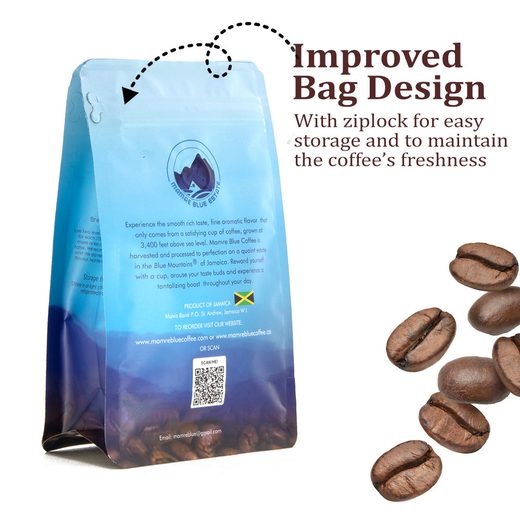
What makes coffee go stale
The NCA names four things to limit: air, moisture, heat and light. Oxygen reacts with the oils and aromatic compounds created in roasting; moisture lets coffee absorb odors and can, in the worst case, allow mold; heat speeds every one of these reactions; and light, especially direct sun, degrades flavor through a clear container. Grinding multiplies the surface area exposed to air, which is why ground coffee goes stale faster than whole beans.
Coffee also picks up smells easily. The NCA warns that coffee absorbs moisture, odors and flavors from the air around it, which is the main argument against keeping an open bag in the refrigerator next to other food.
How to store coffee beans: step by step
- Buy in small amounts. The NCA suggests buying freshly roasted coffee in quantities of about one to two weeks' supply and buying more often, rather than a large bag that sits for a month.
- Move it to an airtight, opaque container. A truly airtight container matters most, especially for pre-ground coffee. The NCA specifically warns that clear canisters let in light. A good resealable bag with the air pressed out is acceptable for short periods.
- Keep it cool and dark. Store the container in a cupboard or pantry away from the oven, dishwasher, kettle and afternoon sun. Room temperature is fine; warm spots are not.
- Grind just before brewing. Grind only the amount you need for each brew. If you have no grinder, buy smaller bags of ground coffee more often.
- Freeze only what you will not use soon. If you buy more than a week or two's worth, freeze the extra in a truly airtight container (see below) and keep only a week's supply at room temperature.
- Check the dates. Look for a roast date as well as a best-by date, and use opened coffee within the time frames in the table below.
How long does coffee stay fresh?
The NCA gives these time frames for coffee once the package is opened and stored in an airtight container. They describe quality, not safety.
| Coffee | Where stored | Stays fresh for about |
|---|---|---|
| Unopened roasted beans or ground coffee, pods, instant | Sealed, as packed | Until the best-by date |
| Roasted whole beans | Room temperature | 1 to 3 weeks |
| Roasted whole beans | Refrigerator | About 2 weeks |
| Roasted whole beans | Freezer | 3 to 4 months |
| Ground coffee | Room temperature | 1 to 2 weeks |
Note that the refrigerator does not extend whole-bean freshness compared with a good container at room temperature in this table, while the freezer does.
Should you freeze coffee beans?
Experts disagree about freezing, and the NCA says so. Its advice is practical: freezing is most useful for coffee you will not open for a while, and in humid climates. If you freeze coffee, use a truly airtight container, take out no more than a week's worth at a time, and put the rest back in the freezer before any condensation forms on the cold beans. The real risk is repeated thawing: taking a container in and out every morning lets moisture condense on the beans, which is exactly what storage is trying to prevent.
The refrigerator is the least useful option. It is cold enough to cause condensation when the coffee comes out, but not cold enough to slow staling much, and it is full of odors the coffee can absorb.
Does coffee expire?
Roasted coffee kept dry does not usually become unsafe. According to the NCA, it loses aroma and flavor over time, may lighten in color and tastes stale or flat, but it does not spoil in the way perishable food does unless moisture allows mold to grow. Any coffee that smells musty or shows mold should be thrown away. A flat, papery taste is the usual sign that coffee is simply old; our brewing guide lists that as the most common cause of a dull cup.
Common coffee storage mistakes
- A clear canister on the counter. It may look good, but the NCA warns that clear containers let in light, and counters near a window, oven or kettle are warm.
- An open bag in the refrigerator. The coffee can absorb food odors and pick up condensation each time it comes out.
- Taking frozen coffee in and out every day. Repeated thawing causes condensation; freeze in portions and take out a week's worth at a time.
- Grinding a week's coffee at once. Ground coffee goes stale faster than whole beans; grind just before brewing.
- Buying the biggest bag for the price. A month's supply opened on day one will be stale long before it is finished. Buy one to two weeks' worth, or freeze the rest unopened.
- Ignoring the roast date. A best-by date can be many months away; the roast date tells you how fresh the coffee really is.
Green coffee is stored differently
Unroasted green coffee keeps far longer than roasted coffee because the roasting reactions have not happened yet. Sweet Maria's coffee library explains that coffee usually leaves the mill at around 12% moisture and that storage is mainly about keeping it close to that level, away from humidity, heat and strong odors. Home roasters can usually hold green coffee for months, but it does fade over time. Our guide to green coffee beans covers grading, storage and shelf life in more detail.
Storage, roast level and premium coffee
Storage matters most for the coffees you bought for their subtlety. A mild, balanced coffee such as Jamaica Blue Mountain (see what Blue Mountain coffee tastes like) has less strong roast flavor to fall back on than a dark roast, so staleness shows sooner. Lighter roasts are denser and can taste fresh a little longer than very dark, oily roasts, whose surface oils are exposed to air (see coffee roast levels). If you are bringing coffee home from a trip, our guide to bringing coffee back from Jamaica covers packing and customs.
Disclosure: this site is published by Mamre Blue Coffee, a Jamaica Blue Mountain estate (see about us), so we rely on official and independent sources for the facts on this page.
Questions people ask
What is the best way to store coffee beans?
Should coffee beans be kept in the fridge?
Can you freeze coffee beans?
How long does ground coffee last once opened?
Does old coffee go bad?
Sources
Taste the benchmark


More in Coffee knowledge
- Hurricane Melissa and Jamaica Blue Mountain CoffeeMelissa hit Jamaica in October 2025 at the start of the coffee harvest. Official reports put early damage to the coffee industry at about 35%, and JACRA has since led a replanting and input programme.
- Italian Coffee CultureItalian coffee culture runs on the standing espresso bar and the stovetop moka pot, backed by more than a century of machine history and widely followed customs.
- JACRA: How Jamaica Certifies Blue Mountain CoffeeJACRA replaced the Coffee Industry Board in 2017 and now registers growers, licenses dealers and coffee works, certifies quality and holds export coffee in its own custody until it ships.
- Jamaica Blue Mountain Blend: What the 30% Rule MeansJamaica's 2018 regulations let a coffee be called a Jamaica Blue Mountain Blend if Blue Mountain coffee is at least 30% of its weight, up from 20% under the old 1953 rules.
- Jamaica Blue Mountain Coffee Grades: No. 1, No. 2, No. 3 and PeaberryBlue Mountain export coffee is sorted into size-and-defect classes, from No. 1 down to triage, with peaberry kept separate; a grade describes the beans, not the flavor or the authenticity of the bag.
- Japanese Coffee CultureJapan's coffee culture spans century-old kissaten cafes, vending-machine canned coffee, meticulous pour-over brewing, and a decades-long appetite for Jamaica Blue Mountain.
- Protected Coffee Origins: GIs, Trademarks and Certification MarksA coffee origin name can be protected as a geographical indication, a certification mark, an ordinary trademark or through labeling law. Each works differently, and none works everywhere.
- Shade-Grown Coffee: What It Means and What Bird Friendly Requires"Shade-grown" is printed on many coffee bags but has no legal definition. The one certification built around it, Smithsonian Bird Friendly, sets specific rules for canopy height, shade cover and tree species.