Honduran Coffee
Honduras is Central America's largest coffee producer, grading its washed, mostly smallholder crop by altitude across 15 departments.
Honduras is Central America's largest coffee producer and, by most counts, the world's seventh-largest exporter overall, yet it spent decades known mainly as bulk filler for other countries' blends. That reputation is now catching up with the volume: pockets of the country, especially Marcala and Santa Bárbara, are turning out coffee that competes on flavor as well as quantity.
How much coffee does Honduras produce?
The UN Food and Agriculture Organization put Honduras's 2023 green coffee production at roughly 384,000 tonnes, well ahead of every other Central American country. The specialty importer Café Imports describes Honduras as the seventh-largest coffee exporter in the world and the largest producer in Central America, exporting around 6.1 million 60-kilogram bags a year. Royal Coffee puts that lead in more concrete terms, noting Honduran export volume runs roughly 50% ahead of Guatemala's or Mexico's.
Honduras reached that position relatively recently, overtaking its neighbors to become Central America's top producer around 2011. The national coffee institute, IHCAFE, has since pushed hard to convert some of that volume into higher-priced specialty lots rather than undifferentiated commodity coffee.
What are Honduras's coffee regions?
| Region | Location | Typical cup, per Royal Coffee |
|---|---|---|
| Marcala | Southwest | Sweet, delicate |
| Santa Bárbara | North | Bright, fruit-forward, pronounced acidity |
| Copán | Northwest | Full-bodied, chocolatey |
| Agalta | East-central | — |
| El Paraíso | East, bordering Nicaragua | — |
Coffee is grown across 15 of Honduras's 18 departments, according to Café Imports, which makes it one of the geographically broadest origins in Central America rather than a country defined by two or three signature zones. That spread is also why Honduran coffee historically read as inconsistent: a bag labeled simply "Honduras" could come from any number of climates and elevations, with little on the label to signal which. Agalta and El Paraíso, in the country's east, are large producing zones in their own right, though they have not built the same single-region reputation abroad that Marcala or Santa Bárbara have.
What varieties and processing methods define Honduran coffee?
Bourbon and Caturra remain the most widely planted varieties, alongside IHCAFE 90, a rust-resistant hybrid the institute bred and released for smallholders. Royal Coffee also highlights Parainema, a newer disease-resistant hybrid that has started drawing attention in competitions for unexpectedly perfume-like, floral character.
Nearly all Honduran coffee is washed: cherries are pulped, fermented and dried before milling. Royal Coffee notes that natural and honey-processed lots are starting to appear as producers experiment with extended fermentation, though washed processing remains the default. Drying is still often done on open patios rather than in mechanical dryers, which can leave moisture levels inconsistent from one lot to the next — one of the quality challenges Honduras is still working through as it builds out a specialty tier alongside its bulk exports.
How is Honduran coffee graded, and when is it harvested?
Café Imports lists three altitude-based grades for Honduran export coffee: SHG (Strictly High Grown), HG (High Grown), and CS (Central Standard), a similar scheme to the SHG/HG grading used in neighboring Nicaragua and El Salvador. Harvest generally follows the same broad Central American calendar as those neighbors, running from around November through March depending on elevation and region.
Most Honduran producers farm small plots, typically between 1.5 and 50 hectares, according to Café Imports — a smallholder-dominated industry rather than one built around large estates.
What does Honduran coffee taste like, and what should buyers look for?
Royal Coffee describes lower-elevation Honduran coffee as soft and mild, with herbal or nutty notes and little citrus, while specialty-grade lots from higher ground show more complexity: caramel, chocolate, citrus and stone fruit. The regional split is sharp — Santa Bárbara's brighter, fruit-forward cups sit at the opposite end of the spectrum from Copán's fuller, chocolatey coffee.
How does Honduran coffee compare with Jamaica Blue Mountain?
Honduras and Jamaica sit at opposite ends of the production-scale spectrum: Honduras is Central America's largest producer, shipping millions of bags a year, while Blue Mountain comes from a single, legally bounded growing area in the parishes of St Andrew, St Thomas and Portland. Honduras also grades coffee mainly by altitude across a wide, varied landscape, while Blue Mountain's identity rests on that one fixed region rather than an elevation scale.
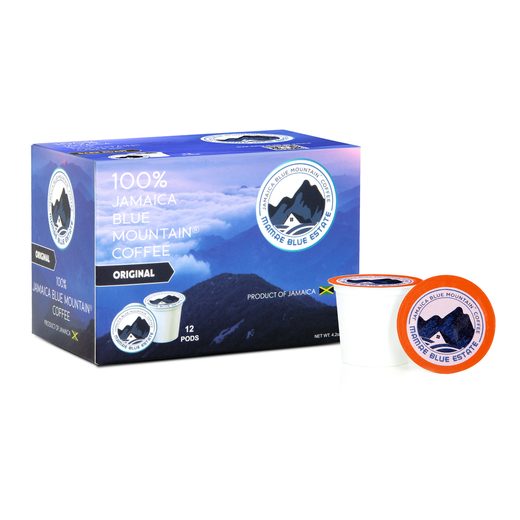
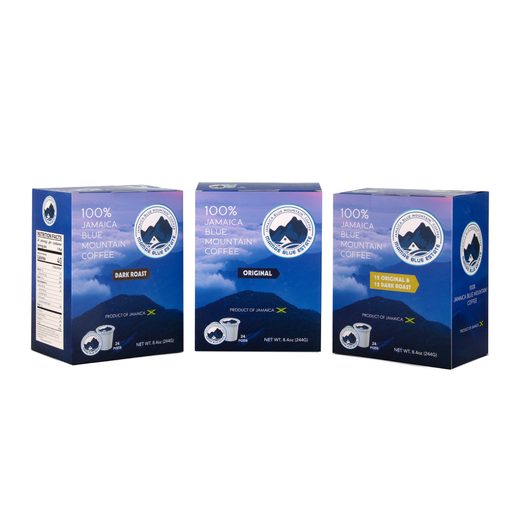
The cups differ too. Jamaica Blue Mountain is widely described as mild and balanced with low bitterness, closer to the soft, gentle profile Royal Coffee attributes to lower-grown Honduran coffee than to the bright, fruit-forward cups coming out of Santa Bárbara. Readers who want a mild benchmark to compare against a specialty Honduran lot can start with Jamaica Blue Mountain whole bean in the shop.
Questions people ask
Is Honduras the largest coffee producer in Central America?
What does SHG mean on a bag of Honduran coffee?
What does Honduran coffee taste like?
How does Honduran coffee compare with Jamaica Blue Mountain?
Sources
Taste the benchmark
More in Origins
- Huila Coffee: Colombia's Top Specialty RegionA guide to Huila, Colombia's top specialty coffee department: its elevation, varieties, flavor, sales, unusual harvest calendar and comparison with Jamaica Blue Mountain.
- Indian Coffee: Chikmagalur, Coorg and ArakuIndia grows both arabica and robusta under shade across Karnataka, Kerala and Tamil Nadu, from Chikmagalur's colonial-era estates to tribal-grown Araku Valley.
- Java Coffee: The Island, and Why Coffee Is Called JavaJava is both an Indonesian island and English slang for coffee, a legacy of three centuries as a top coffee source now centered on the Ijen Plateau's washed arabica.
- Kenyan Coffee: AA Grades, SL28 and Bright AcidityA guide to Kenya's grading system, key varieties and regions, with a fair comparison of its bright acidity to Jamaica Blue Mountain.
- Kona Coffee: Hawaii's Famous Coffee, and What 'Kona Blend' MeansKona coffee grows on a tiny Big Island belt and, until a 2024 law tightened the rule, a blend needed only 10% real Kona coffee to use the name.
- Malawi CoffeeMalawi grows a small, smallholder highland coffee crop centered on Mzuzu and the Misuku Hills, overshadowed for a century by tobacco and tea.
- Mexican Coffee: Chiapas, Veracruz, Oaxaca and Café de OllaMexican coffee comes mostly from small indigenous farms in Chiapas, Veracruz, Oaxaca and Puebla, prized for a mild, low-acid, everyday cup.
- Monsooned Malabar CoffeeMonsooned Malabar exposes Indian coffee to monsoon humidity for months, replicating old sailing-ship voyages and producing a low-acid, heavy-bodied cup used in espresso.