Zambian Coffee
Zambia grows a small, thinly documented arabica crop on its northern plateau, mixing smallholders and estates without a major export identity.
Zambia grows coffee on a small scale in its northern highlands, where elevation and rainfall suit arabica, but the crop has never become a major national export the way it has in neighboring Tanzania. Reliable, current detail on Zambian coffee is genuinely harder to find than for most origins on this site, and that scarcity is itself part of the story -- a reminder that not every coffee-producing country has built the kind of public specialty-market profile that Rwanda or Tanzania have.
How much coffee does Zambia produce?
Zambia is not among the countries with production figures in the FAO's 2023 dataset as reflected in Wikipedia's list of major coffee-producing nations, which points to a crop too small, or too inconsistently reported, to register alongside regional producers like Tanzania (roughly 62,900 tonnes) or Uganda (384,000 tonnes) in the same year. Wikipedia's overview of Zambia's economy mentions coffee only once, listing it among the country's "non-traditional exports" alongside cotton, fresh flowers, tobacco, gemstones and maize -- a category defined mainly by what it isn't (copper, Zambia's dominant export) rather than by any detail on coffee's own scale.
Where is Zambian coffee grown?
Zambia's coffee-growing country sits mainly in the Northern and Muchinga provinces, on the plateau that covers most of the country. Kasama, the Northern Province capital, sits at about 1,374 meters (roughly 4,508 ft), according to Wikipedia, and hosts one of Zambia's few named commercial operations: Kateshi Estates, run by the Northern Coffee Company Limited (NCCL), a subsidiary of the global agribusiness Olam International. Mbala, further northeast near the edge of the Albertine Rift escarpment above Lake Tanganyika, sits even higher, at about 1,670 meters (roughly 5,480 ft) -- genuinely coffee-suitable ground, though Wikipedia notes that despite fertile soil and ample water, Mbala's distance from urban markets and the resulting transport costs have historically limited which crops are commercially viable there.
Who grows Zambia's coffee, and how is it sold?
Zambia's coffee industry mixes smallholder growers with a small number of larger commercial estates such as Kateshi, a structure more like Zimbabwe's than the dense smallholder-cooperative networks of Rwanda or Burundi. Beyond Kateshi's Olam ownership, though, independently verifiable, current detail on other estates, cooperative structures or national export volumes is limited in general reference sources. That gap makes Zambia one of the least publicly documented origins covered on this site.
What varieties, processing and harvest timing does Zambia use?
Zambia's coffee is arabica, grown at plateau elevation broadly comparable to other East and Central African highland origins, but public sourcing does not confirm specific variety names, processing methods or a harvest calendar with the same confidence available for better-documented neighbors like Tanzania or Malawi. A large-scale commercial operation like Kateshi Estates, backed by an international agribusiness, likely runs a more standardized washing and grading process than Zambia's smaller growers, though Wikipedia's coverage of the farm doesn't go into that level of operational detail. Readers who need lot-specific facts should expect to go directly to an importer or exporter rather than general references.
That thinness in public documentation is worth noting on its own. Countries whose coffee reaches specialty roasters in meaningful volume, such as Rwanda, Burundi or Tanzania, tend to accumulate a body of importer profiles, cupping notes and harvest-calendar detail over time; a small, estate-and-smallholder mix like Zambia's, exporting modest volumes without a dedicated national coffee board profile easily found in English-language sources, simply hasn't built up the same record, even if particular farms or lots are well regarded by the buyers who source from them directly.
How does Zambian coffee compare with Jamaica Blue Mountain?
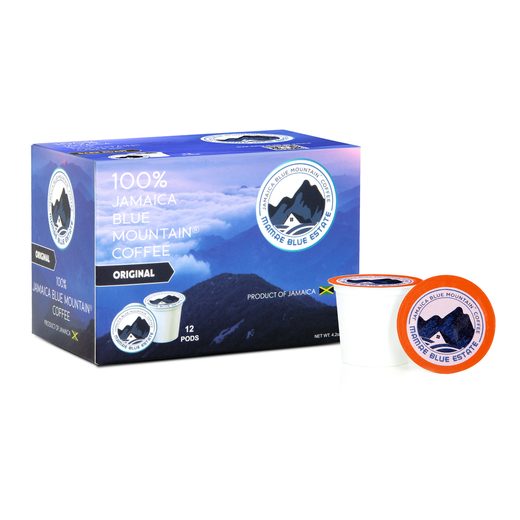
Both Zambia and Jamaica grow arabica at real elevation -- Zambia's northern plateau reaching roughly 1,670 meters in places, within range of the 3,000-5,500 ft commonly cited for Blue Mountain. But the comparison is lopsided everywhere else: Blue Mountain sits inside a single, legally defined, closely monitored growing area with an established grading and estate system, while Zambia's coffee sector is small, scattered across smallholders and estates, and thin enough in public documentation that even basic production figures are hard to pin down. Readers wanting a well-documented, consistently available high-altitude arabica can start with Jamaica Blue Mountain whole bean in the shop, or compare Zambia with nearby Malawi and Zimbabwe coffee.
Questions people ask
How much coffee does Zambia produce?
Where in Zambia is coffee grown?
Is Zambian coffee grown by smallholders or large estates?
How does Zambian coffee compare with Jamaica Blue Mountain?
Sources
Taste the benchmark
More in Origins
- Zimbabwe CoffeeZimbabwe grows a small, contracted arabica crop in the Eastern Highlands around Chipinge and Mutasa, split between smallholders and surviving estates.
- Antigua Guatemala CoffeeAntigua Guatemala's coffee grows in a volcano-ringed valley on ash-enriched soil, prized for a full, velvety body and chocolate-and-spice flavor.
- Australian CoffeeAustralia grows a tiny, mechanized-harvest coffee crop in subtropical New South Wales and Queensland, almost all of it sold at home.
- Bali Coffee: Kintamani and BeyondMost of Bali's coffee comes from Kintamani, grown by subak abian cooperatives and processed as sweet, citrusy washed arabica with its own Geographical Indication.
- Bolivian CoffeeBolivia's small, high-altitude Yungas crop has shrunk dramatically since the 1990s, but Caranavi still produces some of South America's brightest specialty coffee.
- Brazilian Coffee: How the World's Largest Producer TastesBrazil's scale, mechanized farms, and dry processing produce a mild, low-acid, reliably sweet cup unlike small, high-altitude origins.
- Burundi CoffeeBurundi grows old-growth Bourbon coffee through a dense grid of smallholder washing stations centered on Kayanza and Ngozi provinces.
- Cameroon CoffeeCameroon grows a small western-highland arabica crop alongside a much larger robusta crop, both well below the country's 1990 production peak.