Australian Coffee
Australia grows a tiny, mechanized-harvest coffee crop in subtropical New South Wales and Queensland, almost all of it sold at home.
Australia grows coffee on a genuinely small scale — up to 600 tonnes of green beans a year from roughly 850,000 trees, concentrated in two subtropical pockets of Queensland and New South Wales. Almost none of it leaves the country: Australian-grown coffee is a boutique, domestically sold product, not an export crop.
How Much Coffee Does Australia Produce?
Australia's specialty coffee industry is tiny by world standards. Growers harvest up to 600 tonnes of green beans a year from about 850,000 trees, spread across roughly 50 commercial farms, according to Wikipedia's Coffee culture in Australia article and Perfect Daily Grind's reporting on the sector. That's a rounding error next to major origins that measure output in the hundreds of thousands of tonnes — but Australian growers aren't really trying to compete on volume in the first place.
Where Is Australian Coffee Grown? Northern NSW and Queensland
Commercial coffee in Australia concentrates in two subtropical regions: the Northern Rivers area of north-east New South Wales, around the Byron Bay hinterland, and the Atherton Tablelands and surrounding districts of far-north Queensland, according to Wikipedia and Perfect Daily Grind. Both areas combine reliable rainfall, volcanic soil and cooler microclimates within an otherwise subtropical or tropical setting — conditions similar in kind, if not in elevation, to the highland belts that support coffee elsewhere in the world.
Australia's coffee industry didn't start there, though. Wikipedia records an experimental plantation at Waggrakine in Western Australia in the 1870s, which failed within three years because the climate was unsuitable — an early sign that coffee in Australia would only really work in a narrow subtropical band on the opposite side of the continent.
Mechanized Harvesting: How Australia Solved Its Labor Problem
Coffee growing in Australia struggled for decades, and Perfect Daily Grind credits the industry's modern revival to mechanized harvesting, introduced in the 1980s. Machine harvesting lowered labor costs and sped up picking dramatically compared with hand-harvesting, addressing the cost problem that had held the industry back. It's a contrast with most of the world's coffee, including Jamaica Blue Mountain, which is still hand-picked, and it's only practical because Australia's growing areas are flatter and more mechanization-friendly than the steep hillsides typical of many coffee origins.
Varieties and What Australian Coffee Tastes Like
Australian farms grow Arabica only, according to Perfect Daily Grind: red and yellow Catuai in the country's warmer, more tropical pockets, and the K7 cultivar in cooler subtropical areas. The resulting cup is generally described as mild, with a complex flavor, medium-to-low acidity and natural sweetness; Perfect Daily Grind also reports that Australian-grown beans test 10-15% lower in caffeine than average, attributed to the comparatively low environmental stress the trees experience in Australia's growing conditions.
Why Is So Little Australian Coffee Exported?
Almost no Australian-grown coffee leaves the country. Perfect Daily Grind's account of the industry puts the reasons down to a combination of higher production costs than traditional coffee-growing nations, limited awareness abroad that Australia even grows coffee, and buyer preference for established, well-known origins such as Ethiopia or Colombia over an unfamiliar one — on top of the basic fact that Australia's roughly 600-tonne annual crop is too small to matter on the international market. Instead, growers sell almost entirely within Australia, split roughly between direct online or estate sales, specialty grocers and stores, and roasters who supply or run their own cafés, per the same report. In effect, Australian coffee behaves more like a boutique regional product, sold close to where it's grown, than like a conventional export crop.
Australian Coffee vs Jamaica Blue Mountain
Australian and Jamaica Blue Mountain (JBM) coffee sit at opposite ends of coffee's mechanization spectrum: Australia leans on machine harvesting to keep costs down, while JBM, like almost all high-end specialty coffee, is hand-picked on steep, small-holding terrain. Both are nonetheless small, boutique-scale origins by world standards — Australia's entire annual crop, at up to 600 tonnes of green beans, would be a modest single order for a large commodity buyer, and JBM's licensed growing area is similarly limited to a legally defined patch of Jamaica's Blue Mountains.
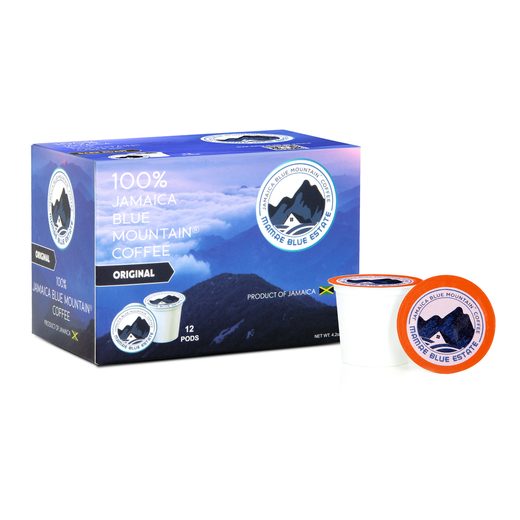
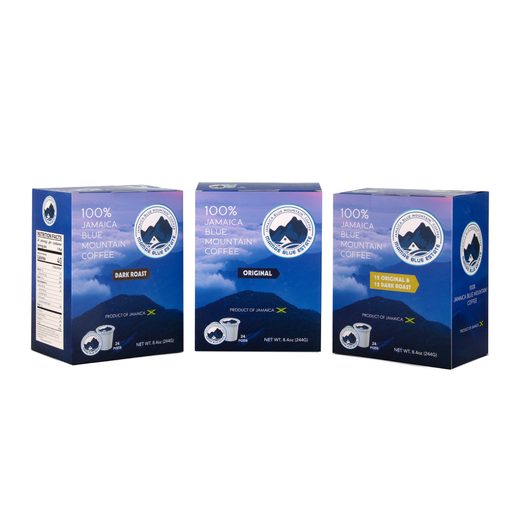
On the cup, both lean mild rather than bold. Australian coffee is described as complex but low-acid and naturally sweet; JBM is widely described as balanced and low in bitterness. The clearest difference is in how each reaches the market: Australian coffee almost never leaves Australia, while JBM has historically been an export-oriented coffee, with much of the crop shipped to Japan. Readers curious how JBM's profile compares firsthand can start with Jamaica Blue Mountain whole bean or ground coffee in the shop.
Questions people ask
Where is coffee grown in Australia?
How much coffee does Australia produce?
Is Australian coffee harvested by hand or machine?
Why doesn't Australia export more coffee?
Sources
Taste the benchmark
More in Origins
- Bali Coffee: Kintamani and BeyondMost of Bali's coffee comes from Kintamani, grown by subak abian cooperatives and processed as sweet, citrusy washed arabica with its own Geographical Indication.
- Bolivian CoffeeBolivia's small, high-altitude Yungas crop has shrunk dramatically since the 1990s, but Caranavi still produces some of South America's brightest specialty coffee.
- Brazilian Coffee: How the World's Largest Producer TastesBrazil's scale, mechanized farms, and dry processing produce a mild, low-acid, reliably sweet cup unlike small, high-altitude origins.
- Burundi CoffeeBurundi grows old-growth Bourbon coffee through a dense grid of smallholder washing stations centered on Kayanza and Ngozi provinces.
- Cameroon CoffeeCameroon grows a small western-highland arabica crop alongside a much larger robusta crop, both well below the country's 1990 production peak.
- Coffee in Vietnam: The Robusta GiantVietnam is the world's second-largest coffee producer, growing almost entirely robusta in the Central Highlands around Đắk Lắk province.
- Colombian Coffee: Regions, Grades and What "100% Colombian" MeansColombian coffee's regions, grades and FNC labeling explained, with a fair comparison to Jamaica Blue Mountain.
- Congo (DRC) Kivu CoffeeDR Congo's Lake Kivu region grows washed, volcanic-soil arabica that is slowly recovering from decades of conflict and policy-driven decline.