Sulawesi Toraja Coffee
Toraja coffee grows high in South Sulawesi's Tana Toraja highlands, mostly wet-hulled like Sumatra, with a spicy profile shaped by a long trade tie to Japan.
Toraja coffee comes from the highlands of Tana Toraja in South Sulawesi, grown at some of Indonesia's highest coffee elevations and processed almost entirely by wet-hulling, the same method that shapes Sumatra's coffee. The result is a cup with less of Sumatra's earthiness and more warm spice — cinnamon, cardamom and pepper — built in part on a decades-old trading relationship with Japan.
Where Is Tana Toraja, and How High Is Its Coffee Grown?
Tana Toraja is a highland regency in South Sulawesi, on the island Indonesians call Sulawesi and Europeans once knew as Celebes. Coffee grows across Tana Toraja and neighboring districts — Mamasa, Enrekang, and the Gowa and Sinjai areas — generally between about 1,400 and 1,900 meters (4,600–6,200 ft), high enough to qualify much of the crop for "strictly high grown" status. The best-regarded lots tend to come from smaller farms at the upper end of that range, north of the town of Toraja itself.
Kalosi (sometimes spelled Kalossi) is a highland market town in the southeastern part of this growing area, in Enrekang Regency just south of Tana Toraja proper. Coffee moving through it has long been sold under the trade name "Kalosi," used in the export trade almost interchangeably with Toraja — a naming pattern similar to how Sumatra's "Mandheling" describes a trading style more than a single farm. Sulawesi is one of three Indonesian islands, alongside Java and Bali, whose coffee is marketed as a distinct specialty origin. For the fuller picture of Indonesian coffee, see our guide to Sumatra coffee.
Wet-Hulled or Washed? How Toraja Coffee Is Processed
The great majority of Sulawesi's coffee — smallholders account for roughly 95% of the island's output, with plantation estates making up the rest — is processed by giling basah, or wet-hulling: mills hull the parchment while it's still wet rather than drying it fully first, producing the semi-dry, dark-tinted green beans typical of Indonesian coffee. It's grown as arabica, and it's the same technique that defines Sumatra's coffee, though Toraja's is generally regarded as a cleaner, less funky expression of the style.
A smaller number of quality-focused cooperatives and exporters have experimented with fully washed processing on some Toraja lots in recent years, aiming for a brighter, more consistent cup than wet-hulling typically produces. Wet-hulled coffee is still what fills most bags labeled Toraja or Kalosi, but a washed lot, when available, is usually marketed as a distinct, higher-end offering rather than the region's default style.
What Does Toraja Coffee Taste Like?
Toraja is usually described as deep, full-bodied and low in acidity, with muted fruit and a rustic sweetness underneath a distinctly spicy character. Darker roasts, common for this origin, bring out cinnamon, cardamom, black pepper and dark chocolate alongside almond and earthy, herbal undertones — a profile that sits between Sumatra's heavier earthiness and Java's cleaner, milder cup.
That spice-forward profile is part of why Toraja is popular both as a single-origin dark roast and as a body-adding component in blends, where its low acidity plays well against brighter beans from Africa or Central America.
How Is Toraja Coffee Sold, and What's Its Japanese Connection?
Coffee became Tana Toraja's first major cash crop in the mid-1800s and built an international reputation for quality that held up through Indonesia's New Order era beginning in 1965. Key Coffee, a major Japanese roaster, later established its own coffee plantation and processing factory in the region, and Japan has remained one of Toraja coffee's most loyal export markets since — a relationship that helped keep the name recognizable abroad even as Indonesia's coffee industry as a whole leaned more heavily toward robusta.
Today Toraja coffee moves through a mix of smallholder cooperatives and estate operations, sold both as certified specialty lots to Western and Japanese roasters and, in more ordinary grades, into broader commercial blends.
When Is Toraja Coffee Harvested?
Sulawesi's main coffee harvest generally runs from July through September, opposite the calendar of Central American origins like Guatemala, whose main crop comes in over the winter. That timing lines up with the dry season in the island's highlands, giving pickers a window to bring in ripe cherry before the wetter months return.
How Does Toraja Coffee Compare With Jamaica Blue Mountain?
Toraja's elevation, roughly 4,600–6,200 ft, runs higher than the 3,000–5,500 ft range commonly cited for Jamaica Blue Mountain (JBM), though the two coffees are built by very different processes. JBM is washed, and widely described as mild, balanced and low in bitterness; Toraja is wet-hulled, and prized instead for a deep, spicy, low-acid cup that leans into body rather than clarity.
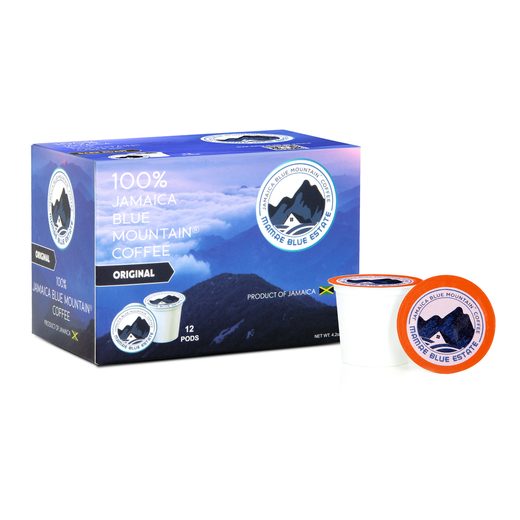
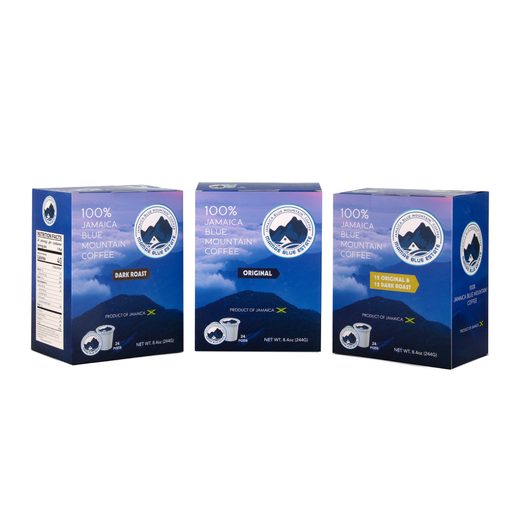
Both origins also carry an outsized reputation for their size: Toraja is a comparatively small part of Indonesia's mostly-robusta coffee output, much as JBM is a small, legally bounded slice of Jamaica's coffee industry. Readers curious how processing changes the cup can compare Toraja against Jamaica Blue Mountain whole bean, or browse the shop for ground and pod formats of the JBM benchmark.
Questions people ask
Where is Toraja coffee grown?
What's the difference between Kalosi and Toraja coffee?
Is Toraja coffee washed or wet-hulled?
What is Key Coffee's connection to Toraja?
Sources
Taste the benchmark
More in Origins
- Sumatra Coffee: Wet-Hulled, Earthy and UnusualSumatra's wet-hulled processing gives it a heavy, low-acid, earthy cup unlike almost any other coffee origin in the world.
- Taiwan Coffee: Alishan and BeyondTaiwan's small but growing coffee crop, centered on Alishan and Gukeng, now includes Geisha and its own Cup of Excellence program.
- Tanzanian Coffee: Kilimanjaro, Mbeya and MoreTanzania grows arabica near Kilimanjaro and Mbeya, sells much of it through the weekly Moshi auction, and grades it on an 11-tier British-derived scale.
- Tarrazú Coffee: Costa Rica's High-Grown RegionA guide to Tarrazu, Costa Rica's flagship coffee region: its elevation, varieties, processing, flavor, harvest season and how it compares with Jamaica Blue Mountain.
- Timor-Leste CoffeeTimor-Leste's coffee is grown mostly by smallholders, and its Timor Hybrid variety became the genetic source for rust-resistant Catimor coffee worldwide.
- Ugandan CoffeeUganda is East Africa's largest coffee exporter, trading mostly robusta while Bugisu and Rwenzori arabica are grown high and graded by screen size.
- Venezuelan CoffeeNineteenth-century Venezuela ranked among the world's top coffee exporters; price controls and economic crisis have since collapsed its once-prized Andean arabica trade.
- Yemeni Coffee and the Port of MochaYemen was the first place coffee was grown and traded commercially, and its Red Sea port, Mocha, gave the world both a coffee word and a chocolate flavor name.