How Decaf Coffee Is Made: Swiss Water, CO2 and Sugarcane
Decaf coffee is made by removing caffeine from green beans using water, CO2, ethyl acetate or methylene chloride, to a US standard of at least 97% removal.
Decaf coffee starts life as ordinary green coffee, then has most of its caffeine removed before roasting through one of a handful of methods: a water-based process, pressurized carbon dioxide, or a solvent such as ethyl acetate or methylene chloride. Each method pulls caffeine out of the bean while trying to leave as much of its flavor behind as possible.
How Is Coffee Decaffeinated, in General?
All decaffeination happens before roasting, on green beans, since caffeine is far easier to extract from unroasted coffee. In broad terms, every method either dissolves caffeine directly out of the bean using a solvent, or first draws caffeine and other compounds into a water solution and then filters or extracts the caffeine back out of that solution, so the beans can reabsorb the rest of their flavor compounds afterward. Commercial decaffeination in something like its modern form dates back to 1903, when the German coffee merchant Ludwig Roselius developed the first widely used process, originally using benzene before health concerns pushed the industry toward the solvents used today.
The Swiss Water and Mountain Water Processes
Swiss Water, developed in Switzerland and commercialized starting in 1980, uses no solvents at all. Green beans are soaked and hydrated, then brought into contact with "green coffee extract," a solution already saturated with coffee's flavor compounds but stripped of caffeine. Because the solution has nowhere left to absorb more flavor, only caffeine migrates out of the bean and into the extract, through simple diffusion; that caffeine-laden extract is then run through carbon filters that trap the caffeine so the flavor-rich solution can be reused with the next batch of beans. Swiss Water's own facility operates out of Delta, British Columbia, Canada. A related water-only method, the Mountain Water Process, works on similar principles and is produced at the Descamex facility in Mexico, giving buyers a second solvent-free option tied to a different origin country.
The CO2 (Supercritical Carbon Dioxide) Process
This method uses carbon dioxide compressed to around 300 atmospheres of pressure at about 65°C (149°F), a "supercritical" state where CO2 behaves partly like a liquid and partly like a gas. In that state, caffeine dissolves readily into the CO2, while the compounds responsible for coffee's flavor are largely insoluble in it and stay behind in the bean. It's often considered one of the gentler methods on flavor, though the equipment required is expensive, which tends to limit it to larger-scale decaffeination operations.
The Ethyl Acetate, or "Sugarcane," Process
Ethyl acetate is a compound that bonds readily with caffeine, and this method is often marketed as the "sugarcane process" because the ethyl acetate used is typically derived from fermented sugarcane rather than being purely synthetic. Beans are steamed to open their pores, then soaked in a solution of ethyl acetate and water for around eight hours, with the tanks refilled with fresh solution partway through, before a final steaming drives off any remaining solvent.
The Methylene Chloride Process
Methylene chloride (dichloromethane) is the most direct descendant of Roselius's original benzene-based method. In the "direct" version, steamed beans are repeatedly treated with the solvent, often eight to twelve times, until caffeine content meets the required standard; in the "indirect" version, beans are soaked in hot water first, and the resulting water is treated with solvent off to the side before being reunited with the beans so they can reabsorb their flavor compounds. Industry sources put the residual methylene chloride allowed in decaffeinated coffee at 10 parts per million or less under FDA rules, with tested batches typically coming in well under that ceiling.
How Much Caffeine Do These Methods Remove?
To be sold as "decaffeinated" in the United States, coffee generally has to meet an FDA standard of at least 97% caffeine removal, regardless of which method produced it. In practice, one 2006 study found decaffeinated products typically retained only 1 to 2% of their original caffeine, though it also found outliers running as high as 20% of the original amount — a reminder that "decaf" means caffeine-reduced, not entirely caffeine-free.
How Does Decaf Compare With Jamaica Blue Mountain?
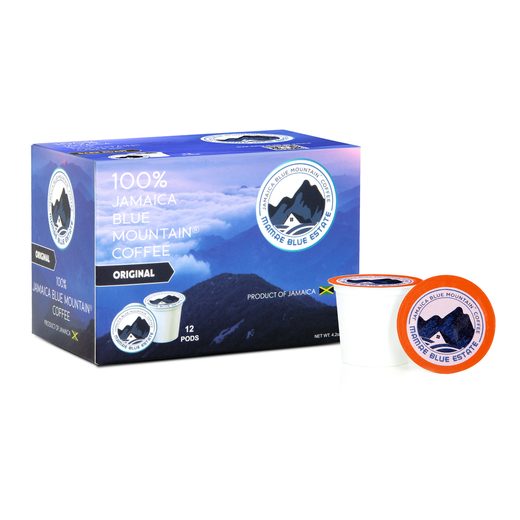
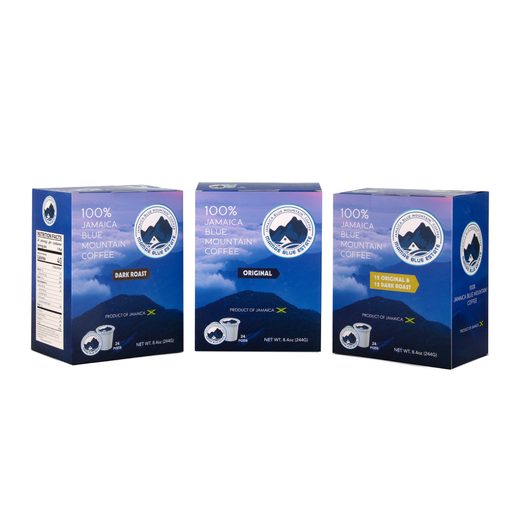
Decaffeination happens after a coffee has already been through its processing method, whether that's the washing traditionally used for Jamaica Blue Mountain or another approach entirely, so it's a separate step rather than a competing one. JBM is grown and sold overwhelmingly as a caffeinated coffee, prized for a cup widely described as mild and balanced; any of the methods above could, in principle, be applied to washed Blue Mountain beans without changing how they were originally processed, though decaffeination inevitably strips out some flavor compounds along with the caffeine no matter how gentle the method.
Questions people ask
How is coffee decaffeinated?
Is Swiss Water decaf chemical-free?
What is the sugarcane decaf process?
Does decaf coffee have zero caffeine?
Sources
Taste the benchmark
More in Processing
- Natural (Dry) Process CoffeeNatural process coffee dries inside the whole cherry, producing a fruit-forward, heavy-bodied cup with a higher risk of defects than washed coffee.
- Washed Coffee: The Wet ProcessWashed coffee has its fruit removed and washed off before drying, a method prized for producing a clean, bright, variety-forward cup.
- Anaerobic and Carbonic Maceration CoffeeAnaerobic fermentation ferments coffee in sealed, low-oxygen tanks, producing bold, fermentation-driven flavors that divide specialty coffee opinion.
- Cascara: The Coffee Cherry as a DrinkCascara is a tea brewed from the dried skin and pulp of the coffee cherry, with roots in Yemen and Bolivia and a 2022 EU novel food safety opinion.
- Green Coffee Beans: Buying and Storing Unroasted CoffeeGreen coffee is unroasted coffee, graded by screen size and defect count, sold internationally at around 12% moisture and best used before it goes past crop.
- Honey Process CoffeeHoney process coffee keeps some fruit mucilage on the bean during drying, giving it more sweetness and body than washed coffee with less risk than natural.